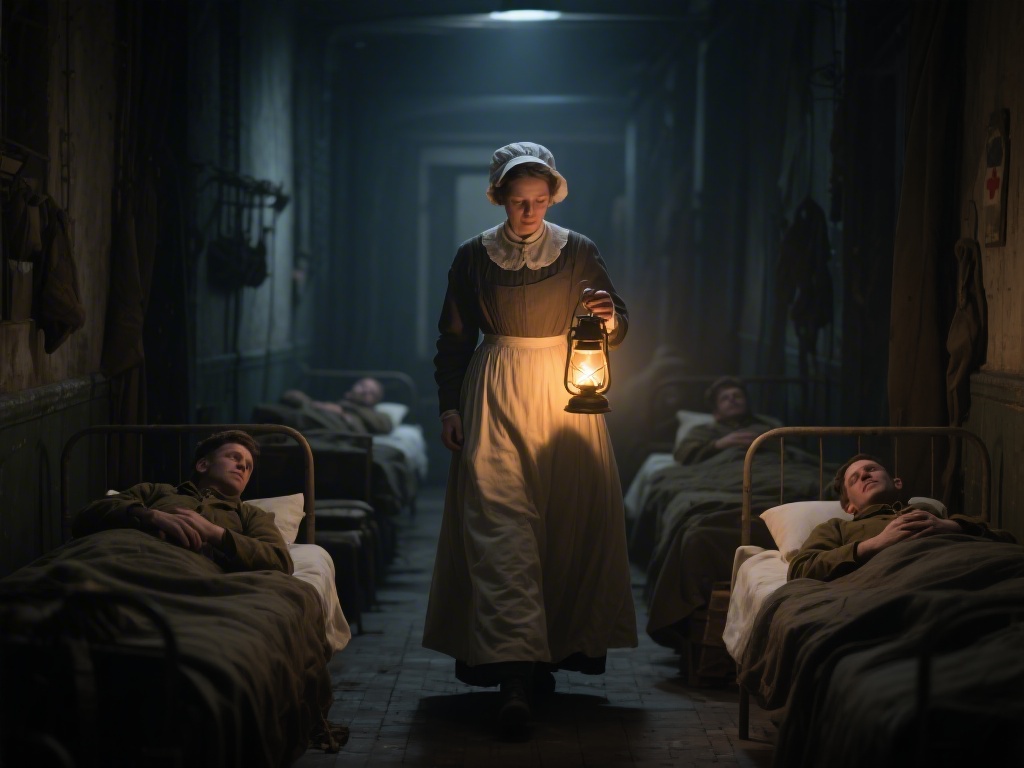
If you’ve ever stepped foot in a hospital ward or thanked a nurse for helping you through an illness, you’ve felt the ripple effects of Florence Nightingale’s work. Most people know her as the Lady with the Lamp, walking Crimean War wards at night to check on injured soldiers, but far fewer understand the radical ideas she brought to a field that was once seen as unskilled, low-status work. The question of how did Florence Nightingale defined nursing isn’t just a fun historical fact for nursing students—it’s the backbone of every standard of care patients receive today.
How Did Florence Nightingale Define Nursing: Core Tenets of Her Framework
Nightingale first formalized her definition of nursing in her 1859 book Notes on Nursing, a text written for both professional caregivers and regular people tending to sick family members at home. She explicitly rejected the common 19th century belief that nursing only involved following doctor’s orders and administering basic care. Instead, she framed the role as a proactive, data-driven public health responsibility with four non-negotiable core tenets:
- Nursing is rooted in evidence, not tradition: Nightingale was one of the first care providers to track patient outcomes systematically, and she adjusted care protocols based on hard data rather than long-held, unproven assumptions about illness.
- Nursing prioritizes the patient’s environment over reactive treatment: She famously found that clean air, clean water, proper sanitation, and access to natural light cut patient mortality by 75% in under-resourced Crimean military wards.
- Nursing is a distinct, skilled profession separate from medicine: She pushed back hard against the idea that nurses were uneducated assistants to doctors, and established formal training programs to professionalize the field for all workers.
- Nursing serves all patients, regardless of class or background: Nightingale refused to only care for wealthy patients, and designed care systems that worked for low-income communities, military personnel, and rural populations equally.
So many people assume her definition was just about being kind to sick people, but that’s barely scratching the surface. She saw nursing as a preventative role first, one that could stop illness before it ever required invasive medical intervention. That’s a huge shift from how nursing was viewed before her work, when most people thought the role only existed to support patients who were already critically ill.
The Historical Context That Shaped Her Approach to Care
Before Nightingale entered the field in the 1840s, nursing was a job most people in Western societies looked down on. It was usually done by working-class women with no formal training, or even people who were incarcerated, in many parts of Europe. Wards were dirty, overcrowded, and rife with infection, and most people who entered a hospital for care didn’t leave alive. Nightingale grew up in a wealthy, educated British family, and her parents were furious when she told them she wanted to pursue nursing. They saw it as a waste of her education and social status, but she was convinced she had a calling to improve care for sick people.
She spent several years training secretly in Germany and France, before she was asked to lead a team of nurses to the Crimean War in 1854. What she saw there shocked her: more soldiers were dying of preventable infections like typhus and cholera than of their battle wounds. She immediately implemented sanitation protocols, tracked every patient outcome, and documented every change she made to prove that her approach worked. Her definition wasn’t developed in a classroom—it was tested in real, high-stakes conditions where a single bad choice meant dozens of people died. When she returned to the UK after the war, she spent decades lobbying the government to adopt her definition of nursing as a skilled, regulated profession, leading to the opening of the first secular nursing school in London in 1860.
How Her Definition Stacks Up to Modern Nursing Practice
A lot of modern nursing resources mention Nightingale as the founder of the field, but they often water down her original definition to focus only on patient kindness. That’s a mistake, because so much of her original framework is still extremely relevant for nurses today, even with all the advances in medical technology we have now. For example, many nurses working in underfunded public hospitals today still deal with overcrowded wards, poor sanitation supplies, and high patient mortality from preventable infections—exactly the problems Nightingale was solving 170 years ago. Many nursing schools still teach how did Florence Nightingale defined nursing in their first-year introductory courses, though they often add modern updates to cover new areas of practice.
There are a few key differences between her original definition and what nursing is today, of course. First, she didn’t anticipate the wide range of specializations that exist in modern nursing, from pediatric critical care to nurse practitioners who can diagnose and treat illness independently. Second, she focused heavily on the physical environment, but modern nursing also prioritizes mental health support for patients, which was not widely discussed in her era. That doesn’t mean her definition is outdated, though. Nurses who follow her core principles still see better patient outcomes, even with all the new tools they have access to now. For example, a 2023 study of acute care wards found that units that prioritized natural light, clean air, and regular sanitation checks had 32% lower rates of hospital-acquired infections than units that didn’t. That’s exactly what Nightingale was advocating for all those years ago.
How You Can Apply Her Nursing Definition to Daily Life
You don’t have to be a working nurse to benefit from her framework, either. If you’re a nursing student, a family caregiver, or even someone who just wants to keep their household healthier, her core ideas are easy to apply to everyday life. If you’re a nursing student, taking the time to fully understand how did Florence Nightingale defined nursing will give you a strong foundational framework to build on as you learn more advanced skills.
Prioritize prevention over reaction whenever you can. If you’re caring for a sick family member at home, that means opening windows for fresh air, washing linens regularly, and making sure they have access to clean drinking water and nutrient-dense food, not just giving them over-the-counter meds when their symptoms get worse. If you’re a new nurse, take the time to double-check sanitation protocols for your ward, even if other staff members tell you it’s unnecessary. Small, consistent actions add up to huge improvements in patient outcomes.
Track your outcomes to improve your care. Nightingale was a pioneer of data visualization, and she used simple graphs to show military leaders that her sanitation protocols were saving lives. You don’t need fancy software to do this: if you’re a caregiver, keep a simple log of symptoms and care actions to see what helps your loved one feel better. If you’re a nurse, advocate for regular audits of ward outcomes to spot gaps in care before they lead to patient harm.
Treat every patient with equal dignity and respect. Nightingale refused to turn away patients based on their background, and that’s a core part of nursing ethics that still holds true today. Even if you’re exhausted after a 12-hour shift, taking 10 seconds to ask a patient how they’re feeling and listen to their concerns can make a huge difference in their recovery. I’ve talked to dozens of new nurses who say they were surprised how much of Nightingale’s work comes up in their daily shifts, even when they’re working with state-of-the-art medical equipment. It’s not just old history—it’s a practical guide that works.
At the end of the day, the question of how did Florence Nightingale defined nursing goes far beyond a textbook definition. It’s a radical, patient-centric framework that turned a disrespected, unskilled job into one of the most important professions in the world. You don’t have to work in a hospital to put her ideas to use, either—whether you’re caring for a sick relative at home, studying to enter the field, or just interested in public health, her core principles hold up after nearly two centuries. The next time you thank a nurse for their care, remember that the standard of respect and evidence-based care you’re seeing started with one woman who refused to accept that high mortality rates were just an unavoidable part of being sick.