When I first started my nursing prereqs, I assumed Florence Nightingale was just the "lady with the lamp" we learned about in middle school history class. I had no idea her work redefined an entire profession, or that her core ideas still guide almost every decision I make at work today. If you’ve ever wondered how did Florence Nightingale define nursing, you’re not just asking for a dictionary entry. You’re asking about the radical, game-changing framework that turned nursing from unregulated, low-status work into the respected, life-saving profession it is today. This guide breaks down her exact definition, the context that shaped it, and why it still matters for nurses, patients, and healthcare teams everywhere.
How Did Florence Nightingale Define Nursing, Exactly?
Nightingale first laid out her formal definition of nursing in her 1859 text Notes on Nursing: What It Is, and What It Is Not, the first ever textbook written for nursing education. She wrote that nursing is "an act of utilizing the environment of the patient to assist him in his recovery." That might sound simple at first glance, but it was a revolutionary statement for its time. Before her writing, nursing was seen as little more than running errands for doctors and changing bandages, with no focus on the broader factors that impact healing. Her definition shifted the entire focus of care from reacting to illness to actively creating conditions that help the body heal itself.
She expanded on that core definition across her writing, adding that nursing is also a duty of care for healthy people, not just those who are already sick. She argued that public health education, hygiene outreach, and community support are all core parts of the nursing role, long before public health was a formal field of study. It’s important to note that she also explicitly framed nursing as a skilled, professional role that required formal education, not casual work for people with no training. That was a radical pushback against 19th century stereotypes that painted nurses as uneducated, untrustworthy, and only fit for low-skill labor.
The Context That Shaped Nightingale’s Nursing Definition
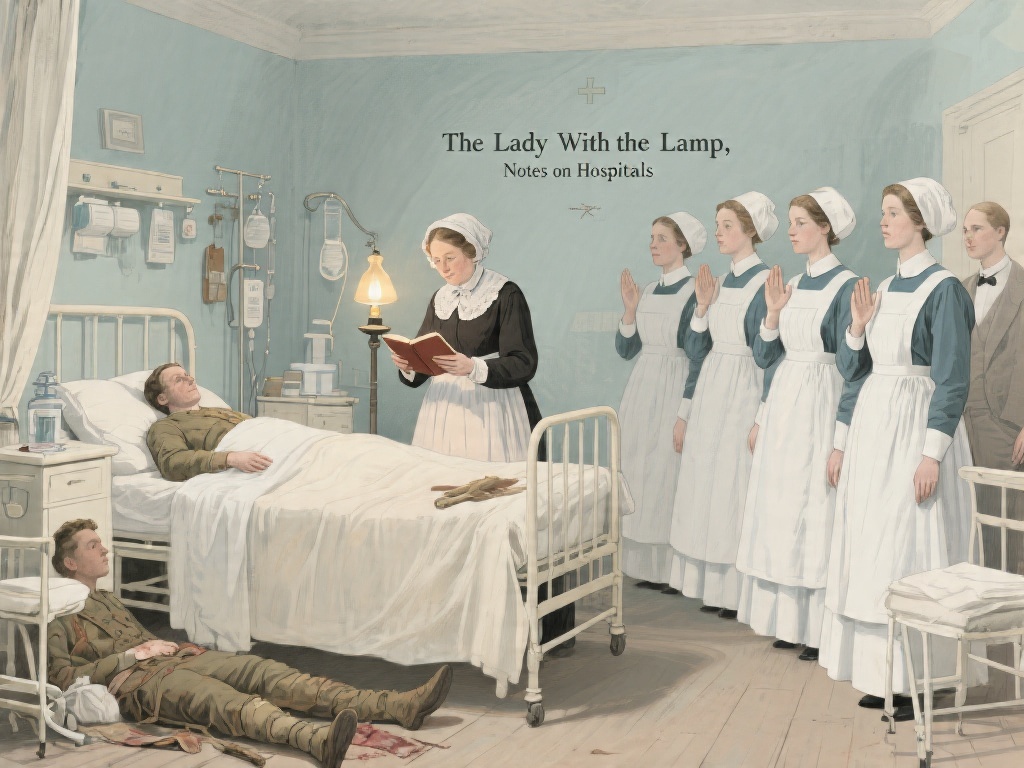
Nightingale didn’t come up with her definition out of thin air. She developed it after years of on-the-ground experience, most famously during the Crimean War, where she led a team of 38 volunteer nurses to care for wounded British soldiers. When she arrived at the military hospital in Scutari, she was horrified by the conditions: overcrowded rooms, raw sewage flowing on the floors, no clean linens, and almost no access to fresh food or clean water. She quickly learned that 10 times more soldiers were dying from preventable infections and malnutrition than from their actual battle wounds.
That experience showed her that the care environment was just as important to patient outcomes as medical treatment. She and her team cleaned the entire hospital, set up sanitation protocols, arranged for healthy food deliveries, and added quiet spaces for patients to rest. Within six months, the death rate dropped from 42% to just 2%, and she had hard data to prove that her changes were the cause. The gaps she saw in 19th century care that directly shaped her definition include:
- No formal hygiene protocols for patient spaces, leading to widespread spread of infectious disease
- No requirement for formal training or education for people working as nurses
- No focus on patient comfort, nutrition, or mental well-being as part of care delivery
- No system for tracking patient outcomes to adjust care practices over time
When she returned to the UK after the war, she used her data to lobby for formal nursing education and hospital regulation. She didn’t just want to improve care for soldiers; she wanted to rewrite what nursing meant for every patient, in every setting, for generations to come. Her definition was intentionally written to be broad enough to apply to all care settings, from military hospitals to small community clinics to private home care.
Core Principles Woven Into Nightingale’s Nursing Definition
Her short formal definition is packed with unspoken principles that still make up the backbone of nursing ethics today. First and most famously, she prioritized the patient environment as a core part of care. She identified five key environmental factors that impact healing: fresh air, clean water, clean housing, good nutrition, and quiet. Those factors are still part of basic patient care checklists for new nurses today, no matter how advanced medical technology gets. Her focus on data collection and outcome tracking made nursing an evidence-based practice, not just a service role, which was unheard of for women-led professions in the 1800s.
She also centered patient autonomy and dignity in her definition, another radical choice for her time. She argued that nurses should listen to their patients’ preferences, concerns, and feedback about their care, rather than imposing care without consultation. That’s the root of the patient-centered care model that is standard across all reputable healthcare systems today. I’ve worked with nurse educators who still use Nightingale’s patient communication frameworks when training new staff, and it’s wild how little those core rules have changed even with all our modern medical tech.
Another key principle embedded in her definition is that nursing is a separate, independent profession, not an extension of medical work. She fought hard to establish nursing as a role with its own skills, ethics, and education requirements, rather than nurses being seen as "assistants" to doctors. She also emphasized that nursing was a profession for educated, skilled workers, not a fallback for unemployable women, which was the dominant stereotype when she started her work. She even pushed for fair pay and safe working conditions for nurses, fights that the nursing community is still continuing today.
How Nightingale’s Nursing Definition Applies to Modern Practice
Critics sometimes argue that Nightingale’s definition is outdated, given that modern nurses do everything from administering complex medications to running telehealth clinics to performing minor procedures. But if you look past the surface level, her core definition still holds up for every area of nursing practice. If you break down the core of her definition – using all available tools to create the best possible environment for a patient to heal – it applies to every nursing role, from emergency room nurses to public health nurses to research nurses. Every time a nurse adjusts a patient’s bed to make them more comfortable, asks about their stress levels, or pushes for a cleaner patient room, they’re following Nightingale’s original definition of nursing.
Even new areas of nursing that Nightingale could never have imagined fit her framework. For example, telehealth nurses work with patients to adjust their home environments to manage chronic conditions, from advising people with asthma to reduce dust in their homes to helping people with diabetes set up medication reminders. Community health nurses run vaccination clinics and hygiene outreach programs in underserved areas, which directly aligns with Nightingale’s focus on preventive care for healthy people. Even the ongoing push for nurse staffing ratios is rooted in her definition, because understaffed teams can’t create the safe, supportive environments patients need to heal.
That’s not to say her definition hasn’t evolved with the times. Modern nursing definitions now explicitly include advocacy, social justice, and cultural competence as core parts of the role, which are natural extensions of her original focus on patient dignity. But the heart of the role, the part that makes nursing different from every other healthcare profession, is exactly what she laid out more than 160 years ago. I see it every shift I work: when I take an extra two minutes to sit with a scared patient, or adjust their room lighting so they can sleep better, I’m not just doing a task. I’m living out the definition she created.
At the end of the day, asking how did Florence Nightingale define nursing is asking about the heart of the entire profession. She didn’t just write a job description; she created a moral framework for care that centers the patient’s whole well-being, not just their symptoms. Her definition was radical for its time, and it’s still a powerful reminder for nurses of why we do the work we do, even on the hardest shifts. Whether you’re a practicing nurse, a nursing student, or just someone who’s ever received care from a nurse, understanding her original vision helps you appreciate just how much one person’s commitment to better care can change the world.