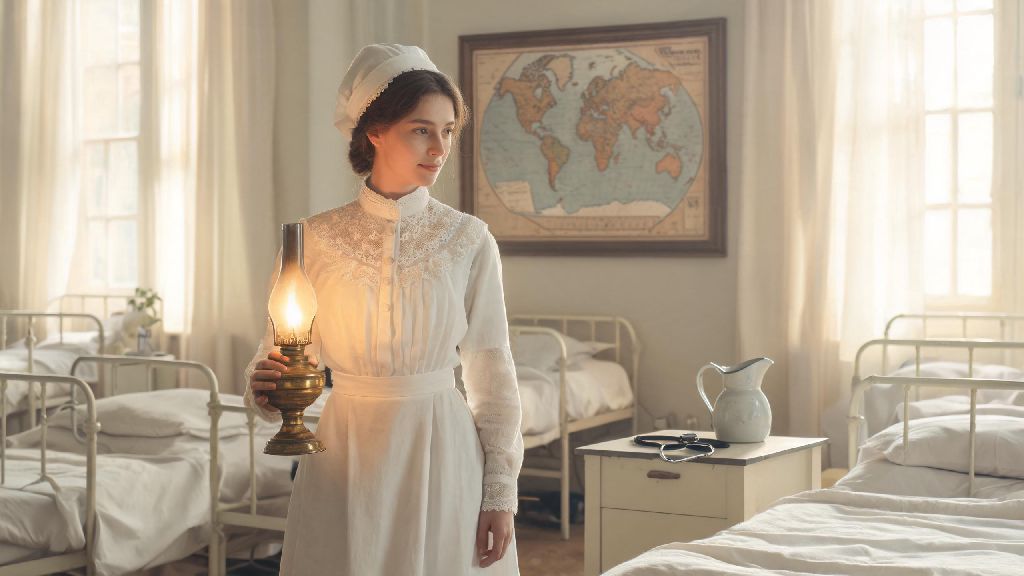
If you only know Florence Nightingale as the "Lady with the Lamp" who cared for wounded soldiers during the Crimean War, you’re missing half of her incredible story. Most people don’t realize she spent the majority of her adult life confined to a bed, and even casual history fans often search how long was Florence Nightingale bedridden to fill the gaps in what they learned in school. Her decades of work while ill redefined what we think of as "productivity," and changed the face of public health for every country on the planet.
How Long Was Florence Nightingale Bedridden, Exactly?
Let’s cut straight to the answer first, because that’s what you came for. Most peer-reviewed historical records confirm she was bedridden for roughly 54 years, from 1856 until her death in 1910 at the age of 90. That doesn’t mean she never left her bed at all in that time, of course. She could occasionally walk short distances around her room, and she took a handful of trips to the countryside or to visit family in her earlier years of illness. But those moments were rare, and she usually ended up bedbound for weeks after even small outings.
She was just 36 years old when her illness became severe enough that doctors ordered her to stay in bed full time. At the time, everyone around her thought she would die within a year. She’d already become a national hero for her work in Crimea, so the public launched huge fundraisers to pay for her care and sent thousands of get-well notes to her London home. No one could have guessed she would live another 54 years, and do more to advance healthcare from her bed than most people do with full mobility.
It’s important to note that she chose to keep her illness private for most of her life. She didn’t want the public to see her as a victim, and she worried people would dismiss her policy recommendations if they knew how sick she was. Most of the general public had no idea she was bedridden until after she died, and her full medical records weren’t released until the 1980s.
What Caused Her Decades of Chronic Illness?
For more than a century, historians and doctors debated what made Nightingale so sick for so long. Her symptoms first appeared during the final months of her service in Crimea, where she worked 20-hour days in unsanitary, overcrowded military hospitals. She first came down with a high fever in 1855, and she never fully recovered, even after she returned to London the following year.
Doctors of her era ran every test they had available, but they couldn’t find a clear cause for her symptoms. Many wrote off her pain as "hysteria," a common, sexist diagnosis for women with unexplained illness in the Victorian era. Modern researchers have a much clearer picture of what she was dealing with, though, after reviewing her personal letters and surviving medical notes. The leading theory is that she contracted brucellosis, a bacterial infection spread by contaminated milk or meat, from the unsanitary food supplies in Crimea. That infection triggered a chronic inflammatory response that lasted for the rest of her life, paired with post-traumatic stress disorder from the trauma of working through the war.
Her symptoms are extremely familiar to anyone who lives with chronic fatigue syndrome or fibromyalgia today:
- Persistent muscle pain and extreme fatigue that didn’t improve with days of bed rest
- Recurring low-grade fevers and migraines that lasted for weeks at a time
- Shortness of breath and heart palpitations after walking more than 10 or 15 steps
- Periods of severe brain fog that made it hard to read or write for hours at a time
There’s still some debate about the exact cause, of course. Some researchers think she may have also had an undiagnosed autoimmune condition that made her symptoms worse. Whatever the root cause, there’s no question her illness was severe, and it drastically limited her physical ability for more than half her life.
How Did She Achieve So Much While Confined to Bed?
You might be wondering how someone who could barely get out of bed managed to revolutionize global healthcare. The answer is that she used her limited energy extremely strategically, and she built a huge network of allies who could carry her ideas out into the world for her. She wrote more than 200 reports, pamphlets and books on healthcare reform from her bed, plus more than 14,000 letters to politicians, doctors and activists around the world.
Her most famous work, Notes on Nursing, was published in 1859, just three years after she became bedridden. It was the first ever textbook for secular nursing education, and it sold more than 10,000 copies in its first year alone. She used the profits from the book, plus the public fundraiser money raised for her care, to found the Nightingale Training School for Nurses at London’s St Thomas’ Hospital in 1860. That was the first secular nursing school in the world, and it set the standard for nursing education that we still use today.
She didn’t stop there, either. She spent 10 years researching public health conditions in British-ruled India, and her reports led to sweeping reforms that reduced preventable deaths in the country by more than 50% in 20 years. She also advised the British government on hospital design, sanitation policy and military healthcare for decades. I’ve always found it wild that most of the work we celebrate her for happened after she left the Crimean battlefield, not during it. She didn’t just care for sick soldiers – she built a system that prevented millions of people from getting sick in the first place.
She also made intentional choices to conserve her energy for the work that mattered most. She turned down most public appearance requests, and she only met with visitors who could help advance her policy goals. She worked from a small folding desk that fit over her bed, and she dictated letters to assistants when her hands were too weak to write. She didn’t let her illness define what she could accomplish, even when everyone around her thought she would never work again.
Common Myths About Her Bedridden Years Debunked
Because she kept her illness so private for so long, a lot of false stories about her bedridden years have spread over the past century. One of the most persistent myths is that she faked her illness to avoid public attention and pressure to speak at events. This myth started with a 1950s biography that took her private jokes about "hiding" in her room out of context, and it’s been repeated ever since. We now have hundreds of letters from her doctors, friends and family that confirm her symptoms were real, and that she often pushed through extreme pain to get work done.
Another common myth is that she became a recluse who never saw anyone during her bedridden years. That’s not true at all. She met with dozens of visitors every week, from members of Parliament to new graduates of her nursing school, as long as she was feeling well enough. She just didn’t make public appearances in front of large crowds, because the effort would leave her sick for weeks. She also had a very active social life via letter, and she kept in regular contact with hundreds of friends and colleagues around the world.
Some people also claim she completely recovered from her illness in her 70s, and started walking again regularly. There’s no evidence for that, either. She was able to take slightly longer walks around her home in her later years, but she still spent most of her time in bed, and she continued working from her bedroom until just a few months before she died.
It’s easy to see why these myths spread. People love simple, inspirational stories, and the idea of a national hero being stuck in bed for 50 years feels too sad for some people to accept. But the real story is far more inspirational: she didn’t let a life-altering illness stop her from changing the world.
Now you know the full answer to how long was Florence Nightingale bedridden, and the incredible work she did during those decades. Her story isn’t just a fun historical fact – it’s a reminder that people with chronic illness and disability can make enormous contributions to the world, even when they can’t leave their homes. If you ever find yourself feeling limited by your own health or circumstances, her story is a great reminder that you don’t need to be physically present to make a huge difference.