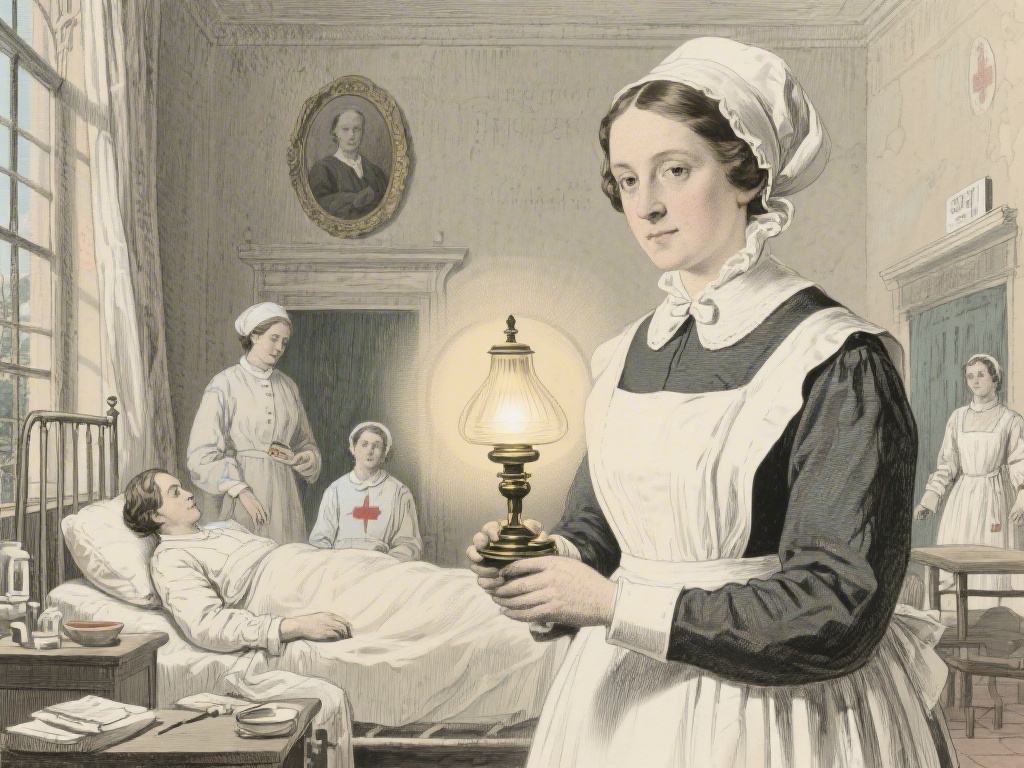
I first learned about Florence Nightingale in elementary school, where textbooks painted her as a gentle “Lady with the Lamp” who tended to wounded soldiers during the Crimean War. It wasn’t until I took a public health class in college that I realized how much of her legacy is tied to her upbringing, rather than just her time on the front lines of battle. Most casual history fans can’t answer when and where was Florence Nightingale born, or how that context led her to revolutionize healthcare for millions of people around the world. This guide breaks down the exact facts of her birth, plus all the little-known context that most school lessons skip.
When and Where Was Florence Nightingale Born: Exact Details
If you’ve only ever seen her name listed in a history textbook, the answer to when and where was Florence Nightingale born might surprise you, as many people assume she was a native of Italy rather than a British citizen. Nightingale was born on 12 May 1820 in the city of Florence, which was then part of the Grand Duchy of Tuscany, now part of modern-day Italy. Her parents, William Nightingale and Frances Smith Nightingale, were wealthy British landowners who were on a two-year extended tour of Europe when she was born.
Her parents chose to name her after the city of her birth, a tradition they had already started with her older sister, Parthenope, who was born a year earlier in Naples (Parthenope is the ancient Greek name for the city of Naples). The family returned to England when Florence was 12 months old, splitting their time between two large family estates: Lea Hurst in Derbyshire and Embley Park in Hampshire. Her family’s upper-class status meant she was born into a life of privilege most women of the era could only dream of, with access to private education, travel, and social connections that would later help her advance her reform work.
Understanding when and where was Florence Nightingale born is key to seeing why her choice to become a nurse was so radical for her time. As a wealthy unmarried woman in Victorian England, her expected path was to marry a man of similar social standing, run a household, and host social events. Nursing at the time was seen as a low-status job for working-class women, often associated with poor hygiene, long hours, and even moral laxity. Her family was furious when she first announced her intention to pursue nursing, and they refused to support her for years.
How Her Birth Privilege Shaped Her Unconventional Career Path
Florence’s father, William, was a Cambridge-educated man who believed in educating his daughters just as thoroughly as he would have educated sons. She learned Latin, Greek, French, German, and Italian by the time she was 12, along with advanced math, statistics, history, and philosophy. That advanced education was almost unheard of for women of the era, and it gave her the analytical skills she would later use to prove the link between poor sanitation and preventable deaths in hospitals.
From the age of 16, Nightingale reported having religious visions calling her to dedicate her life to caring for the sick. She spent years pushing back against her family’s disapproval, studying nursing secretly in Germany and Paris before finally getting permission to work at a hospital for governesses in London in 1853. She was 33 years old at the time, far older than most women who entered the field then.
When the Crimean War broke out in 1853, reports of wounded British soldiers dying from neglect and preventable disease made headlines across the UK. Florence used her family’s political connections to get permission to take a team of 38 nurses to the military hospitals in Scutari, Turkey, in 1854. What she found there was worse than she imagined: overcrowded wards, rotten food, no clean linens, and sewage running through the hallways. More than 40% of wounded soldiers were dying from diseases like typhus and cholera, not from their battle wounds.
Little-Known Facts About Nightingale’s Early Life Before the Crimean War
Even people who know the answer to when and where was Florence Nightingale born often miss these small but critical details that defined her career. She wasn’t just a kind caregiver — she was a sharp strategist who used every advantage she had to change the way the world thought about healthcare:
Her work after the Crimean War had a far bigger impact than her time on the front lines. She pushed for the passage of the Public Health Act of 1875, which mandated clean water and improved sanitation for all British households, cutting death rates from preventable diseases by more than 50% in 20 years. Her first nursing school, opened at London’s St Thomas’ Hospital in 1860, set a global standard for professional nurse education that is still used today.
She also advocated for better healthcare for poor communities in India, for improved access to care for working-class women in the UK, and for standardized record-keeping in all hospitals. Many of the rules we take for granted in modern healthcare, from regular handwashing to separate wards for patients with contagious diseases, come directly from her recommendations.
Common Misconceptions About Florence Nightingale’s Origins and Legacy
One of the most common myths tied to when and where was Florence Nightingale born is that she was of Italian descent, but both of her parents were British, and she only spent the first year of her life in the country. She identified as British for her entire life, and most of her reform work was focused on the British healthcare system and the British Empire.
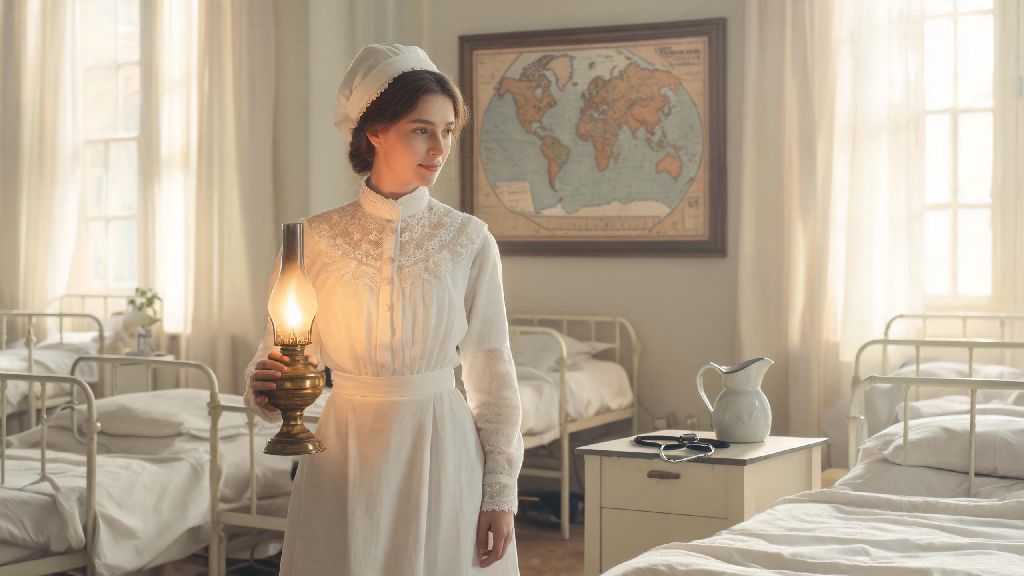
Another common myth is that she was just a kind woman who carried a lamp around to check on patients at night. While she did make rounds to check on patients after dark, earning her the famous “Lady with the Lamp” nickname, her real superpower was her ability to use data to convince politicians to make systemic change. She didn’t just want to help individual patients — she wanted to fix the broken systems that were making people sick in the first place.
Many people also assume she rejected her wealthy background entirely, but that’s not true either. She openly acknowledged that her privilege gave her access to education, political connections, and financial security that most women of the era didn’t have, and she used that privilege to advocate for people who didn’t have the same ability to speak up for themselves. Many modern nursing organizations still use her birthday, May 12, as International Nurses Day to honor her contributions to the field.
So next time someone asks you when and where was Florence Nightingale born, you don’t just have the basic answer of 1820 in Florence, Italy. You can also share how her privileged upbringing, unshakable sense of calling, and sharp analytical mind turned a wealthy young woman with an unusual dream into the founder of modern nursing. Her story isn’t just about holding a lamp for sick soldiers — it’s about using every advantage you have to make systemic change for people who can’t advocate for themselves. Even 200 years after her birth, her work still touches every person who has ever been cared for by a trained nurse.