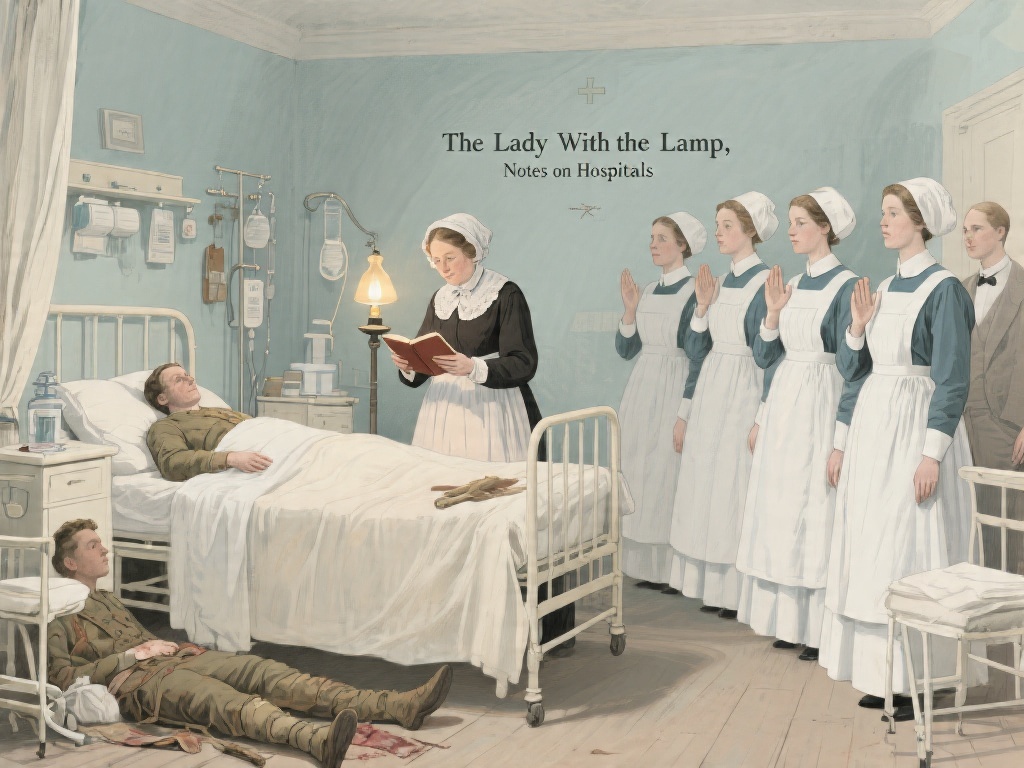
Most people know Florence Nightingale as the Lady with the Lamp, the founder of modern nursing who cared for wounded soldiers during the Crimean War. But far fewer people stop to ask: is Florence Nightingale a mathematician? I first stumbled on this question when I was researching underrecognized female STEM figures for a high school project, and what I found blew every assumption I had about her career. She didn’t just tend to sick people—she used hard data to save thousands of lives, and her work in math is still used in public health today.
Is Florence Nightingale a Mathematician? Breaking Down Her Formal Training
Nightingale’s mathematical education started far earlier than most people realize. Her father, William Nightingale, was a Cambridge-educated scholar who believed girls deserved the same academic training as boys. He began teaching her geometry, algebra, and Latin when she was just 7 years old, and by her early teens, she was already showing exceptional talent for statistical analysis.
Her parents pushed back hard when she told them she wanted to pursue formal math training, since wealthy women of her era were expected to focus on marriage, household management, and polite social skills. But Nightingale refused to back down, and eventually convinced her father to arrange private tutoring with some of the leading mathematicians of the time, including James Joseph Sylvester, a co-founder of the London Mathematical Society.
She passed her university-level math exams with honors when she was 20 years old, at a time when women weren’t even allowed to enroll at most formal higher education institutions in the UK. She spent the next decade applying her math skills to early nursing research, before she ever traveled to the Crimea.
How Her Mathematical Work Changed Crimean War Outcomes
When Nightingale arrived at the British military hospital in Scutari in 1854, she was horrified by the conditions. Wounded soldiers were lying on dirty floors next to rotting food and human waste, and there was no clean water or soap available for washing. More than 40% of patients admitted to the hospital were dying of preventable infections like typhus and cholera, not their battle injuries.
Nightingale immediately started collecting detailed daily data on patient mortality, tracking cause of death, ward conditions, and supply levels. She knew that plain numbers would not convince skeptical government officials to invest in hospital upgrades, so she created a new type of data visualization to communicate her findings clearly.
Her polar area diagram was one of the first widely used data visualization tools designed to make complex statistics accessible to non-experts. She presented the diagram to British parliament members, most of whom had no background in reading statistical reports, and it worked. Within six months of implementing her recommended sanitation reforms, the hospital’s mortality rate dropped to just 2%. I’ve seen copies of her original diagrams in a London museum exhibit a few years back, and even today, they’re easier to understand than most of the convoluted corporate data reports I’ve had to sit through for work.
Her Post-War Mathematical Contributions to Public Health
After the Crimean War ended, Nightingale didn’t hang up her math skills to focus solely on nursing education. She used her statistical expertise to push for widespread public health reform across the entire British Empire, and most of her recommendations are still standard practice today.
She wrote over 200 reports, pamphlets and books that used statistical analysis to push for public health reform across the British Empire. Some of her lesser-known mathematical contributions might surprise you:
- She developed a standardized system for collecting hospital patient data that is the foundation of modern electronic health record keeping used by hospitals and clinics worldwide
- She used statistical modeling to prove that overcrowding, poor ventilation and lack of clean water were the leading causes of high death rates in 19th century workhouses, leading to sweeping reform of these facilities
- She created a statistical formula to calculate the optimal number of beds per ward in hospitals to reduce infection spread, a rule that is still referenced in hospital design guidelines across North America and Europe
She became the first female member of the Royal Statistical Society in 1859, and later received an honorary membership from the American Statistical Association for her groundbreaking work. She also advised the British government on sanitation policies for military posts in India, where her reforms cut soldier mortality rates by more than 50% in just 10 years.
Why Most People Don’t Know About Her Mathematical Legacy
If Nightingale’s mathematical work is so impactful, why do most people only know her as the Lady with the Lamp? A big part of the reason is the cultural bias against women in STEM that was rampant in the 19th century, and that still lingers today. Victorian society was far more comfortable framing her as a gentle, selfless caregiver than a sharp, data-driven mathematician who challenged government officials and pushed for systemic change.
Her legacy as the Lady with the Lamp became so popular that it overshadowed her far more impactful work as a statistician for nearly a century. Even most school history textbooks only mention her nursing work, leaving out her STEM contributions entirely. It’s only in the last 30 years that historians have started to dig through her archives and bring her mathematical work to light, as part of a broader push to recognize underrated female scientists and innovators.
If you’ve ever filled out a patient intake form at a doctor’s office or seen a public health infographic about disease spread, you’re seeing a small piece of her mathematical work in action. She didn’t just make math interesting—she used it to save millions of lives, and that’s a legacy worth celebrating.
Next time you hear someone talk about Florence Nightingale only as the kind nurse who carried a lamp through hospital wards at night, you can share a fun, unexpected fact about her math skills. We don’t have to pick between her identity as a nurse and her identity as a math expert—she was both, and her work in both fields saved millions of lives over the last 170 years. To circle back to the question that brought us here: is Florence Nightingale a mathematician? The answer is a resounding yes, and her contributions to math and statistics are just as worthy of celebration as her work to build modern nursing. I make a point to mention her math work whenever I talk about her to the middle school kids I mentor in STEM programs, because it’s a great reminder that you don’t have to stick to one label to make a huge difference in the world. You can be caring and creative and analytical, all at the same time, just like she was.