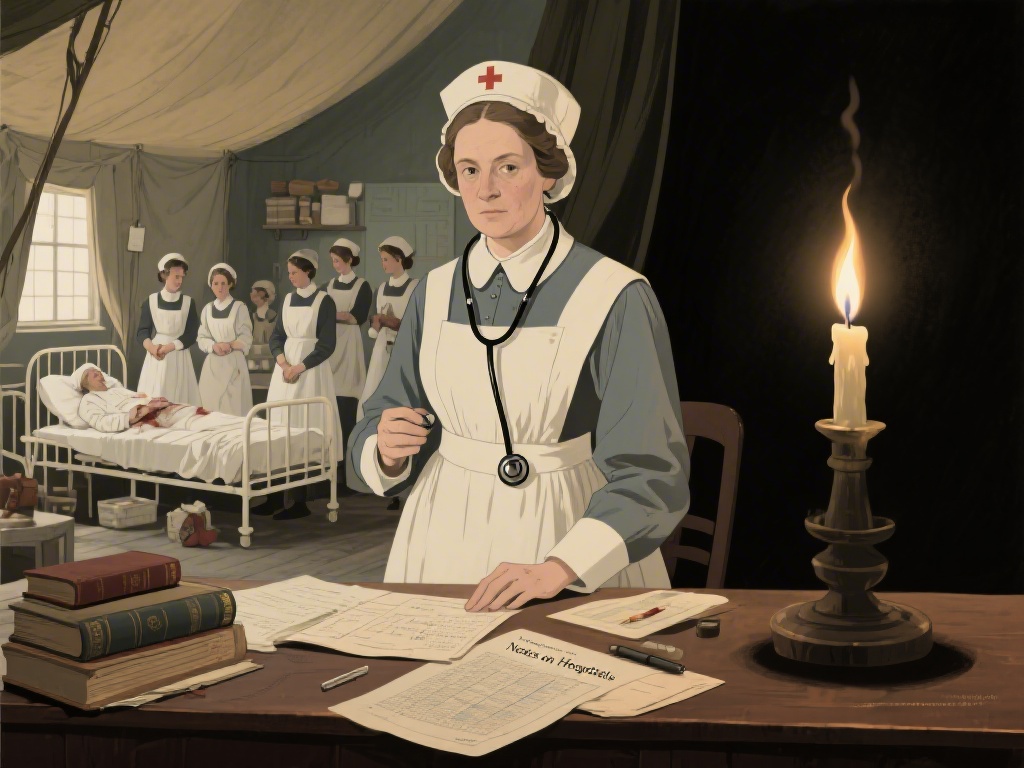
Who Was Florence Nightingale?
Florence Nightingale, born on May 12, 1820, was an English social reformer and statistician, but she is most famously known as the founder of modern nursing. Her groundbreaking work during the Crimean War and her advocacy for healthcare reform have made her an iconic figure in the history of medicine.
The Crimean War and Nightingale's Impact
Nightingale's fame surged during the Crimean War when she traveled to the war-torn region to care for the sick and wounded. Her efforts significantly improved sanitation and healthcare conditions, leading to a dramatic reduction in mortality rates. Her experiences during this period were documented in her book "Notes on Hospitals," which laid the foundation for modern hospital management.
Nightingale's Nursing Theory
Nightingale developed a comprehensive nursing theory that emphasized the importance of clean environments, patient comfort, and holistic care. Her work revolutionized the nursing profession, making it a respected and vital part of healthcare.
The Nightingale Pledge
One of Nightingale's enduring legacies is the Nightingale Pledge, which nursing students take as part of their graduation ceremony. The pledge commits them to uphold the highest standards of nursing and care.
Nightingale's Legacy in Modern Healthcare
Florence Nightingale's legacy continues to inspire nurses and healthcare professionals worldwide. Her focus on sanitation, cleanliness, and patient care has saved countless lives and improved healthcare standards globally.
Conclusion
Florence Nightingale was not just a nurse; she was a pioneer in healthcare reform and a symbol of compassion and dedication. Her work has left an indelible mark on the nursing profession and the world of healthcare.