Last spring, I camped in a southern English woodland and stayed up past 1 a.m. chasing a song so rich and varied I thought I was listening to three different birds at once. It took me 20 minutes of quiet creeping through brambles to confirm I’d found my first ever singing male nightingale. If you’ve ever stumbled on a surprisingly complex bird song after dark and wondered what do nightingales sound like, you’re not alone. Most people recognize the name from poems and folklore, but far fewer have ever picked their call out from other common woodland birds.
What Do Nightingales Sound Like? Core Characteristics of Their Song
If you’re listening for the first time, the biggest surprise when learning what do nightingales sound like is just how varied their output is. Only male nightingales sing, and each individual can master 200+ different song phrases that they mix and match throughout their performance. Unlike most songbirds that stick to a small set of repeated phrases, nightingales shift between sounds so quickly you might think multiple birds are calling at the same time.
They also have an unmatched vocal range for a bird that only weighs around 20 grams, roughly the same as a AA battery. Their songs mix high, clear whistles, low gurgling trills, and even sharp, staccato notes that cut through quiet woodland air clearly. I once recorded a nightingale that switched between 12 different phrase types in less than 30 seconds, with no repeats at all.
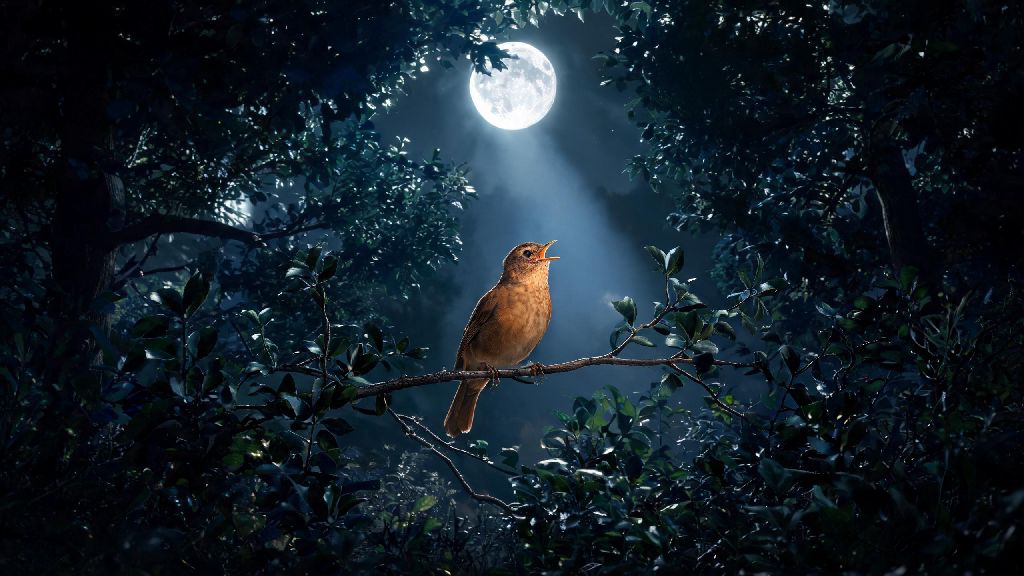
You’ll also notice a difference between their daytime and nighttime songs. Daytime songs are shorter, usually used to mark territory against rival males. Nighttime songs, the ones they’re most famous for, are longer, louder, and far more varied, as unpaired males sing to attract potential mates flying overhead.
Key Differences Between Nightingale Calls and Similar Bird Songs
This quick checklist takes all the guesswork out of figuring out what do nightingales sound like vs other common backyard and woodland birds. It’s extremely common to mix nightingales up with nighttime-singing robins, blackbirds, or song thrushes if you don’t know what cues to look for. Blackbirds, for example, have mellow, slow, consistent phrases that they repeat on loop, with none of the rapid shifts you’ll hear from a nightingale.
Night-singing robins are another common source of confusion, especially in urban areas where street lights trick them into singing after dark. Their songs are much thinner, higher pitched, and quieter than a nightingale’s, with far less variation in tone. Use this quick 3-point test to confirm you’re hearing a nightingale:
I used to mistake nighttime robin songs for nightingales for years until I learned the volume trick. If you can hear the song clearly through a closed window 30 feet away, it’s almost certainly a nightingale, not a robin or blackbird.
Rare Nightingale Sounds You Might Not Know About
Most resources that explain what do nightingales sound like only cover their famous breeding song, but they have a whole repertoire of lesser-known calls you might hear if you spend enough time around their nesting sites. The first is their contact call, a soft, low tuc-tuc sound that mated pairs use to communicate with each other while building nests or foraging for food. It’s very quiet, so you’ll have to be within 10 feet of a pair to pick it up, and it’s most often heard during the day in early spring.
They also have a distinct alarm call they use if a predator like a cat, crow, or fox gets too close to their nest. It’s a sharp, scolding chatter that sounds almost like a wren’s alarm call, but deeper and slower. I’ve triggered this call before by getting too close to a nest hidden in a hawthorn bush, and the male kept making the noise for 5 minutes after I backed away to let him know the threat was gone.
Juvenile nightingales also have a unique, messy version of the adult song that you can hear in late June and early July. Young males practice their phrases for 2-3 weeks after leaving the nest, often during the day, and their songs have frequent pauses, missed notes, and repeated phrases that adult birds don’t use. I found a juvenile practicing last year, and it kept messing up the long trill part of its song and pausing like it was correcting itself before trying again.
Top Tips to Hear Nightingales in the Wild Responsibly
If you’re heading out specifically to listen for nightingales, it helps to listen to a few clips of what do nightingales sound like before you go, so you know what to listen for. Hearing a nightingale sing live is an unforgettable experience, but you have to approach it carefully to avoid disturbing the birds during their sensitive breeding season. First, pick the right habitat: nightingales prefer thick, low scrub and woodland edges, not deep, dense forest. They like to perch 3-6 feet off the ground in dense bushes where they’re hidden from predators while they sing.
Timing is also key: peak singing time is between 11 p.m. and 3 a.m. from mid-April to late May, when unpaired males sing the longest to attract mates. You might hear them earlier in the evening too, but their most varied, loud performances happen in the middle of the night when there’s less competing noise from other birds and humans.
Stay quiet and still once you find a spot where you think nightingales might be singing. They’re extremely shy, and even the quietest conversation or sudden movement will make them stop singing immediately and hide. Wear dark clothing to avoid being spotted, and bring a low-powered red light if you need to see where you’re walking, as white light will startle them far more.
Most importantly, never use recorded nightingale songs to try to attract them to your spot. Playback tricks males into wasting energy singing to a fake rival instead of mating or feeding their young, and many local conservation groups ban the practice entirely during breeding season. If you’re patient enough to sit quietly for 30 minutes, you’ll almost always hear a male sing on his own if he’s in the area.
Once you learn to pick out their unique mix of trills, whistles and rapid phrase shifts, you’ll never again wonder what do nightingales sound like when you hear one after dark. These tiny birds have one of the most impressive vocal ranges in the animal kingdom, and hearing one sing live is an experience you won’t forget anytime soon. Take the time to seek them out responsibly during breeding season, and you’ll get to enjoy one of nature’s most magical performances for yourself.