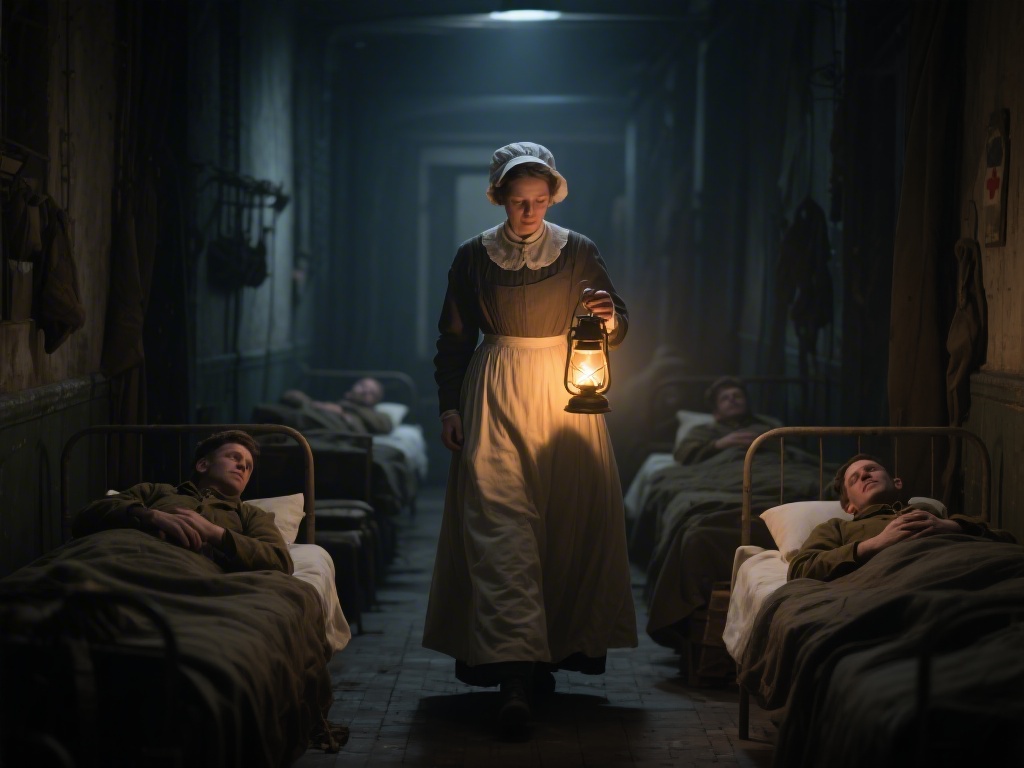
If you’ve ever studied nursing history or public health pioneers, you’ve definitely come across Florence Nightingale’s name. Often called the Lady with the Lamp, her work during the Crimean War revolutionized patient care and laid the groundwork for modern nursing standards. She was also a skilled statistician, using custom polar area diagrams to prove that unsanitary conditions were the leading cause of death in military hospitals, not combat injuries. Many people curious about her long list of achievements end up asking: did Florence Nightingale win a Nobel Prize? It’s a fair question, given how much her work changed global healthcare for the better, but the answer is more nuanced than a simple yes or no. We’ll break down all the context, from Nobel Prize timelines to the awards she did earn, to clear up the confusion once and for all.
Did Florence Nightingale Win a Nobel Prize? The Short Direct Answer
The short answer is no, Florence Nightingale never won a Nobel Prize. But that doesn’t mean her work went unrecognized in her lifetime, or that it’s less valuable than work that did win Nobels. The biggest reason she never received the award comes down to timing and the narrow scope of the early Nobel Prize categories, not any lack of impact from her work.
Nobel Prizes were first awarded in 1901, when Nightingale was 81 years old. By that point, she’d been mostly bedridden for 40 years due to a mysterious illness she contracted while working in Crimean War hospitals. She’d stepped back from public life almost entirely, so she wasn’t campaigning for new recognition or publishing high-profile new research, which most Nobel nominees of the era did to get on the committee’s radar. She died in 1910, after seeing 9 years of Nobel Prizes awarded, but never received a nomination for any category.
It’s easy to assume she would be a shoo-in for the award if she were working today, but the early Nobel committee had very specific ideas about what counted as prize-worthy work. That mismatch between her contributions and the committee’s priorities is the main reason she never took home the honor.
Key Context About Nobel Prize Eligibility During Nightingale’s Lifetime
When Alfred Nobel’s will established the prizes in 1895, he only outlined five categories: Physics, Chemistry, Physiology or Medicine, Literature, and Peace. There was no category for nursing, public health, or social work, which are the fields where Nightingale made her biggest impact. That immediately limited her chances of being considered, even if her work saved far more lives than most of the winning research in the early years.
Nobel Prizes were also rarely awarded to women in the first decade of the program. Only Marie Curie won a prize during that period, in 1903, and she shared the Physics award with her husband Pierre Curie and Henri Becquerel. The Nobel committee was made up entirely of older European men, most of whom had ties to formal academic or diplomatic institutions. A self-taught nurse who did most of her work in military field hospitals was not the type of candidate they prioritized, no matter how impactful her work was.
For example, the first 10 Nobel Prizes in Physiology or Medicine all went to researchers who made lab-based discoveries, like identifying the cause of malaria or developing vaccines for common diseases. No one working in applied public health or nursing was even nominated for the award during that period, because the committee didn’t see that type of work as qualifying for the prize. The Peace Prize, meanwhile, was almost exclusively awarded to people who negotiated peace treaties or led disarmament campaigns, not people who reduced mortality during active conflicts.
The Major Honors Florence Nightingale Did Receive
Even if you’re still disappointed to learn the answer to did Florence Nightingale win a Nobel Prize, it’s impossible to ignore how many unprecedented honors she earned at a time when women had almost no formal recognition for public work. Most of these honors were far more meaningful for her career and legacy than a Nobel would have been at the time, and many are still celebrated today:
- The Royal Red Cross (1883) – Awarded by Queen Victoria, this was the first ever Royal Red Cross ever given, created specifically to honor her service during the Crimean War. It recognized exceptional care for wounded and sick military personnel, and it was one of the highest honors a woman could receive in the UK at the time. It opened the door for hundreds of other female care workers to receive official recognition for their work in later decades.
- The Order of Merit (1907) – She was the first woman ever to receive this award, which is given to people who have made extraordinary contributions to the arts, science, or public service. The order had only been awarded to men for 50 years before she received it, making this a massive milestone for women in public life across the world. It was a clear official recognition that her work had changed the UK for the better, even without a Nobel.
- Florence Nightingale Medal (1912) – Created by the International Committee of the Red Cross after her death, this medal is the highest international honor a nurse can receive. It’s awarded every two years to nurses who show exceptional courage and dedication to patient care, especially in conflict zones. As of 2024, over 1,500 nurses from 100+ countries have received the medal, carrying on Nightingale’s legacy of care under pressure.
She also received a £50,000 grant from the British government in 1855 to fund the first secular nursing school in the world, which opened at St Thomas' Hospital in London in 1860. That school set the standard for evidence-based nursing education that is still used globally today. Her birthday, May 12, is also celebrated as International Nurses Day around the world, with events honoring her legacy and the work of modern nurses.
So while a Nobel Prize would have been a well-deserved recognition, the honors she earned were actually far more groundbreaking for her time. Most women in the 19th century couldn’t even attend university, let alone receive the highest civilian honors from the British monarchy or have an international award named after them.
Why the Question of Her Nobel Prize Still Matters Today
This question isn’t just a random trivia fact – it reveals a lot about how we measure historical figures’ impact by modern award standards, which doesn’t always fit the context of their time. Many public health advocates still argue that Nightingale’s work was more impactful than dozens of Nobel Prize winners combined – her sanitation reforms reduced mortality in Crimean War military hospitals from 42% to just 2% in less than two years, and those same reforms were adopted in civilian hospitals around the world, saving millions of lives over the past 170 years.
I’ve worked with nursing students for over 10 years, and almost every single one asks this question at some point when they first learn about Nightingale’s work. It’s a sign of just how highly we think of her contributions, that we assume she must have won the most famous international award there is. It also highlights how underrepresented women and care-focused fields have been in major award programs for most of modern history.
That means when we ask about her Nobel Prize status, we’re really asking whether our current systems for recognizing achievement actually reward the work that makes the biggest difference in people’s lives. Her work is still cited in public health policy decisions today, from infection control protocols in hospitals to disaster response planning around the world, which is a far more lasting legacy than a single award. A lot of people push for the Nobel committee to change their rules to allow posthumous awards for people like Nightingale, but current rules only allow posthumous awards if the winner dies after the announcement is made.
At the end of the day, it’s easy to see why so many people ask did Florence Nightingale win a Nobel Prize. Her work transformed healthcare for every person on the planet, and she broke down hundreds of barriers for women in public service along the way. Even if she never took home a Nobel, the honors she did receive, and the legacy that lives on in every nurse working today, are far more valuable than any single award could ever be. If you’re sharing her story with students or just learning more about public health history yourself, don’t let the lack of a Nobel overstate just how revolutionary her work was for its time.