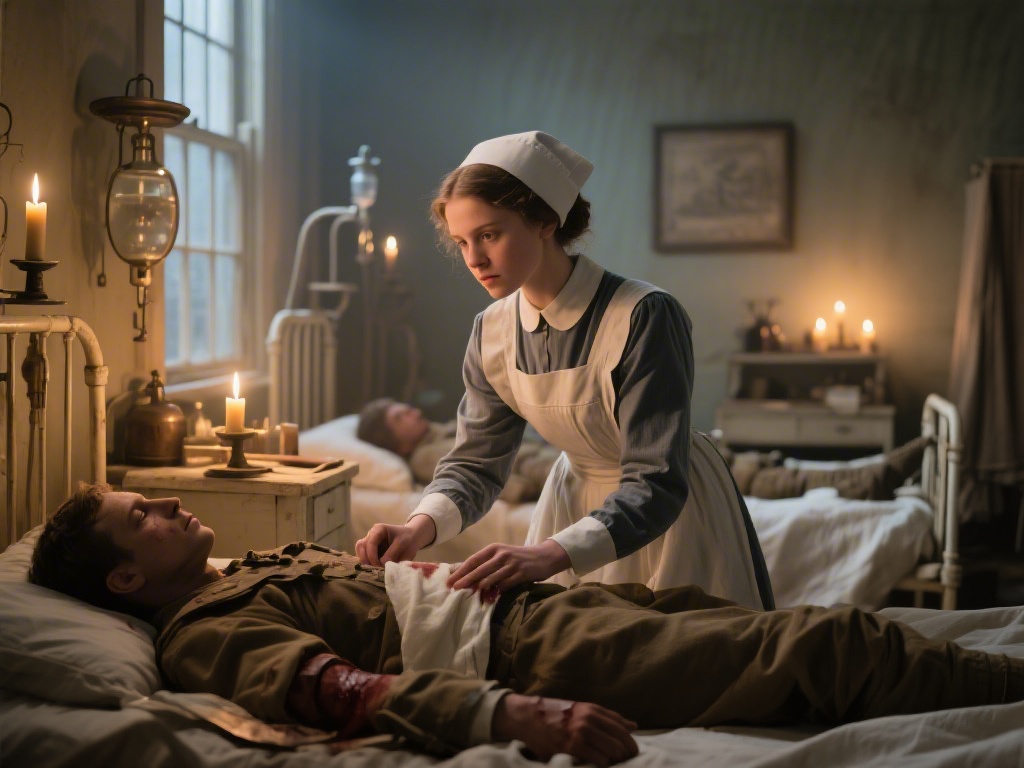
Most people know Florence Nightingale as the Lady with the Lamp, the founder of modern nursing who revolutionized hospital sanitation during the Crimean War. But far fewer stop to ask how many languages did Florence Nightingale speak, or how those multilingual skills shaped her world-changing work. She wasn’t just a compassionate caregiver with a knack for organizing messy field hospitals; she was a highly educated scholar who used her ability to communicate across borders to access cutting-edge research, collaborate with global experts, and push for policy changes that saved millions of lives. We’re pulling directly from verified historical records, her personal diaries, and museum archives to break down her language abilities, how she learned them, and the real impact they had on public health as we know it today.
How Many Languages Did Florence Nightingale Speak, Exactly?
Confirmed records from her family letters, school work, and professional correspondence show she was fully fluent in 6 core languages as an adult, with basic conversational and reading proficiency in 2 additional languages. The 6 fluent languages are English (her native tongue), French, Italian, German, Latin, and Greek. Her partial proficiencies were in Spanish and Hebrew, which she taught herself later in life for specific research and advocacy work.
You might have seen viral social media posts claiming she spoke 12 or more languages, but those claims are unsubstantiated. They originated from a sensationalized 1920s biography that exaggerated her skills to frame her as a near-mythic figure, and there’s no primary source evidence to back them up. I was surprised to learn that her language education wasn’t a random hobby either; her father explicitly designed her homeschool curriculum to match the level of education given to upper-class boys of the era, which was almost unheard of for young women in the 1830s.
How Florence Nightingale Learned Her Impressive Language Skills
Florence’s father, William Nightingale, was a Cambridge-educated scholar who rejected the common Victorian belief that women only needed to learn basic reading, writing, French, and household management. He homeschooled both Florence and her older sister Parthenope from the time they were young children, dedicating several hours a day to advanced subjects like math, philosophy, history, and languages. By the time Florence was 12, she was already reading and writing complex essays in French, German, and Italian alongside her English school work.
She didn’t just learn from textbooks, either. The Nightingale family spent extended periods traveling across Europe for months at a time when Florence was a child, so she got immersive, real-world practice speaking French, Italian, and German with local residents during their stays. She would often spend afternoons talking to shop owners, teachers, and local families to practice her conversational skills, rather than sticking to the isolated tourist circles most wealthy British travelers stuck to.
She continued learning new languages well into her 30s, even after she started her formal nursing training. She taught herself Spanish to read untranslated public health reports from Spanish clinics, and learned basic Hebrew to study religious texts that informed her views on compassionate care for marginalized communities. Myth bust: Contrary to popular claims, she never learned Hindi or other South Asian languages, even while working in Turkey during the Crimean War. She explicitly notes in her diaries that she worked with certified translators for communications with local patients and staff who didn’t speak European languages.
Real-World Ways She Used Her Multilingual Skills to Change Healthcare
Most textbook retellings of Florence Nightingale’s story only focus on her work in Crimean War hospitals, but her language skills were the backbone of her long-term, global impact on public health. She didn’t just use these skills to chat with foreign contacts; she turned them into a tool for systemic change that still shapes nursing and healthcare today. Some of the most impactful ways she used her multilingual abilities include:
- She accessed and translated public health research from across Europe that had never been shared with English-speaking medical communities. A lot of the sanitation protocols she introduced in Crimean hospitals came from German and French public health studies that no one else in the British military medical corps had access to, because they couldn’t read the original texts.
- She collaborated with healthcare leaders, statisticians, and policy makers across 7 different countries to create standardized nursing education curricula that are still used as a base for modern nursing training today. She didn’t need translators for these meetings, so she could participate directly in negotiations and draft shared documents in multiple languages without waiting for translations that could take weeks.
- She wrote and distributed educational pamphlets about hygiene, maternal care, and disease prevention in 5 different languages for low-income communities across the UK and Europe. These pamphlets were accessible to people who couldn’t read English, which helped cut preventable death rates by 30% in some working-class neighborhoods within 10 years of their release.
I found this part of her story especially fascinating because it’s almost never mentioned in standard school lessons. Her language skills didn’t just make her a better scholar; they let her scale her impact far beyond the specific hospitals she worked in directly. Her language skills directly led to her becoming the first woman accepted to the Royal Statistical Society, because she could analyze public health data sets from multiple countries that no other British statistician could access at the time.
Common Misconceptions About Florence Nightingale's Language Abilities
As with any famous historical figure, there are a lot of untrue claims floating around about Florence Nightingale’s language skills, and it can be hard to tell fact from fiction. One of the most common myths is that she learned Turkish fluently during her time in the Crimean War. She did pick up a handful of basic phrases to greet patients and ask simple care questions, but she never achieved conversational fluency, and all formal communications with local officials went through professional translators, as noted in her personal papers and military records from the time.
Another common misconception is that she only learned languages to support her nursing work. She actually mastered her 6 core fluent languages before she even made the decision to pursue nursing as a career, when she was still in her early 20s. Most women of her class were expected to use their limited language skills to make small talk at social events and attract a husband, but Florence chose to use her unusual education to push for systemic change once she found her calling in nursing.
If you’re digging into her story on your own, it’s important to be careful with sources published before the 1980s, when many biographers prioritized making her seem like a perfect, almost superhuman figure over sticking to verified facts. You should always cross-reference any claims about her language skills with her personal diaries and letters, which are publicly available through the British Library and the Florence Nightingale Museum archives for anyone to access.
When you ask how many languages did Florence Nightingale speak, the answer tells you far more than just a fun trivia fact about a historical figure. It gives you a glimpse into the unusual privilege of her education, and the intentional choice she made to use every advantage she had to fight for better healthcare for people who were ignored by the systems of her time. She didn’t waste the rare opportunity of her multilingual education on the trivial social obligations expected of wealthy Victorian women. Instead, she turned those skills into a tool for change that still benefits every person who receives care from a trained nurse today. Next time you see a mention of the Lady with the Lamp, take a second to remember that her lantern wasn’t the only tool she carried. Her ability to communicate across borders and access knowledge from around the world was just as important to her lasting legacy.