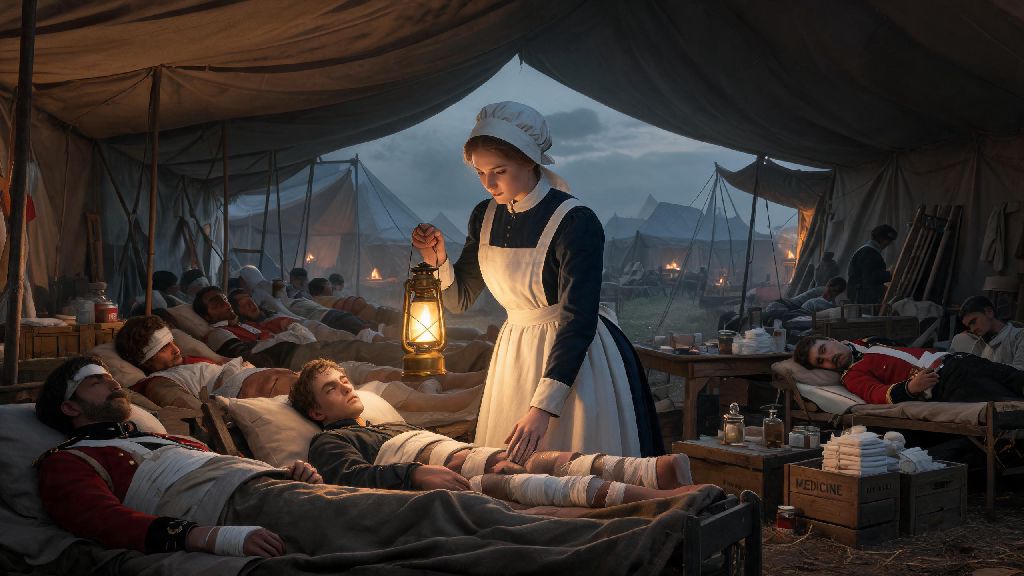
Most people know Florence Nightingale as the Lady with the Lamp, but far fewer understand the full scope of her work during one of 19th century Europe’s deadliest conflicts. If you’ve ever wondered what did Florence Nightingale do in the Crimean War, you’re in the right place. We’re breaking down her lesser-known contributions beyond the late-night ward checks, plus how her work laid the groundwork for modern nursing as we know it today. This isn’t just dry textbook history either—many of the protocols she tested on the frontlines are still used in hospitals across the world right now.
What Did Florence Nightingale Do in the Crimean War First? Answering the Call to the Front
Nightingale was working as a nurse supervisor in a London hospital in 1854 when she received a letter from the British Secretary of War, asking her to travel to Crimea to lead a team of nurses to care for wounded soldiers. Reports had been circulating in British newspapers that troops were dying from neglect and preventable disease at far higher rates than they were dying from battle injuries, and the government was facing public pressure to act. She assembled a team of 38 nurses, including religious sisters and experienced civilian care providers, and arrived at the Scutari military hospital base two months later.
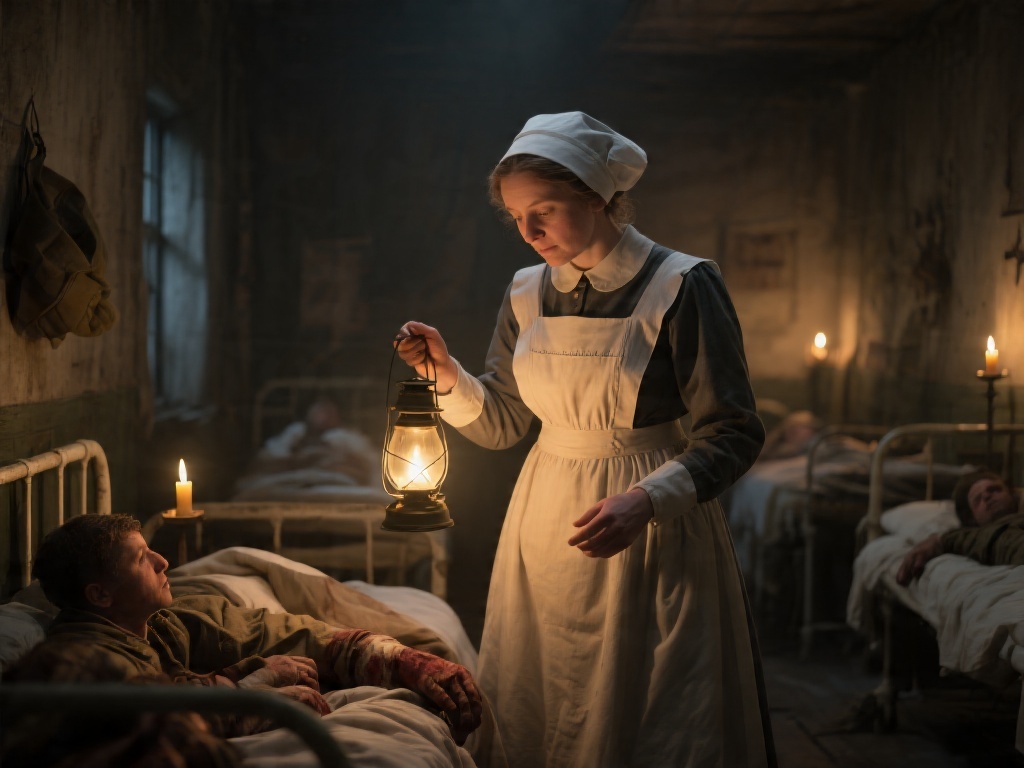
What she found at Scutari was worse than any report had described. More than 4,000 wounded soldiers were crammed into spaces meant to hold less than half that number, with sewage leaking into the hallways and no access to clean water or bandages. The British army initially refused to let female nurses work in military hospitals because they thought women were unqualified and would disrupt male military operations. When most people ask what did Florence Nightingale do in the Crimean War, they imagine her walking through wards at night, but that was just a tiny part of her daily work. She spent the first three months fighting with military leadership just to get access to basic supplies and permission to clean the wards, before she could even start caring for patients directly.
Her Radical Sanitation Reforms That Cut Death Rates by 75%
Once she finally got permission to make changes to the wards, Nightingale moved fast to address the filth that was killing most of her patients. She knew from her earlier work studying health outcomes in poor London neighborhoods that dirty, crowded spaces spread sickness, even if germ theory hadn’t been widely proven yet. She used her own personal funds to buy medical supplies, clean bedding, and even fresh food for the wards because the military supply chain was completely broken and no one else would provide these essentials.
She implemented a strict set of rules for the hospital that had never been used in military care before, including:
At the time, many military leaders dismissed her changes as unnecessary, saying that soldiers were expected to die from disease during war. But Nightingale refused to back down, and as the death rate dropped month after month, even her biggest critics couldn’t argue with the results. I always find it wild that she figured this out years before Pasteur’s germ theory research was widely accepted, just by paying attention to patterns in her patient records. She didn’t know exactly why clean spaces reduced deaths, but she could see the clear correlation, and she ran with it. Within six months of implementing her reforms, the death rate at Scutari dropped from 42% to just 2%.
The Hidden Data Work That Launched Modern Public Health
Most people don’t realize that Nightingale was a skilled statistician long before she traveled to Crimea. She’d spent years studying health outcomes for poor communities in London, so she knew how to track data and spot trends. This data work is another often overlooked part of what did Florence Nightingale do in the Crimean War, even though it’s the foundation of modern public health reporting. She invented the polar area diagram, a type of circular bar chart, to make her data accessible to politicians who refused to read 100-page reports about hospital conditions. The diagram clearly showed that more than 80% of Crimean soldier deaths were from preventable, sanitation-related diseases, not battle injuries, and it convinced parliament to fund permanent sanitation reforms for all military hospitals just a year after she returned home.
She didn’t just present data to win arguments either. She used her patient records to identify gaps in care, including the fact that young, newly enlisted soldiers were far more likely to die from disease than older, more experienced troops. She found that new soldiers often arrived at the front malnourished and with no access to basic healthcare before they even saw battle, so she pushed for pre-enlistment health checks and better rations for all troops. She later became the first woman elected to the Royal Statistical Society, a huge honor for a woman in a male-dominated field in the 1850s.
Her Post-War Work That Grew Directly From Her Crimean Experiences
When Nightingale returned to Britain in 1856, she was a national hero, but she didn’t stop working. She’d contracted brucellosis, a bacterial infection spread by unpasteurized dairy, while working in the Crimean wards, and she was bedridden for nearly 30 years after her return. But she didn’t let that slow her down. She worked from her bed, writing thousands of letters to politicians, nurses, and public health officials across the world to push for reform. She pushed for the first nursing school in the world, which opened at St. Thomas’ Hospital in London in 1860, and it set the standard for nursing education that is still used today. The school required formal training, hands-on clinical experience, and standardized testing for all nurses, which was completely unheard of at the time.
She also wrote Notes on Nursing, a short, easy-to-read guide that was sold to regular people, not just medical professionals, to teach them how to keep their homes clean and prevent the spread of disease. The book sold more than 10,000 copies in its first year alone, and it’s still used as a reference text in some nursing programs today. She also advocated for better sanitation in workhouses, poor neighborhoods, and even Indian military bases, leading to widespread public health reforms that cut death rates for low-income communities across the British Empire by more than 30% in just 20 years. It's easy to forget that all of this work grew directly from what she saw and learned while working in Crimean military hospitals.
When you step back and look at all her contributions, it’s clear that the answer to what did Florence Nightingale do in the Crimean War goes far beyond carrying a lamp to check on wounded soldiers. She didn't just care for patients—she completely reimagined how healthcare is delivered, used data to drive policy changes, and opened doors for millions of women who wanted to work in nursing after her. Her legacy is still visible in every hospital sanitation protocol, every public health report, and every nurse practicing today, and it all started with her decision to travel to a war zone to do the work no one else wanted to do.