If you’ve only ever heard the nickname “Lady with the Lamp” attached to Florence Nightingale, you probably don’t have the full answer to how was Florence Nightingale beyond the basic story of a nurse caring for wounded soldiers. Most pop culture depictions reduce her to a gentle, selfless caregiver, but that barely scratches the surface of her accomplishments. She was a statistician, a social reformer, a fierce lobbyist, and a trailblazer who defied every expectation for women of her era to build systems that still save millions of lives today. I still remember being shocked when I first learned how much of her work happened far from hospital wards, and I wanted to put together this guide to share the full, unfiltered story of her life.
How Was Florence Nightingale’s Early Life Different From Typical Victorian Women?
Florence Nightingale was born in 1820 to a wealthy, well-connected British family, and from her childhood, she was expected to follow the path laid out for upper class women of the time: marry a wealthy man, manage a household, and host social events. She was unusually well educated for a girl of her era, tutored by her father in math, languages, and history, and she showed a rare talent for statistics from a young age. When she was 16, she said she received a divine calling to dedicate her life to caring for the sick, a goal her family immediately rejected.
Nursing in the 1830s and 1840s was seen as a low-status, dangerous job, reserved for working class women with no other options, and hospitals were unsanitary, overcrowded spaces where most patients died of preventable infections rather than their original ailments. She rejected two formal marriage proposals specifically because she feared married life would force her to abandon her dream of working in healthcare. She spent years secretly studying medical texts and public health reports, and eventually convinced her family to let her train as a nurse in Germany when she was 31, far later than most people entered the field at the time.
Her Revolutionary Work During the Crimean War
In 1854, reports began circulating in British media that wounded soldiers in the Crimean War were dying at catastrophic rates, not from battle injuries, but from typhus, cholera, and malnutrition in poorly run military hospitals. The Secretary of War, who knew Nightingale from her previous work on healthcare reform, invited her to bring a team of nurses to the Scutari military hospital in Turkey to help. She arrived with 38 trained nurses, and was immediately met with hostility from male military doctors, who refused to let the women treat patients, claiming they were unqualified.
Instead of backing down, Nightingale and her team got to work cleaning the wards, setting up a dedicated laundry facility to stop the spread of infection, creating a specialized kitchen to cook nutritious meals for patients, and arranging for regular delivery of clean bandages and medical supplies. She started keeping meticulous records of patient deaths and their causes, using a custom polar area diagram (a type of pie chart she invented) to show that 83% of soldier deaths were from poor sanitation, not combat wounds. Within 6 months of her team arriving, the mortality rate at the Scutari hospital dropped from 42% to just 2%.
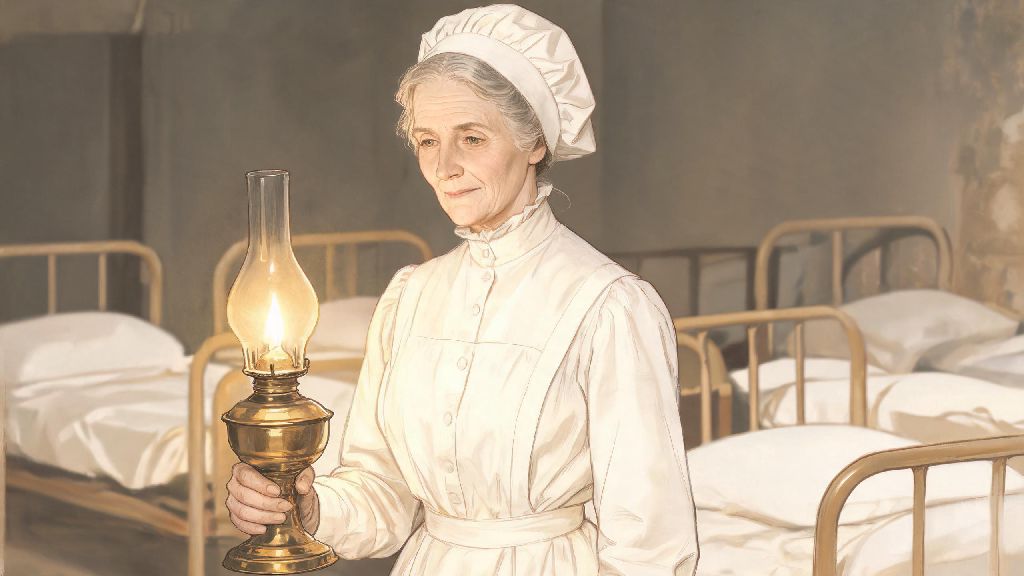
The “Lady with the Lamp” nickname came from her habit of making rounds of the wards at night, carrying an oil lamp, to check on patients who were still awake. The British press turned her into a national hero while she was still in the Crimea, and she used that public fame to push for permanent change once she returned home.
Post-War Reforms That Changed Global Healthcare Forever
Nightingale didn’t retire after the war ended, and she didn’t stick to only working on nursing care. She used her public profile to lobby Parliament for sweeping healthcare reforms, starting with the military hospital system, then expanding to all public hospitals across the UK and eventually the world. In 1860, she raised enough public funds to open the world’s first secular nursing school at St Thomas’ Hospital in London, which for the first time set formal training requirements and professional standards for nurses, turning the field from a low-status job to a respected career for women.
Her 1859 book Notes on Nursing: What It Is, and What It Is Not was the first ever formal nursing textbook, and it was written to be accessible to regular people, not just medical professionals, so everyday people could learn how to care for sick family members at home safely. Some of her most enduring reforms include:
- Mandatory sanitation protocols for all public hospitals, including regular handwashing, ward cleaning schedules, and waste disposal rules that are still standard practice today
- Official, standardized training requirements for all nurses, including both classroom learning and hands-on clinical practice
- Data-driven public health policy, where government healthcare decisions had to be backed by statistical evidence rather than anecdote or the personal opinions of wealthy male doctors
Her Notes on Nursing book sold more than 10,000 copies in its first 10 years of release, and is still used as a reference in nursing programs around the world today. She also advocated for women’s access to higher education, better working conditions for female factory workers, and improved healthcare for poor people living in urban slums, areas that almost no other wealthy reformers of the era paid attention to.
Common Misconceptions About Florence Nightingale
Most popular depictions of Nightingale leave out huge parts of her life and work, leading to a lot of common myths about who she was and what she did. The biggest myth is that she was only a gentle caregiver who spent all her time tending to patients. In reality, she was a sharp, highly skilled statistician, and the first woman ever elected to the Royal Statistical Society, an honor she received in 1859 for her work using data to prove the value of sanitation.
Another common myth is that she stopped working after the Crimean War. She actually contracted a bacterial infection while working in Scutari that left her bedridden for 30 years, starting when she was 38. She wrote more than 200 reports, pamphlets and books during her 30 years of bedridden work, most of which focused on public health policy rather than direct patient care. She worked 10 to 12 hours a day from her bed, meeting with politicians, writing letters to healthcare leaders across the globe, and reviewing data to refine her reform proposals. Despite being seen as a gentle caregiver in popular culture, she was known for her sharp, uncompromising attitude when pushing for reforms that would save lives, and she didn’t hesitate to call out powerful politicians or doctors who stood in her way.
She also didn’t love the “Lady with the Lamp” nickname, and saw it as a distraction from the actual policy work she was doing. She thought the popular image of her as a gentle, selfless nurse made it harder for people to take her policy proposals seriously, and she rarely talked about her time in the Crimea in her later years, preferring to focus on future reform work instead of past achievements.
When you put all these pieces together, the answer to how was Florence Nightingale is far more complex and inspiring than the simple popular myth most of us grow up with. She wasn’t just a kind woman who cared for sick soldiers. She was a brilliant, stubborn, uncompromising reformer who defied every expectation of her family and her society to build systems that still protect millions of people every single day. Her legacy isn’t just a nickname or a portrait of a woman carrying a lamp. It’s every nurse working in a properly sanitized hospital, every public health policy backed by data, and every woman who chooses a career path that defies the expectations placed on her. It’s easy to see why she’s still considered one of the most important figures in modern healthcare history, more than a century after her death.