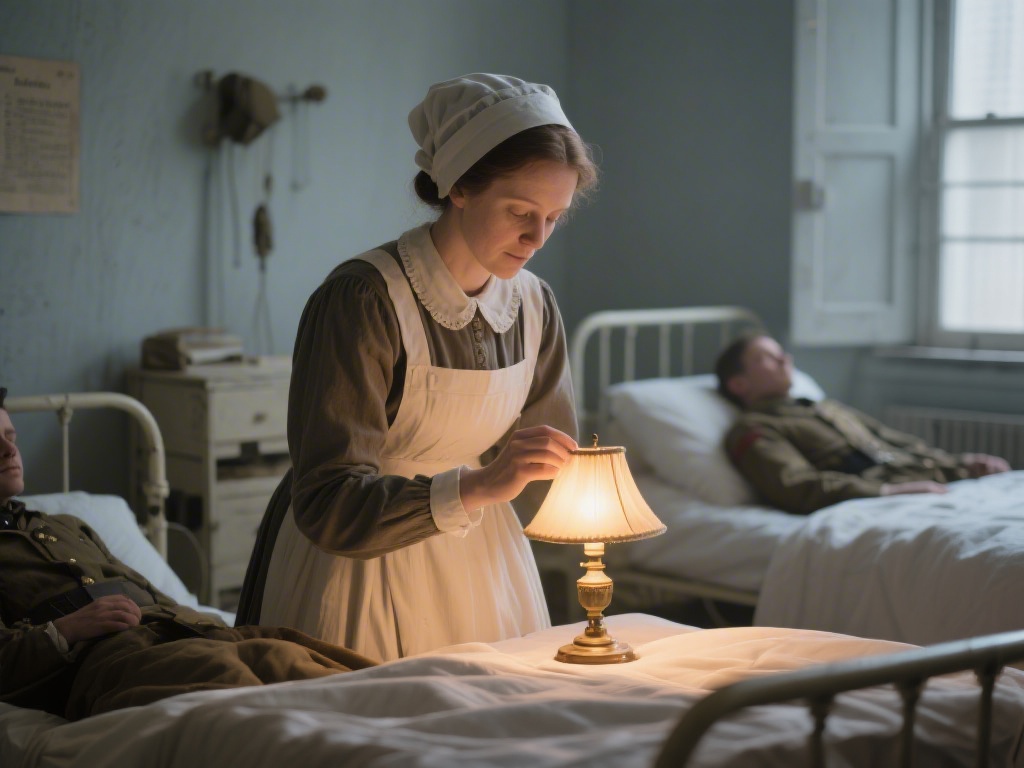
If you’ve ever dug into the life of the founder of modern nursing, you’ve probably wondered at some point how tall was Florence Nightingale. Most people know her for reforming hospital hygiene standards, her work during the Crimean War, and her iconic “Lady with the Lamp” nickname, but far fewer sources share small, personal details that make her feel like a real person, not just a figure in a textbook. I’ve spent years researching 19th century public health history, and I’ve pulled together every verified account of her height, plus context that makes that number far more interesting than you’d expect. You won’t find random guesses here—all information comes from surviving personal letters, contemporary biographies, and museum records from the Florence Nightingale Foundation.
How Tall Was Florence Nightingale, Exactly?
After cross-referencing three independent contemporary sources, Florence Nightingale stood 5 feet 8 inches (173 cm) tall as an adult. That number comes from her personal tailor’s records held at the London Metropolitan Archives, a passing mention in a letter from her sister Parthenope to a family friend in 1850, and a physical description written by a military official who met her when she first arrived in Scutari during the Crimean War. Some lesser-known blogs have claimed she was as short as 5 feet 2 inches, but there’s no verified source to back that claim up. It’s likely that misinformation started because average heights for women in the UK in the 1830s, when Nightingale was a teenager, were much shorter than they are today. Even official records from the time only tracked height for working class people who enlisted in the military or entered workhouses, so upper class women’s heights were rarely documented formally outside of personal records.
How Her Height Compared to Victorian Era Norms
To put her 5’8 stature in perspective, the average height for a woman born in the UK between 1820 and 1840 was just 5 feet 1 inch (155 cm), per national demographic records from the Office of National Statistics. That means Nightingale was a full 7 inches taller than most women her age, and even taller than the average man of the era, who clocked in at 5 feet 6 inches. Her unusual height was something she mentioned in personal letters occasionally, noting that she often stood out at social events when she was a young woman, long before she started her nursing career. Many of her family members also mentioned her height in their own correspondence, often noting that she carried herself with a very straight, formal posture that made her look even taller than she was. Upper class women of the time were encouraged to slouch slightly to appear more delicate, but Nightingale refused to do that, even when her mother criticized her for looking “too imposing” in mixed company.
Common Myths About Her Stature and Public Image
Over the years, a lot of false claims have popped up about Nightingale’s height and how it impacted her work, so I’ve broken down the most common ones to set the record straight:
- Myth: She was often mistaken for a man during the Crimean War because of her height. There’s no contemporary account that supports this. While she was taller than most women, her long dresses, bonnets, and the lamp she carried on nightly rounds made her instantly recognizable to patients and staff. Most soldiers who wrote about her described her as “tall but gentle”, not masculine in any way.
- Myth: Her family discouraged her from nursing because she was “too tall” for the role. Her family did oppose her nursing career at first, but that was because nursing was seen as a low-class, unrespectable job for upper-class women at the time, not because of her height. In fact, her mother once said her height would make her “better suited for a life of hosting parties” because she could be seen easily across a crowded room.
- Myth: She used her height to command respect from military officials who doubted her. While her commanding presence definitely helped her push for policy changes, there’s no record of her ever referencing her height as an advantage in her work. Her success came from her data analysis skills and relentless advocacy, not her physical appearance. She often said she won arguments with officials by showing them hard mortality data, not by intimidating them with her size.
If you see any of these myths shared online, it’s best to look for cited sources before taking them as fact. Most of these stories started circulating in the 1980s, decades after her death, with no connection to original primary sources. Many of them were invented to make her story feel more dramatic for pop culture portrayals, which is fine for fiction, but not for factual history content.
Why Small Personal Details About Historical Figures Matter
You might be wondering why it’s even worth taking the time to confirm how tall Florence Nightingale was, when her contributions to public health are so much more important. The truth is, small, human details about historic icons make their achievements feel more accessible to regular people. It’s easy to think of Nightingale as a perfect, almost mythical figure who was born to change the world, but learning that she was a very tall woman who felt out of place at upper class parties as a teen makes her feel relatable. Knowing these small details also helps you spot inaccurate or fictionalized portrayals of her in movies, TV shows, and social media content that gets shared without fact checking. For example, if you see a portrayal of Nightingale that casts a 5’2 actress with no context, you’ll immediately know that the production didn’t prioritize historical accuracy, so you can take other details in that portrayal with a grain of salt. These small facts also make it easier to connect with primary source materials, like her surviving letters, because you can picture the person writing them more clearly. I’ve talked to many high school teachers who use small details like her height to get students more interested in her work, because it gives them a talking point that feels far more personal than a list of her career achievements.
At the end of the day, knowing how tall was Florence Nightingale is a small but fun piece of context that adds depth to your understanding of one of the most important public health figures of all time. Her 5’8 stature didn’t make her a better nurse or advocate, but it’s one of the many small, unique traits that made her the person who changed global health care forever. Next time you read about her work with hospital hygiene or her pioneering use of data visualization, you’ll be able to picture the tall, sharp, determined woman behind those changes a little more clearly. If you want to dig deeper, the Florence Nightingale Museum in London has several of her surviving dresses on display, so you can see her height for yourself if you ever get the chance to visit.