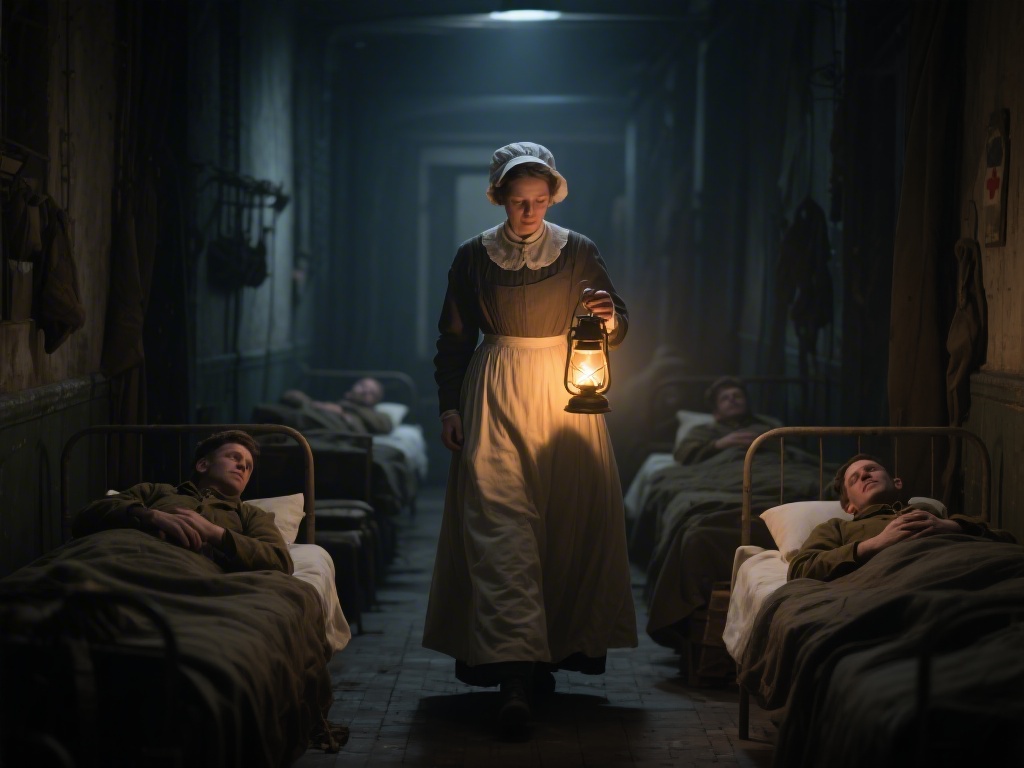
If you’ve ever spent time in a hospital ward, benefited from a nurse’s structured care plan, or read about infection control best practices that keep patients safe, you’ve felt Florence Nightingale’s influence firsthand. Many people know her as the Lady with the Lamp, the 19th century caregiver who walked miles each night to tend to wounded soldiers during the Crimean War, but fewer understand the full scope of her work that redefined an entire profession from the ground up. We’re breaking down exactly how did florence nightingale influence nursing, and why her principles are still non-negotiable for care teams across the world nearly 170 years after she first stepped foot in a military hospital in Scutari.
She Built the First Evidence-Based Frameworks for Patient Care
When Nightingale arrived at the British military hospital in Scutari in 1854, she found conditions that would shock even the most casual observer today. Wards were overcrowded, rats and lice ran rampant, sewage leaked into patient beds, and there was almost no access to clean water, bandages, or nutritious food. Most military officials at the time assumed the high mortality rate among soldiers was caused by their battle wounds, but Nightingale suspected otherwise. She started tracking every cause of death in the ward, cross-referencing it with living conditions, and testing small changes to see how they impacted patient outcomes.
Before Nightingale’s work, most patient care decisions were based on anecdote or tradition, not verifiable data. Within six months of implementing changes like regular handwashing, sanitizing ward surfaces, improving ventilation, and serving fresh, nutrient-dense food to patients, the mortality rate in the Scutari hospital dropped from 42% to just 2%. This was the first formal proof that standardized, data-backed care directly reduces patient death rates.
These findings didn’t just apply to military hospitals, either. She spent the rest of her career pushing civilian hospitals to adopt the same sanitation and care standards, laying the groundwork for the infection control protocols that are universal in healthcare settings today. You don’t have to look far to see this impact: every time a nurse washes their hands between patients, changes your bed linens regularly, or opens a window to let in fresh air, they’re following rules Nightingale first proved worked 170 years ago.
How Did Florence Nightingale Influence Nursing Professional Training and Credentialing?
Before Nightingale’s advocacy, nursing was not seen as a respected profession for educated people. In fact, most nursing work in the 1800s was done by unskilled laborers, people with criminal records, or religious workers who had no formal care training. It was seen as a low-status, dirty job that no middle or upper class person would choose to pursue. Nightingale, who came from a wealthy family and chose to study nursing against her parents’ wishes, wanted to change that perception entirely.
In 1860, she used funds raised by the public to thank her for her Crimean War work to open the Nightingale Training School at St. Thomas’ Hospital in London, the first secular, professional nursing school in the world. Her curriculum required hundreds of hours of hands-on clinical work, written exams, and tracked patient care outcomes to prove competency, a model that had never been used for nursing training before. Graduates of her program went on to open their own training schools across the UK, the United States, Australia, and Europe, spreading her standardized training model across the globe.
She also wrote “Notes on Nursing: What It Is, and What It Is Not”, a slim, accessible guide to care that was the first standard textbook for nursing students. It sold millions of copies in its first decade, and was even used by regular people who had no formal medical training to care for sick family members at home. Today, every registered nurse in the world has to complete a standardized, clinically focused training program and pass a credentialing exam to practice, a direct result of Nightingale’s work to professionalize the field.
She Normalized Data Collection and Public Health Reporting for Care Teams
Most people don’t know that Nightingale was also a skilled statistician, one of the first women ever admitted to the Royal Statistical Society in the UK. She knew that collecting data was useless if she couldn’t convince skeptical policymakers to act on it, so she invented new data visualization tools to make her findings easy to understand for people who had no advanced math training. Her most famous invention was the polar area diagram, a type of circular bar chart that clearly showed how many more soldiers died from preventable infections than from battle wounds during the Crimean War. The diagram was so effective that it convinced the British government to completely overhaul military hospital care within two years of the war ending.
She introduced three core data practices that are still standard in healthcare settings today:
- Standardized patient outcome tracking for every ward, regardless of size, location, or patient population, so care teams can compare results across facilities
- Public reporting of care quality metrics to hold healthcare facilities accountable for patient safety, rather than hiding poor outcomes from the public
- Data-driven adjustments to care protocols, rather than sticking to outdated traditions with no proven benefit for patients
Before Nightingale pushed for these changes, most hospitals didn’t track mortality rates or patient outcomes consistently, so they had no way to tell if their care practices were working or putting patients at risk. Even modern electronic health record (EHR) systems used in almost every hospital today are built on the basic data tracking rules Nightingale established in the 1850s. We even saw a direct reference to her work during the COVID-19 pandemic, when public health teams used similar circular data visualization tools to track infection and mortality rates across different regions, making complex data accessible to the general public.
She Advocated for Patient-Centered Care That Prioritizes Dignity and Comfort
A lot of popular narratives about Nightingale focus only on her work with sanitation and data, but she was just as passionate about the human side of care. She argued constantly against the common 19th century belief that poor, working class, or military patients didn’t deserve the same level of comfort and respect as wealthy private patients. She pushed for every patient, no matter their background, to have access to clean bedding, quiet rest periods, natural light, and compassionate communication from their care team. She also wrote extensively about the importance of emotional support for healing, noting that patients who felt anxious or ignored often had worse outcomes even if they received the right medical treatment.
Her focus on holistic care, which addresses both physical and emotional needs, is a core part of every nursing code of ethics in use today. She also fought hard for nurses to be recognized as independent care providers, not just orderlies who followed doctor’s orders without question. That advocacy paved the way for advanced practice nursing roles that fill critical care gaps today, from nurse practitioners who can diagnose and treat common illnesses to nurse midwives who provide safe, affordable maternity care to people who don’t have access to an obstetrician.
I’ve worked with dozens of new nurses who still reference Nightingale’s patient care principles in their first clinical rotations, even if they don’t realize the origin of the rules they’re following. It’s not uncommon to hear a nursing instructor remind students to check if their patient has access to water, is warm enough, or has questions about their care before they leave the room – that’s pure Nightingale, still guiding practice today.
It’s easy to reduce Florence Nightingale to a mythic figure with a lamp, walking through hospital wards late at night to check on wounded soldiers. But her real legacy is the structural change she brought to a profession that had been overlooked and undervalued for centuries. She didn’t just make hospitals cleaner – she turned nursing into a respected, regulated profession that saves millions of lives every year. When you look at the high standard of care you expect from nurses today, you’re seeing the end result of decades of her advocacy, research, and relentless push for better care for all people, no matter their background or income. Understanding how did florence nightingale influence nursing doesn’t just help you appreciate the history of healthcare – it also helps you recognize the core values that make great nursing work, even as technology and medical treatments evolve at a rapid pace. Next time you meet a nurse who takes the time to answer your questions, washes their hands before touching you, or checks in on your comfort as much as your symptoms, you can thank Nightingale for laying the groundwork for that skilled, compassionate care.