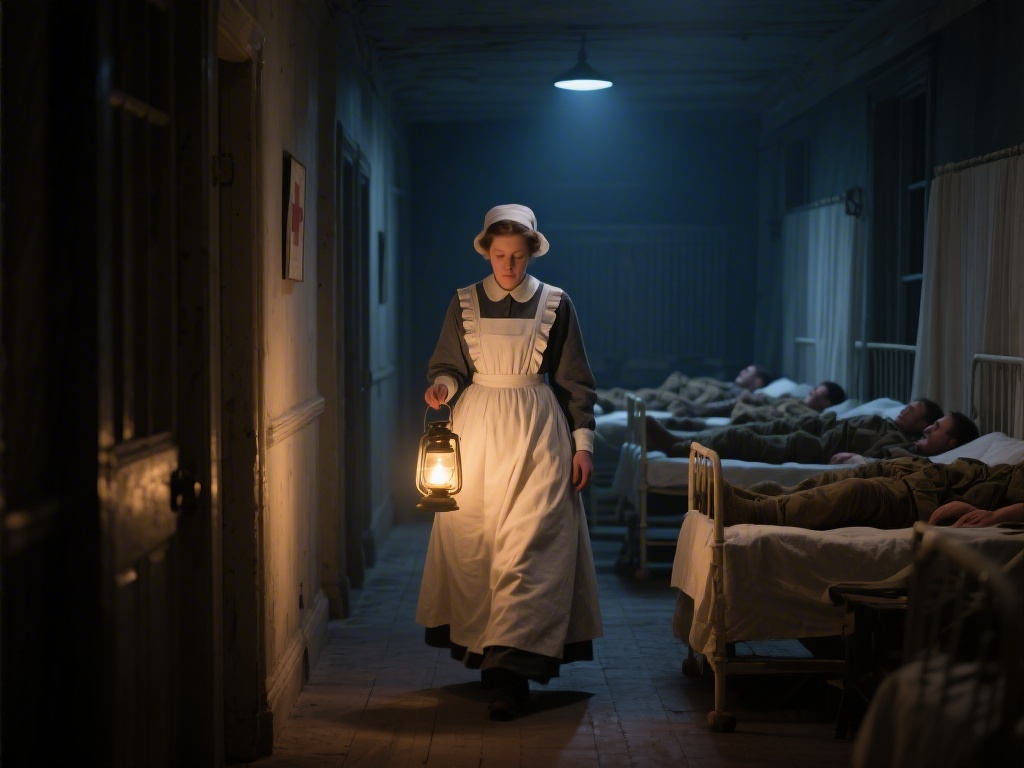
Most people know Florence Nightingale as the “Lady with the Lamp,” the gentle wartime nurse who checked on injured soldiers through the night during the Crimean War. That romanticized image only scratches the surface of her work, though. If you’ve ever wondered how did Florence Nightingale contribute to medicine beyond basic patient care, you might be shocked by how many of today’s standard healthcare practices trace back to her research, data analysis, and relentless advocacy. She wasn’t just a nurse—she was a statistician, social reformer, and public health pioneer whose work saved millions of lives long after the war ended.
How Did Florence Nightingale Contribute to Medicine Through Wartime Sanitation Reforms?
When Nightingale arrived at the British military hospital in Scutari, Turkey in 1854, the conditions were almost unthinkable. Wards were overcrowded, rats and lice ran rampant, sewage leaked into drinking water supplies, and patients were often left lying on dirty, blood-soaked blankets for days. 42% of soldier deaths during the early Crimean War stemmed from preventable infectious disease, not combat injuries, but military leaders at the time didn’t see the connection between unsanitary conditions and illness.
Nightingale didn’t wait for permission to make changes. She organized a team of volunteers to scrub every surface, launder all patient linens, set up dedicated laundry and kitchen facilities, and install ventilation systems to circulate fresh air through the wards. She also pushed for regular waste removal and access to clean, safe drinking water for every patient. She cut the mortality rate by 95% in less than two years, dropping it from 42% to just 2% by the end of her time at Scutari.
Many of her peers dismissed her work at first, claiming the drop in deaths was a coincidence. But Nightingale had kept meticulous records of every change she made, and every corresponding shift in mortality rates. She had the data to prove her reforms worked, and she refused to back down when military leaders tried to take credit for her results.
Pioneering Data Visualization to Prove Public Health Claims
Nightingale knew that raw data tables wouldn’t convince politicians and military leaders who had no background in statistics or public health. Most of the people who held power to fund permanent sanitation reforms couldn’t parse spreadsheets, so she found a way to present her findings visually, so anyone could understand them.
She invented the polar area diagram, a type of circular bar graph that showed the number of deaths each month, broken down by cause. The diagram made it immediately clear that the vast majority of deaths were from preventable infections, and that those deaths dropped sharply after her sanitation reforms were implemented. Florence Nightingale was the first woman inducted into the Royal Statistical Society for this work, and her innovative approach to data presentation is still taught in public health and data science classes today.
I first learned about Nightingale’s data work in a college public health class, and I was shocked that none of my grade school lessons ever mentioned it. Most textbooks stick to the “lady with the lamp” myth, which is sweet, but it ignores the fact that she was one of the sharpest public health minds of her era. Her polar area diagram is still used as a model for accessible public health data today, especially for communicating complex health information to the general public.
Establishing Nursing as a Regulated, Respected Medical Profession
Before Nightingale’s work, nursing was not seen as a legitimate medical role. It was largely considered low-skill, low-status work for working-class women, and many people associated nurses with poor ethics or even criminal behavior. There were no formal training programs, no standardized rules for practice, and no requirements for anyone who wanted to work with patients.
In 1860, Nightingale used funds raised in honor of her Crimean War work to open the Nightingale Training School for Nurses at London’s St. Thomas’ Hospital. The school established formal, evidence-based training standards for all nurses, and it required graduates to follow a strict code of ethics and professional conduct. Her core nursing principles, which are still used globally today, include:
- Regular, documented health checks for all patients, regardless of income or social status
- Mandatory training in infection control, wound care, and patient communication for all practicing nurses
- Strict requirements for clean, well-ventilated ward spaces to reduce infection spread
- Patient-centered care that prioritizes comfort, nutrition, and mental wellbeing alongside medical treatment
Before Nightingale’s reforms, nursing was largely seen as an unskilled, low-status role for working class women that no middle or upper class woman would ever choose to pursue. By the turn of the 20th century, nursing had become a respected, professional career path for women from all backgrounds, and that shift is almost entirely thanks to Nightingale’s work.
Advocating for Universal Public Health Infrastructure for Marginalized Groups
Nightingale didn’t stop her work after the war ended, or after her nursing school was established. She spent the rest of her life advocating for public health reforms that would benefit poor, working class, and marginalized groups who had no access to clean, safe healthcare.
She collected data on living conditions in British slums, where mortality rates for children under five were as high as 70% in some neighborhoods. She lobbied members of Parliament for years to invest in public sewer systems, clean drinking water lines, and regular waste collection for working class neighborhoods. Her advocacy directly led to the first national Public Health Act in the UK, passed in 1875, which established mandatory sanitation standards for all residential areas across the country.
She even worked on public health reforms for colonial India, without ever stepping foot in the country. She analyzed data on mortality rates for British soldiers stationed in India, and found that unsanitary living conditions were killing far more soldiers than combat or local diseases. She pushed the British government to build clean water systems, improve hospital conditions, and implement public health rules for both military and local civilian populations in India, and her recommendations led to a 50% drop in military mortality rates in the country within 10 years.
Most people still reduce Florence Nightingale to a gentle, kind nurse holding a lamp, and that narrow narrative erases the scope of her impact. Next time you see a hospital ward with open windows, a nurse following standardized infection control protocols, or a public health infographic making complex data easy to understand, you’re seeing Nightingale’s work in action. That’s the real answer to how did Florence Nightingale contribute to medicine: she didn’t just care for sick people, she built systems that keep millions of people from getting sick in the first place. Her legacy isn’t just about kindness—it’s about using data, evidence, and relentless advocacy to build a better, safer healthcare system for everyone.