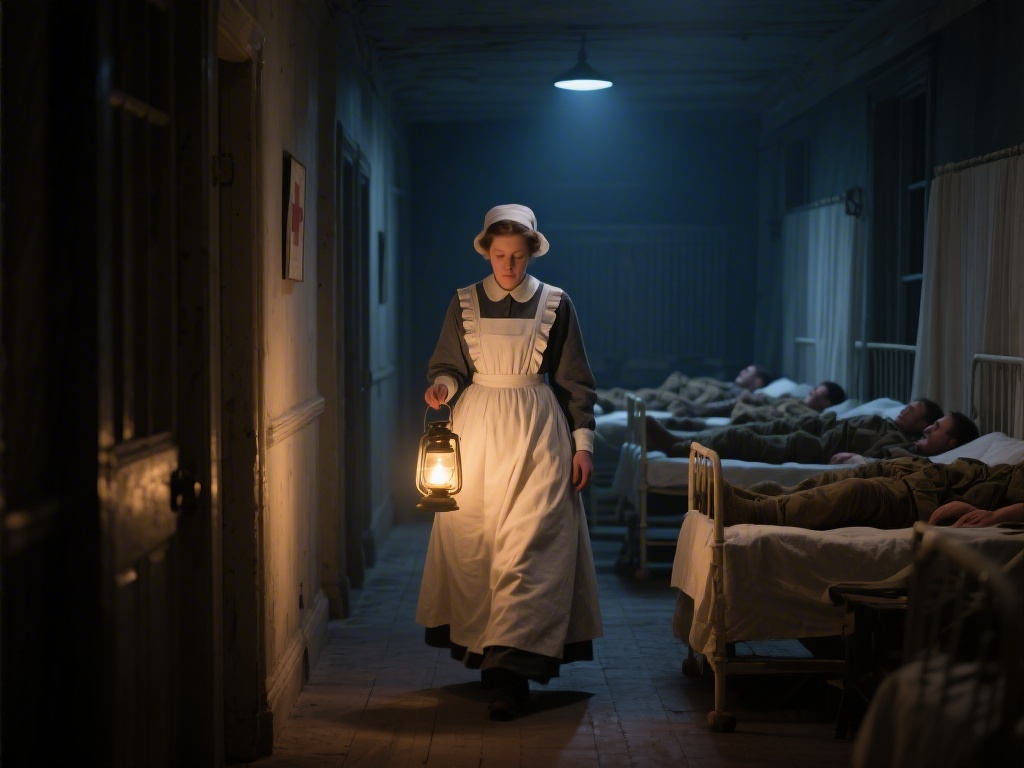
Florence Nightingale, the famous nurse and social reformer, is famously known as "the Lady with the Lamp." But why was she given this nickname? In this article, we delve into the history and lore surrounding this iconic title, uncovering the fascinating story behind it.
1. The Origins of the Nickname
During the Crimean War, Florence Nightingale was stationed in a military hospital in Scutari, Istanbul. Her dedication to the care of wounded soldiers earned her the nickname "the Lady with the Lamp." The story goes that she would walk the halls of the hospital at night, carrying a lamp, checking on her patients.
2. The Symbol of Compassion
The image of Florence Nightingale carrying her lamp became a symbol of compassion and dedication. It represented her unwavering commitment to the welfare of her patients, regardless of the hour or the conditions.
3. The Impact on Nursing
Florence Nightingale's actions during the Crimean War had a profound impact on the nursing profession. Her dedication to patient care and cleanliness in hospitals set new standards for nursing practice, and she is often credited with founding modern nursing.
4. The Legacy of the Lady with the Lamp
The nickname "the Lady with the Lamp" has become synonymous with Florence Nightingale's legacy. It symbolizes her dedication, compassion, and the transformative impact she had on nursing and healthcare.
5. The Modern Perception
In the modern world, Florence Nightingale remains an iconic figure, celebrated for her contributions to nursing and healthcare. The story of "the Lady with the Lamp" continues to inspire generations, reminding us of the power of compassion and dedication.
In conclusion, the nickname "the Lady with the Lamp" is a testament to Florence Nightingale's incredible dedication and compassion. Her legacy continues to inspire us today, reminding us of the importance of caring for others, no matter the circumstances.