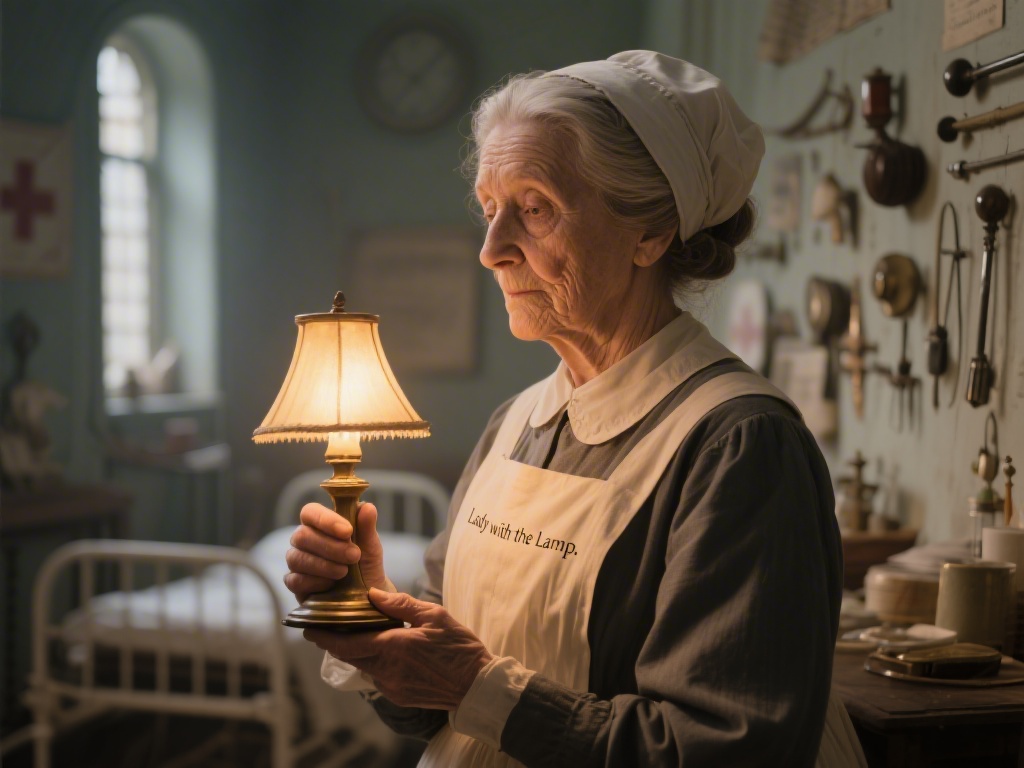
Most people know Florence Nightingale as the Lady with the Lamp, the fearless nurse who transformed healthcare for Crimean War soldiers and laid the groundwork for modern nursing. But far fewer know the details of her life after she returned to England in 1856, including the persistent, widely circulated claim that she spent decades confined to her bedroom. If you’ve ever wondered did Florence Nightingale take to her bed for decades of her adult life, you’re not alone—this is one of the most debated, often misrepresented facts about her legacy. Too many accounts either dismiss her confinement as a choice or ignore her work during this period entirely, erasing some of her most impactful contributions to global public health.
Did Florence Nightingale Take to Her Bed? Separating Myth From Documented Fact
The short, confirmed answer is yes: starting in 1857, one year after she returned from the Crimean War, Nightingale spent roughly 30 years living mostly confined to her bedroom, only leaving for rare, short trips late in her life. That simple fact has been twisted into dozens of false narratives over the years, though, from claims that she was lazy or attention-seeking to rumors that she had a nervous breakdown and withdrew from public life entirely. None of those claims hold up to scrutiny of her personal letters, official government records, and accounts from people who visited her regularly during that time.
Contrary to popular myth, her confinement was not a choice to withdraw from public life. She hated being stuck in bed, and wrote dozens of letters to friends and colleagues complaining about how frustrating it was to be unable to travel, visit hospitals, or attend public meetings to advance her reform work. She pushed through severe physical discomfort every single day to keep working, even when her doctors begged her to rest. Many people assume her career ended when she left the Crimea, but the opposite is true: most of her policy and education work happened while she was confined to her room.
To understand why did Florence Nightingale take to her bed for so long, you have to look back at her time stationed at the Scutari Barracks hospital during the Crimean War. The facility was overcrowded, unsanitary, and infested with rats and lice, and more soldiers died of preventable diseases like typhus and cholera than of battle wounds. She worked 20-hour days for months on end to clean the space, implement sanitation protocols, and advocate for more resources for the troops, pushing her body well past its limits.
What Illness Forced Florence Nightingale to Stay Confined to Her Room?
In 1855, while still in the Crimea, Nightingale collapsed suddenly with a high fever that left her semi-conscious for nearly two weeks. The military doctors treating her diagnosed her with “Crimean fever,” a catch-all term for infectious diseases common in the region at the time, and told her she needed to return to England to recover. She tried to stay and continue her work, but her symptoms kept worsening, and she eventually agreed to go home the following year.
Back in England, her symptoms never fully went away. She experienced chronic fatigue, severe joint pain, recurring fevers, and heart palpitations that made it impossible for her to stand for more than a few minutes at a time without feeling faint. Victorian era doctors had no way to diagnose or treat her condition properly, and many wrote off her symptoms as “hysteria,” a common, misogynistic diagnosis used to dismiss women’s chronic health issues at the time.
Modern medical analysis of her symptoms confirms she lived with a disabling, untreated chronic condition for more than 30 years. Most medical historians now agree she contracted chronic brucellosis, a bacterial infection spread through contact with infected livestock or unpasteurized dairy products, which was extremely common in the Crimea during the war. Without antibiotics, which didn’t exist until the 1930s, the infection causes lifelong, recurring symptoms that mirror exactly what Nightingale described in her letters. She wasn’t being dramatic or faking illness—she was living with a painful, incurable condition that limited her mobility for most of her adult life.
What Accomplishments Did She Achieve While Confined to Bed?
If you only know Nightingale for her work in the Crimea, you’ll be shocked by how much she got done while stuck in her bedroom. She turned her small room into a de facto policy office, receiving visitors, answering hundreds of letters a week, and writing thousands of pages of research and policy recommendations that shaped healthcare systems across the world. Some of her most notable achievements from this period include:
- Wrote more than 200 official reports, pamphlets, and books on hospital design, sanitation, nursing education, and public health policy, many of which became standard references across the British Empire and beyond
- Founded the first secular nursing school in the world at St. Thomas' Hospital in London in 1860, which professionalized nursing as a respected, paid career for women instead of a low-status, unskilled role for working class women
- Advised government officials on healthcare policy for military and civilian populations, including reforms that reduced mortality rates for British soldiers stationed in India by 50% between 1857 and 1877
- Corresponded with thousands of nurses, reformers, and politicians around the world, sharing research and advocating for better public health infrastructure for low-income communities in cities and rural areas
At the peak of her confinement, she was working 12 to 14 hours a day from her bed, pushing through chronic pain to advance her reform work. She only allowed close friends, family members, and key government contacts to visit her, so most of the public had no idea how much she was working behind the scenes. That lack of public visibility is part of why so many false narratives about her seclusion spread over the years.
She also used her own experience as a chronically ill person to improve care for other people living with long-term health conditions. She wrote extensively about how to design home care spaces that are safe, comfortable, and supportive for people who can’t leave their homes, guidelines that are still used by home health providers today.
Common Misconceptions About Her Bed Confinement to Avoid
Even with all the documented evidence about her illness and work during this period, plenty of false myths still circulate about Nightingale’s decades in bed. Clearing up these myths is important to honoring her full legacy, and to avoiding the same harmful misrepresentation of chronic illness that she faced during her life.
One of the most harmful misconceptions is that her illness was a psychological or attention-seeking choice. This myth started with Victorian doctors who refused to believe a wealthy, educated woman could have a physical illness they couldn’t diagnose, and it has persisted in pop culture accounts of her life for more than a century. It erases the real pain she lived with, and dismisses the massive amount of work she put in despite her disability. If she was just seeking attention, she would have made public appearances regularly instead of staying out of the public eye to focus on her work.
Another common myth is that she never left her bedroom at all for 30 years. That’s not true: as her symptoms fluctuated, she would occasionally take short walks outside late at night when there were no crowds, or visit close family members who lived nearby. She avoided public spaces because crowds and long periods of standing would trigger severe flare-ups of her symptoms that left her bedridden for weeks at a time. She didn’t avoid people entirely—she just carefully managed her energy to prioritize her work.
Her decades of bedridden work had a far greater global impact on public health than her time in the Crimean War. The sanitation protocols she implemented in Scutari saved thousands of soldiers’ lives, but the nursing schools she founded, public health policies she helped pass, and hospital design guidelines she wrote saved millions of lives around the world in the decades that followed. If she hadn’t spent those years working from her bed, modern nursing and public health would look completely different today.
Whether you’re a nursing student, a history buff, or just someone curious about underrated female historical figures, the answer to did Florence Nightingale take to her bed is far more nuanced than a simple yes or no. She didn’t choose to spend most of her adult life confined to her room, but she turned that extremely difficult circumstance into a chance to transform global healthcare for generations to come. Her story is a powerful reminder that contribution and impact don’t depend on being able to show up in public, or fit into narrow ideas of what a “productive” person looks like. Next time you hear someone dismiss her later life as a period of quiet seclusion, you’ll know the full story of her relentless, hard-won legacy.