I remember flipping through my middle school history textbook as a kid and glancing right past the portrait of Florence Nightingale, writing her off as just another "famous nurse" I had to memorize for a test. It wasn’t until I took a public health class in college that I realized how much I was missing by not looking closer. Historical portraits are like tiny time capsules, every choice the artist or photographer made, every object in the frame, holds a purpose you might not catch on first glance. A picture of Florence Nightingale is one of the most underrated time capsules out there, packed with clues about her life, work, and the era she lived in that most people never pick up on. I still get excited when I see a new portrait pop up in an exhibit or online, because I know there’s always a new detail I haven’t noticed before.
What a Picture of Florence Nightingale Tells Us About Her Early Life Choices
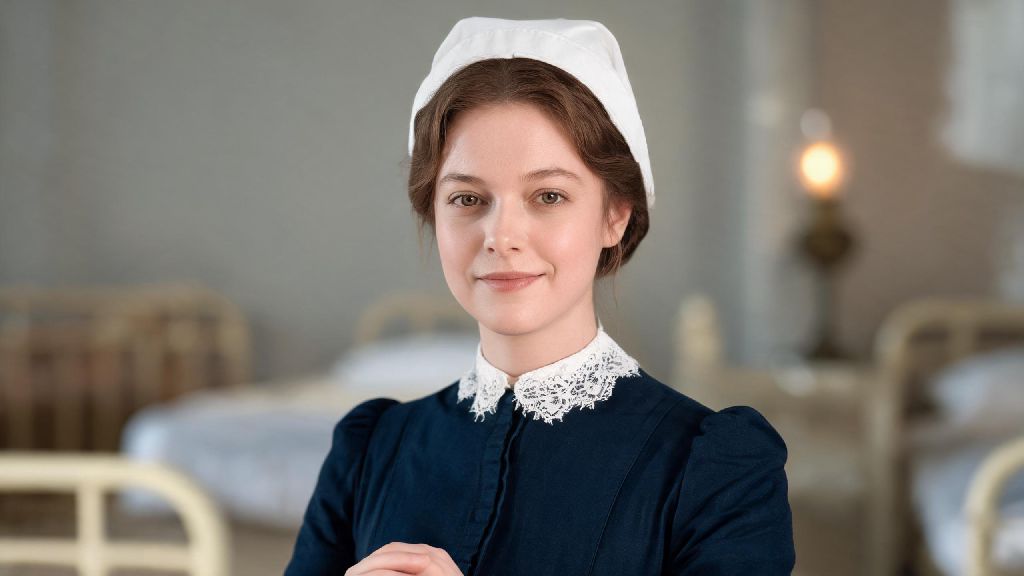
The most widely circulated portrait of her was taken in 1854, right before she left for the Crimean War. She’s wearing a simple dark wool dress, a plain white linen cap, and no jewelry at all. That’s no accident. Florence came from an extremely wealthy British family, grew up in a manor house, and had a private education that most women of the era could only dream of. She learned math, philosophy, and multiple languages as a kid, skills that would later make her one of the most effective public health reformers of her time.
Most 19th century women of her social standing would have spent their days attending balls and managing a household, not tending to sick soldiers in filthy war camps. She turned down multiple marriage proposals to pursue nursing, which was seen as a job for working class, uneducated women at the time. Her family was so opposed to her career choice that they cut her off financially for years. The simple clothing in the portrait is her way of rejecting her upper class roots and aligning herself with the nurses she worked with, rather than the wealthy elite she was born into. You’ll also notice she’s not looking directly at the camera in most early portraits – that was a deliberate choice too, as she wanted to be seen as a public servant, not a celebrity.
The Surprising Context Behind the Iconic Lamp in Most Portraits
We’ve all seen the portraits of Florence holding a small glowing lamp, which earned her the "Lady with the Lamp" nickname that’s still used today. But most people don’t know that the lamp you see in most paintings is not the one she actually used during the war. The real lamp was a small, foldable Turkish lantern, designed to be carried easily through the narrow, crowded corridors of the Scutari hospital where she worked. It was lightweight, didn’t spill easily, and could be hung on a hook when she needed to use both hands to treat a patient or fill out paperwork.
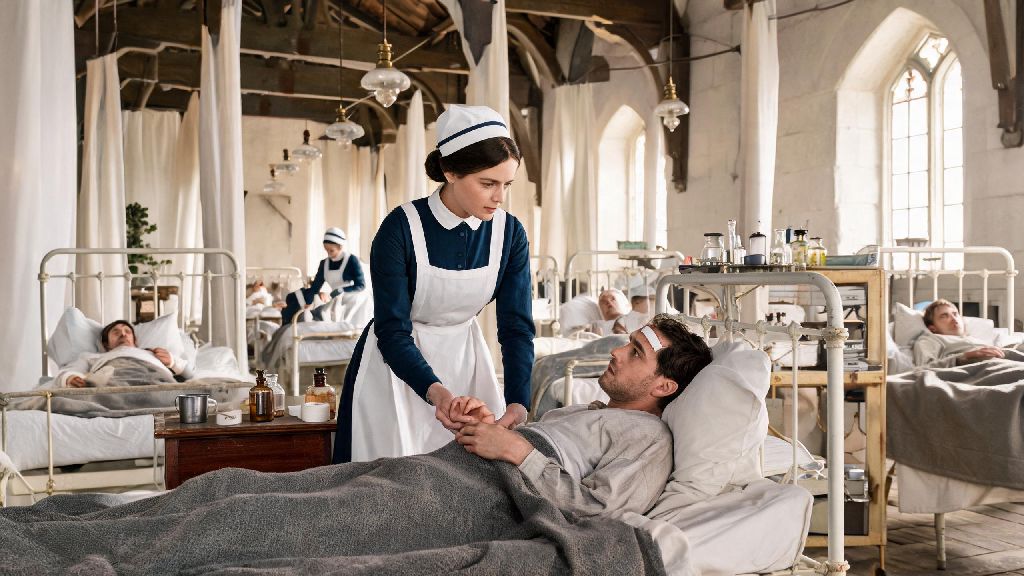
The "Lady with the Lamp" nickname stuck because she would check on injured soldiers long after other staff had gone to sleep, often working 20 hour days to reduce mortality rates. At the time she arrived at Scutari, the mortality rate for injured soldiers was over 40% – most died from preventable diseases like typhus and cholera, not their battle wounds. By pushing for better sanitation, regular laundry, and clean drinking water, she got that rate down to under 2% in less than a year. The romanticized glass oil lamp you see in most later portraits was added by artists who wanted to make her seem more gentle and nurturing, erasing the practical, hardworking side of her that spent most of her time fighting with military officials to get the supplies she needed.
Common Myths Debunked by Studying Her Original Portraits
Most of what we think we know about Florence Nightingale comes from romanticized stories written after she became a public figure, but her original portraits tell a much more accurate story. I’ve spent hours digging through archived portraits from the 1850s and 1860s, and these are the three biggest myths I’ve seen debunked time and time again:
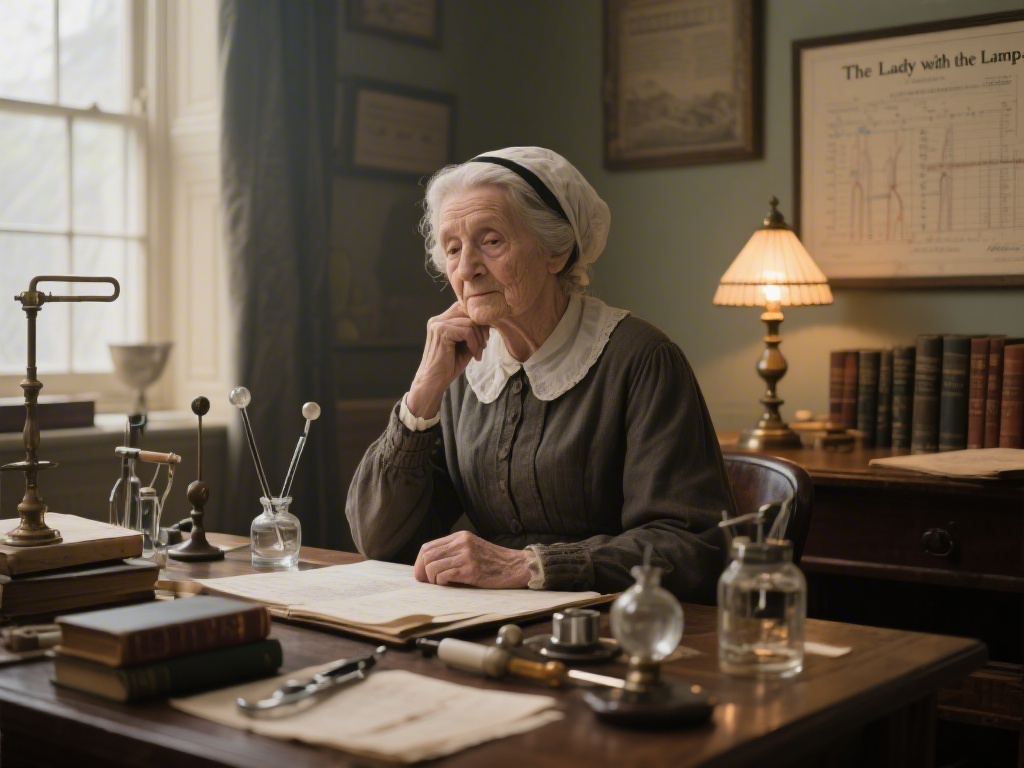
- Myth 1: She only worked as a nurse during the Crimean War. In reality, most portraits of her taken after the war show her surrounded by papers and statistics, because she spent 30 years after the war advocating for public health reform from her bed, after contracting a chronic illness in Crimea. She wrote over 200 reports on hospital design, sanitation, and nursing education, and her work led to the creation of the first secular nursing school in the world.
- Myth 2: She wore a formal nurse's uniform for all her work. Most candid sketches of her from the Crimean period show her in plain, washable cotton dresses, not the starched uniform seen in later official portraits, which were designed to make her look like a symbolic figure rather than a working caregiver. The starched white aprons and structured caps associated with early nursing didn’t become standard until decades later, when the profession became more widely respected.
- Myth 3: She was solely focused on caring for individual patients. Many portraits show her with pen and paper in hand, which reflects that she was a skilled statistician who used data to push for cleaner hospitals and better sanitation policies across the UK. She even invented a type of pie chart called a polar area diagram to make mortality data easy for non-expert politicians to understand.
It’s wild how much misinformation is spread about her, just because later artists wanted to make her fit a "caring nurse" stereotype instead of showing her as the sharp, ambitious reformer she really was. She cared deeply about her patients, of course, but she knew that changing systemic policies would save far more lives than one-on-one care ever could.
How to Spot an Authentic Period Portrait vs. a Romanticized Recreation
With so many modern artworks and stock photos of Florence Nightingale floating around online, it can be hard to tell what’s accurate and what’s made up. If you’re looking for a reliable image for a project, presentation, or even just to learn more, there are a few easy checks you can do to avoid falling for a false depiction. First, look for any sign of a red cross on her clothing or accessories. The International Committee of the Red Cross wasn’t founded until 1863, years after she left Crimea, so any portrait with a red cross is a modern recreation.
Authentic portraits also almost never show her smiling, because long exposure times for early photography meant subjects had to stay completely still for minutes at a time, making smiling nearly impossible. Any photo of her grinning is either a fake or a heavily edited modern image. If you’re comparing multiple versions of a picture of Florence Nightingale, you’ll also notice that most authentic shots have her positioned near a desk or stack of papers, rather than just standing next to a hospital bed. That’s because even during the war, she spent just as much time doing paperwork and advocating for policy changes as she did directly caring for patients.
Finally, check the provenance if you can. Portraits held by major national museums or university archives are almost always verified as authentic, while random images from generic stock photo sites are often heavily romanticized. Even small details, like the type of pen she’s holding or the fabric of her dress, can tell you whether a portrait is true to the time period, so don’t be afraid to zoom in and look closely. You’ll be shocked by how many small inauthentic details you can spot once you know what to look for.
Next time you stumble across a picture of Florence Nightingale, take an extra 30 seconds to look closer. You won’t just see a famous nurse from a history book – you’ll see a woman who defied every expectation placed on her, used data to save millions of lives, and built a legacy that still shapes healthcare around the world today. It’s easy to write off old portraits as boring, but every small detail holds a story that’s worth hearing. You might be surprised by how much you can learn from just one image.