I’ve spent almost every spring weekend birding across London for the last 12 years, and no request comes up more often from visiting friends than to take them to find the spot where a nightingale sings in berkeley square. Most people first hear the phrase in old romantic movies or vintage radio tracks, and many assume it’s just a made-up lyric with no basis in real life. But after digging through old birding records, talking to long-time Mayfair residents and spending three late nights waiting near the square’s gardens a few years back, I can tell you there’s more truth to the tale than you might think. This guide breaks down everything you need to know about the iconic story, from its wartime origins to whether you stand a chance of hearing that famous song in person.
What Makes A Nightingale Sings in Berkeley Square Such an Iconic Phrase?
The phrase first rose to fame as the title and core lyric of a 1940 wartime romantic ballad written by Eric Maschwitz and Manning Sherwin. At the time, London was in the middle of the Blitz, with nightly bombings destroying entire neighborhoods and leaving residents scared for their futures. The song painted a picture of a perfect, peaceful moment in the heart of the city: two lovers sharing a quiet night, with a nightingale’s unexpected song cutting through the chaos of the world around them. It became an instant hit, especially with troops stationed overseas who played it to remind themselves of home. Most people who know the nightingale in Berkeley Square tale have no idea it’s rooted in small bits of real birding history.
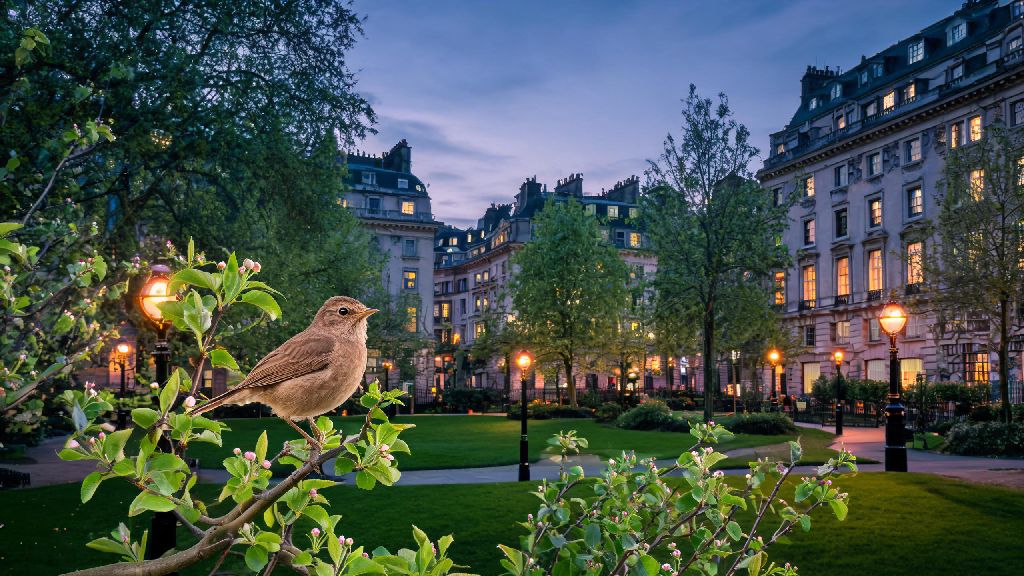
Part of what made the lyric so magical was its absurdity, even back then. Berkeley Square sits in the middle of Mayfair, one of London’s most expensive and densely built-up neighborhoods. Its gardens are carefully tended, with neatly trimmed plane trees, manicured flower beds and no thick, tangled undergrowth that nightingales rely on for nesting. The idea of a wild nightingale choosing to stop and sing there felt like proof that beautiful, impossible things could happen even during the darkest times. It’s why the song has been covered by hundreds of artists over the last 80 years, from Vera Lynn to Frank Sinatra, and still gets regular play on oldies radio stations across the UK.
The Real History of Nightingales in Central London
While the song’s premise was intentionally whimsical, there actually are confirmed records of nightingales appearing near Berkeley Square over the last 100 years. The RSPB records show that native European nightingales were far more common across the UK in the first half of the 20th century, with breeding populations as close to central London as Hampstead Heath and Richmond Park. Migrating birds would often get blown off course during their spring journey from Africa to the UK, leading them to end up in unexpected urban green spaces.
Some of the most well-documented sightings near the square include:
Sadly, nightingale populations in the UK have dropped by more than 90% over the last 50 years, due to habitat loss both in their UK breeding grounds and their winter habitats in Africa. That means sightings in central London are now far rarer than they were even 30 years ago, but they’re not completely impossible. Local birding groups still get 2 to 3 reported sightings of migrating nightingales in central London every spring, some within half a mile of Berkeley Square.
Can You Hear a Nightingale Sing in Berkeley Square Today?
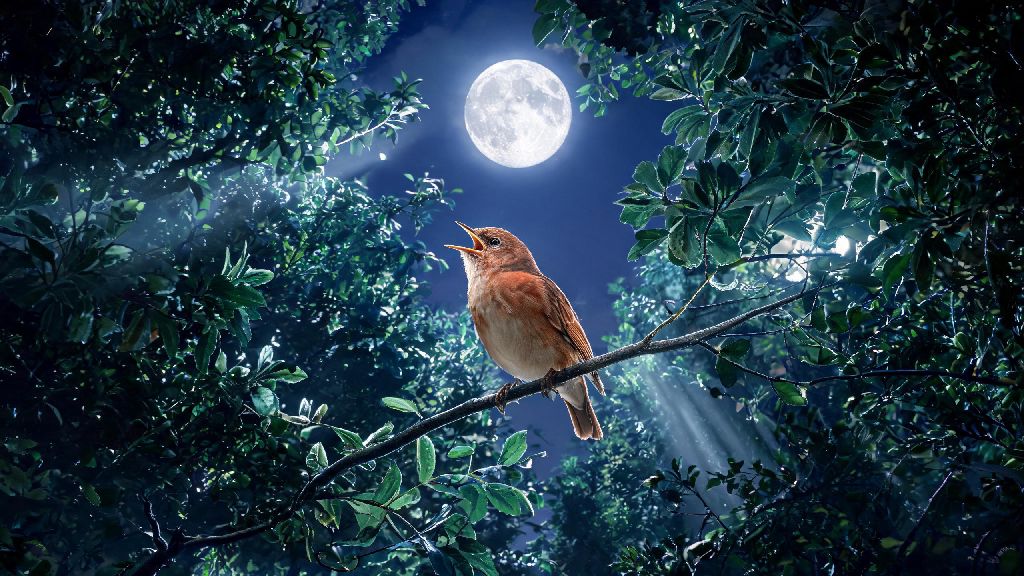
The short answer is: it’s extremely unlikely, but not 100% out of the question. The gardens of Berkeley Square still don’t have the dense, low shrubbery that nightingales need to build nests and feel safe, so you won’t find any breeding pairs living there full time. But during the spring migration season, which runs from mid-April to mid-May, lost migrating birds can turn up almost anywhere with greenery, including small city gardens and park edges. You’re far from the first person to go looking for a nightingale’s song in Berkeley Square, and every few years someone gets lucky.
If you want to try your luck, there are a few rules you should follow to make the most of your trip and avoid disturbing any birds you might find. First, visit between mid-April and mid-May after dark, ideally around 10pm to midnight, when male nightingales sing most loudly to attract mates. Stick to the public pavements around the square, and don’t try to enter the private gardens without permission. Keep your phone on silent, don’t use flash photography, and move as quietly as possible if you think you hear a call. It’s also important to remember that nightingales are protected under the Wildlife and Countryside Act 1981, so deliberately disturbing them or their nests can lead to heavy fines.
If you don’t hear anything at Berkeley Square, you don’t have to go far to find spots where nightingales are regularly spotted. Green Park and Hyde Park are both less than a 10-minute walk away, and both have areas of thick scrubland that migrating nightingales often stop in during their journey. Local birding groups share real-time sightings on their social media pages every spring, so you can check those before you head out to save yourself a wasted trip.
The Cultural Legacy of the Famous Berkeley Square Nightingale Tale
Even if you never hear a nightingale sing in Berkeley Square, the story behind the phrase is still a core part of modern London culture. The song has been featured in dozens of films and TV shows set in the city, from wartime dramas to modern romantic comedies, and it’s often played at public events marking VE Day and other wartime anniversaries. Every April, a number of bars and cafes around Berkeley Square host themed nights where they play different versions of the song, invite local ornithologists to talk about nightingale conservation, and raise money for RSPB projects to protect the species.
I’ve been to a few of these events over the years, and I’m always struck by how many people turn up who have no interest in bird watching at all. They just grew up with the song, or have a family memory attached to it, and they want to be part of that shared story. Last year I talked to a woman in her 80s who came to the event alone, who told me her late husband had proposed to her while the song was playing on the radio during the Blitz. She said she didn’t care if she ever heard a real nightingale in the square; just being there, hearing the song, felt like visiting an old friend.
That’s the real magic of the tale, I think. It’s not just about a bird or a song. It’s about the idea that unexpected moments of joy can turn up even in the most unlikely places, even when everything around you feels dark and chaotic. That’s a message that still resonates just as much today as it did in 1940.
Whether you’re a dedicated bird watcher hoping to spot a rare migrant, a vintage music fan curious about the story behind your favorite song, or just someone who loves little pieces of hidden London history, the tale of a nightingale sings in berkeley square has something for you. You might stand in the square for three nights in a row and hear nothing but traffic and distant police sirens, but you’ll still be standing in a spot that’s been tied to hope, romance and small, wonderful surprises for almost 80 years. That’s more than enough reason to make the trip, in my book.