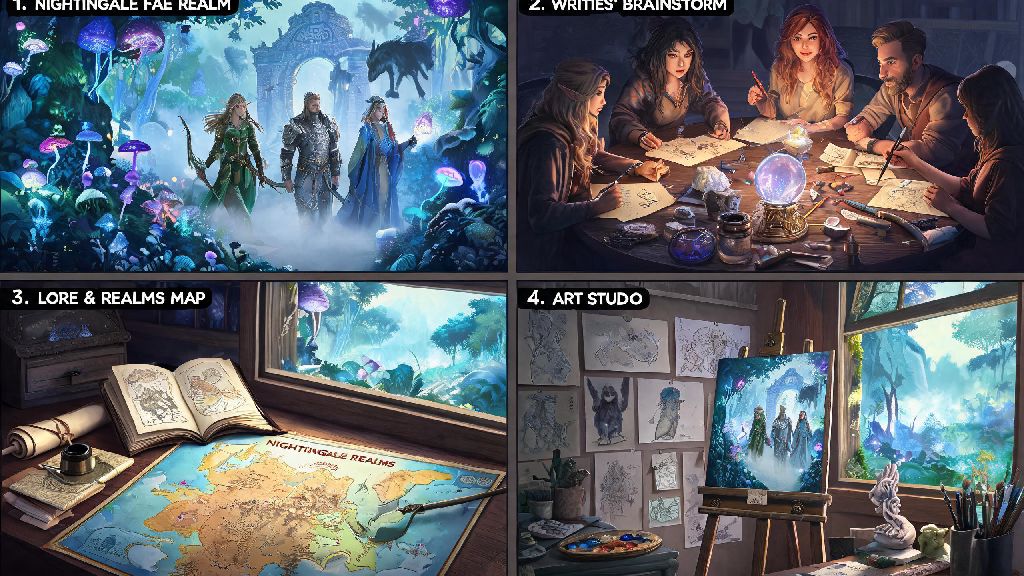
If you’ve spent hours trekking through misty fae realms, crafting enchanted gear, and fending off shadowy creatures in Nightingale, you’ve probably wondered at some point who built that rich, immersive world you’re exploring. It’s not just a random collection of survival mechanics, after all—every quest line, every odd fae character, every hidden piece of backstory has a team of writers behind it. We’re breaking down exactly who wrote Nightingale, from the lead creative minds to the supporting contributors that made the game feel so lived-in. I’ve sunk over 120 hours into Nightingale since early access launched, and I still find new little lore bits I missed on my first few playthroughs, so I wanted to pull back the curtain on the people responsible for that level of detail.
Who Wrote Nightingale? Meet the Lead Creative Team
Nightingale is developed by Inflexion Games, a Canadian studio founded by a group of veteran RPG developers with decades of experience in the industry. Aaryn Flynn, the former BioWare general manager who led teams behind Mass Effect and Dragon Age for over 17 years, founded Inflexion in 2019 and oversaw the core narrative direction for Nightingale from its earliest concept stages. He wanted to build a survival game that put story and worldbuilding first, a gap he noticed in most popular titles in the genre.
The day-to-day lead writing duties fell to Lesley Phord-Toy, a senior writer with past credits on Dragon Age: Inquisition and multiple award-winning mobile RPGs. Her core focus was making the fae realm feel equal parts dangerous and wondrous, avoiding the generic medieval fantasy setting that saturates most open-world games. She worked closely with the game’s design and art teams to make sure every mechanic tied back to the world’s lore, rather than feeling tacked on for gameplay purposes.
The team’s focus on player-driven narrative is a direct carryover from their work on choice-heavy RPGs. Even small decisions, like giving a random fae traveler a loaf of bread or turning them away, can lead to unexpected rewards or conflicts later in your playthrough. That attention to small details is why so many players comment on how immersive the game feels, even when you’re just wandering around collecting resources.
How the Writing Team Built Nightingale’s Unique Fae Lore
Unlike many survival games where lore is added as an afterthought once core mechanics are finished, Nightingale’s writing team set three non-negotiable ground rules before any development work started. These rules shaped every part of the game, from the types of enemies you face to the way realm cards work:
That last rule is one of the biggest reasons Nightingale stands out from other survival games on the market. I’ve played dozens of survival titles over the years, and most feel like they use generic fantasy assets to fill space, but every part of Nightingale’s world feels intentional. For example, the towering, spindly Bound enemies aren’t just generic zombies—they’re former realmwalkers who got trapped in the Gloom and twisted by fae magic, a backstory you can uncover through notes scattered across abandoned campsites.
The team also made a conscious choice to leave some lore bits ambiguous. They didn’t want to spell out every single detail of the world, so players could form their own theories about parts of the realm’s history. That’s led to a really active community on Reddit and Discord, where players swap theories about hidden lore hints they’ve found during their playthroughs.
Contributors Outside the Core Writing Team That Shaped the Game
The core writing team of six people didn’t build Nightingale’s lore all on their own. Early in development, they brought in three professional folklore consultants who specialize in pre-Christian European fae stories to make sure their take on fae felt authentic, not just made up for the game. The consultants helped them tweak everything from the names of fae characters to the rules of how magic works in the realm, to make sure it aligned with the traditional folklore they were drawing from.
Early access players also had a huge impact on the final version of the game’s writing. In the first month of early access, the team set up a dedicated feedback channel for lore and story content, and they received over 1,200 submissions from players pointing out plot holes, suggesting side quest ideas, and pointing out lines of dialogue that felt out of character. I remember a side quest about a lost blacksmith that felt really abrupt in the first early access build, and by the next major update, the team had added three extra dialogue lines and a small, rewarding ending that made the whole quest feel worth completing.
The team also ran a community writing contest in 2023, where 10 winning players got to write small lore snippets that were added to the game as notes you find in abandoned homes, campsites, and hidden chests. Over 700 players entered the contest, and the winning entries were so good that the team is planning to run another one for the next major content update. It’s a cool way for regular players to leave their mark on the game’s world.
How the Writing Team’s Past Work Shows Up in Nightingale
If you’ve played any of the modern Dragon Age or Mass Effect titles, you’ll notice immediate parallels between those games and Nightingale’s writing style. The team’s background making character-driven RPGs means that even throwaway NPCs have distinct personalities, not just generic lines of dialogue. For example, the shopkeeper in the main player hub has a running gag about hating fae turnips, a small detail that makes her feel like a real person instead of just a vending machine with a character model.
One common complaint from players in the first few months of early access was that the main story was too short, and there weren’t enough lore-heavy side quests to keep players engaged for long playthroughs. The writing team addressed this directly in the 2024 Realmwarp update, adding three new full quest lines and over 50 new lore notes scattered across the new biomes. They’ve confirmed that they’ll be adding at least two new major story chapters every year for the next three years, so there’s plenty more lore coming down the line.
Another carryover from their BioWare days is the team’s focus on accessibility for casual players. They didn’t lock main story content behind super hard grind walls, so even if you only play a few hours a week and don’t want to spend 10 hours grinding for high-tier gear, you can still experience almost all of the game’s written content. They also added a lore library in the main player hub, so you can go back and re-read any notes or quest dialogue you missed if you want to piece together more of the world’s backstory.
At the end of the day, the question of who wrote Nightingale has a longer answer than you might expect. It’s not just one person, but a whole team of veteran writers, folklore experts, voice actors, and even regular players who all contributed to making the game’s world feel so immersive. If you’re someone who usually skips cutscenes to jump right into crafting and exploring, it’s worth taking a few extra minutes on your next playthrough to read the lore notes or chat with random NPCs—you’ll get a peek at all the hard work the writing team put into every corner of the fae realms.