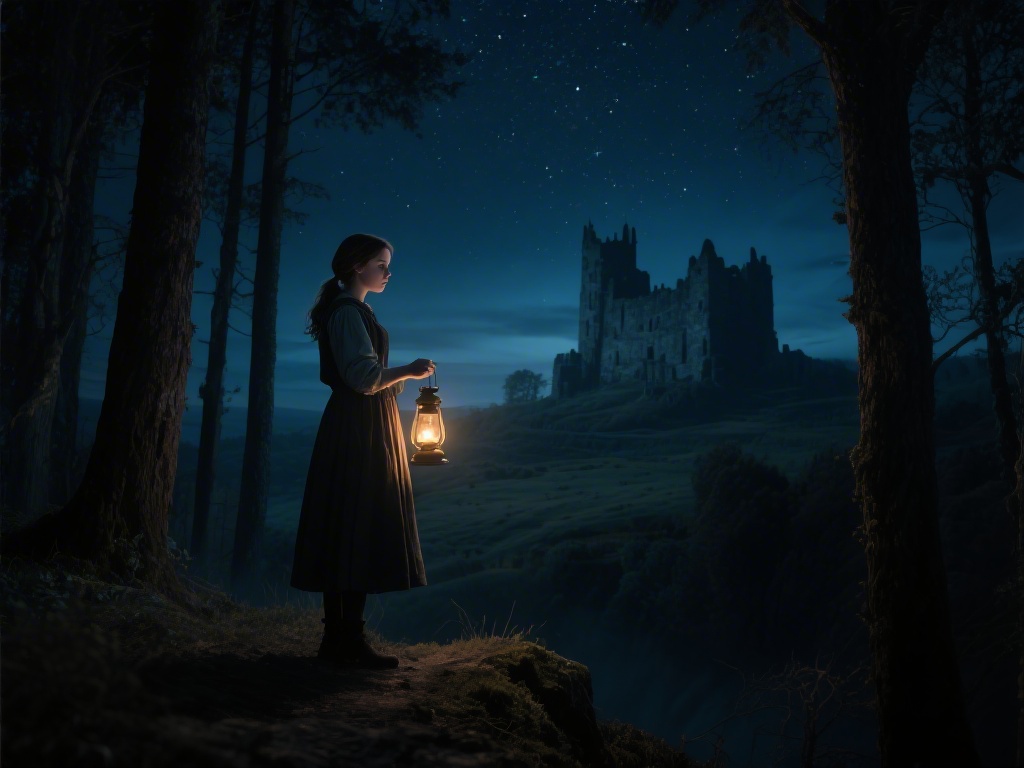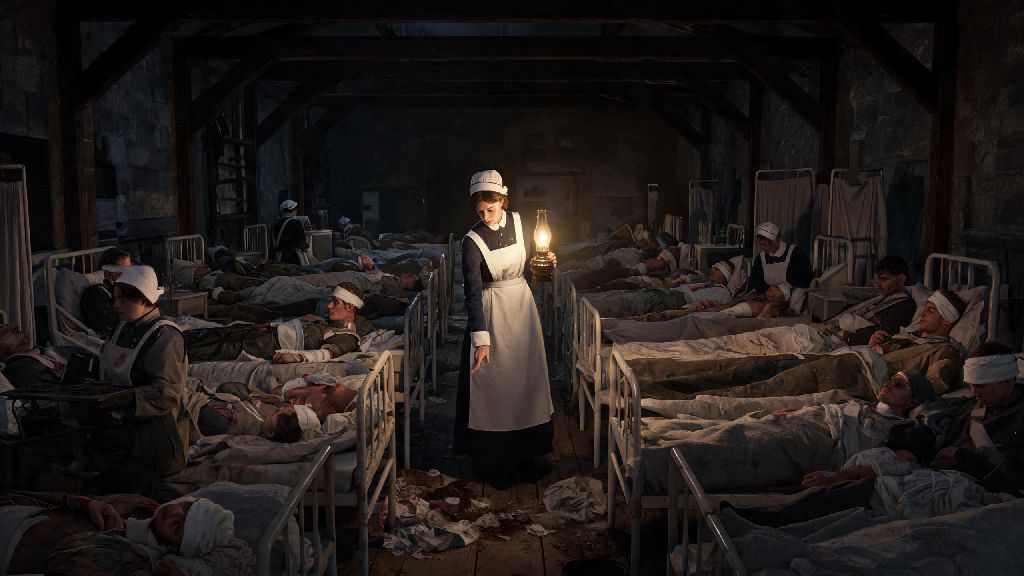
Most people know Florence Nightingale as the Lady with the Lamp, the fearless nurse who tended to wounded soldiers during the Crimean War and laid the foundation for modern nursing as we know it. But far fewer people stop to ask what was Florence Nightingale's childhood like, and how those early years shaped the world-changing work she did as an adult. If you’ve only ever heard stories of her work in military hospitals, you’re in for a surprise: her upbringing was full of contradictions, quiet rebellion, and small moments that pointed directly to the leader she would become. We’re digging into all the lesser-known details of her early years, from her unusual education to the family pushback she faced long before she stepped foot in a hospital ward.
What Was Florence Nightingale’s Childhood Like? Core Context of Her Upbringing
Florence was born in 1820 in Florence, Italy, while her wealthy British family was on an extended tour of Europe. That’s where she got her first name, and her older sister Parthenope was named for the ancient Greek title for Naples, the other Italian city the family visited during the trip. The Nightingales were part of the British upper class, with two sprawling estates: a summer home in Derbyshire and a winter residence in Hampshire, complete with dozens of servants, sprawling gardens, and a massive private library. Her father, William Nightingale, was a Cambridge-educated landowner with a passion for learning, while her mother Frances came from a wealthy merchant family and placed heavy importance on following the strict social rules of Victorian high society.
As young girls, Florence and her sister were expected to follow the standard path for women of their class: learn basic domestic skills, marry a wealthy man, run a household, and host dinner parties for other elite families. Higher education, paid work, or any pursuit outside the home was seen as unladylike and inappropriate. It’s wild to think that someone who would completely reimagine a whole profession grew up in an environment that actively told her she couldn’t have a career at all.
Her Unusual, Self-Directed Education As a Young Girl
Most girls from Florence’s social status at the time only learned basic reading, writing, needlework, and maybe a little music or drawing to make them more attractive marriage candidates. But William Nightingale decided to educate both of his daughters himself, a choice that was almost unheard of for the era. By the time she was 12, Florence was fluent in Greek, Latin, French, German, and Italian, and had advanced training in mathematics, history, philosophy, and statistics. She was especially drawn to math and data tracking, a passion that would become the backbone of her later hospital reform work.
Her mother often fought with her about her long study hours, saying too much education would make her unfit for marriage and household duties. Florence would sneak extra reading time in her room, borrowing books from her father’s library on biology, chemistry, and healthcare even when she was told to put them away. By the time she was 16, she had already mastered a set of skills most women of her era would never get access to at all:
She often wrote in her diary about feeling frustrated that her family couldn’t see how important these skills were to her. She knew she didn’t want to spend her life hosting parties, but she hadn’t yet figured out exactly what she wanted to do instead.
The Early Spiritual Calling That Set Her On the Path to Nursing
Florence first started having what she described as “divine calls” when she was 16 years old. She wrote in her private journal that she heard a voice telling her she had a special mission to serve others, but she didn’t know what that mission would be for several years. She explored different forms of charity work, from caring for poor families near her family’s estate to volunteering at local schools, before she realized her calling was to work in healthcare.
At the time, nursing was seen as a job for working-class, uneducated women, and was even associated with sex work in many parts of Europe, so her family was horrified when she first told them she wanted to become a nurse. They refused to let her pursue the career, saying it would shame the family and ruin her reputation. They even tried to distract her by taking her on a two-year tour of Europe, hoping she would forget about nursing and settle down with a husband. But instead, Florence used those trips to visit hospitals across France, Germany, and Italy, studying local nursing practices and even taking secret training courses when her family wasn’t paying attention.
She turned down multiple marriage proposals during this time, saying she knew marriage would mean she had to give up her dream of working in healthcare. It took almost 10 years from the time she first felt her calling for her to finally convince her family to let her pursue nursing full time.
Little-Known Childhood Habits That Shaped Her Later Career
Lots of the small routines Florence had as a kid directly impacted the work she did as an adult. For example, she was always obsessed with organization, and would keep detailed logs of everything from the number of flowers in the family garden to the health of the servants who worked on their estate. That habit of tracking small, consistent data points is exactly what made her hospital reform work so effective, because she could prove with hard numbers that sanitation reduced death rates. When she worked in Crimean military hospitals, she used colorful data visualizations to show government officials that more soldiers were dying of preventable infections than battle wounds, a tactic that finally convinced them to let her implement sanitation rules.
She also had a habit of sneaking out to care for sick villagers who lived near her family’s Derbyshire estate when she was as young as 12. She would bring them food, clean their homes, and help care for their children, even when her mother told her it was inappropriate for a wealthy young woman to associate with “the lower classes” in that way. She loved writing stories and plays as a child too, and would write scripts for her family to perform on holidays. That writing practice honed her communication skills, which she later used to write policy papers, nursing textbooks, and advocacy materials that pushed for national healthcare reform across the UK.
She also had a lifelong love of animals, and kept several pet dogs and cats as a child that she would care for when they were sick, practicing basic first aid skills long before she had any formal nursing training. She even wrote in her diary that caring for her sick puppy when she was 10 was the first time she realized she liked helping other living things feel better.
If you’d only ever seen portraits of Florence as a serious, uniformed nurse working in Crimean war hospitals, you might never have guessed that her path to that role started with a quiet, curious, rebellious little girl who defied every expectation of her social class. Learning what was Florence Nightingale's childhood like doesn’t just give you fun trivia to share about a famous historical figure—it helps you see that even the most world-changing people start small, with small passions, small acts of rebellion, and small dreams that they refuse to give up on. If you’re feeling stuck on a goal that feels too big or too impossible, her story is a great reminder that even 10 years of pushing back against people who don’t believe in you is worth it for the work you’re meant to do.