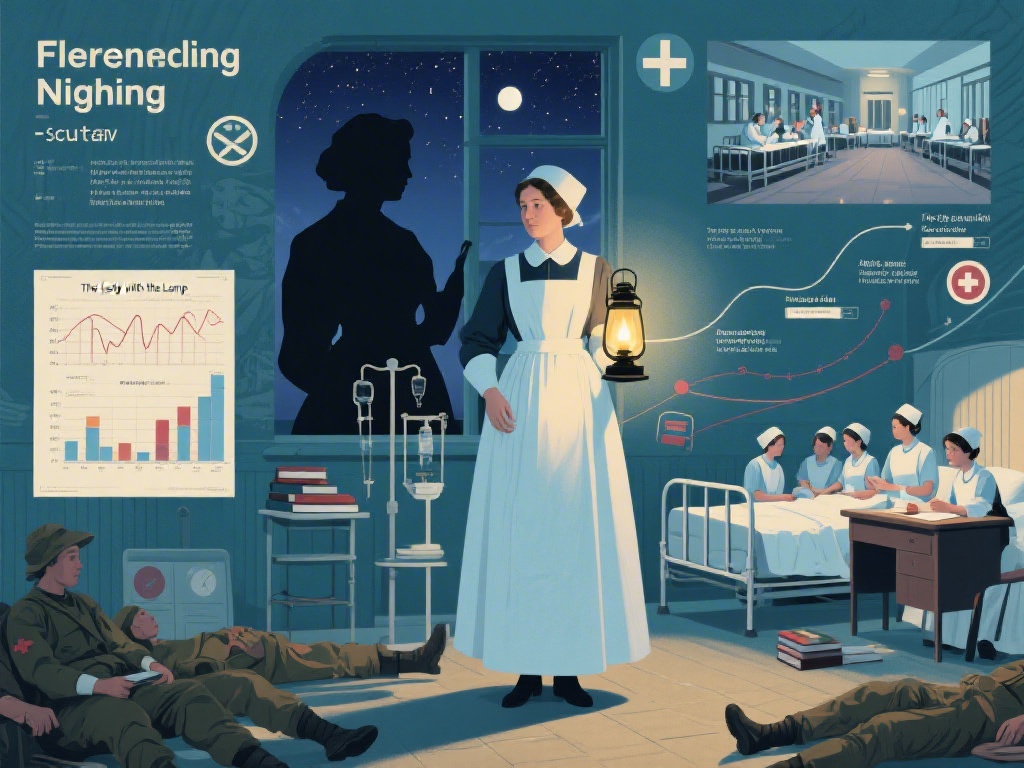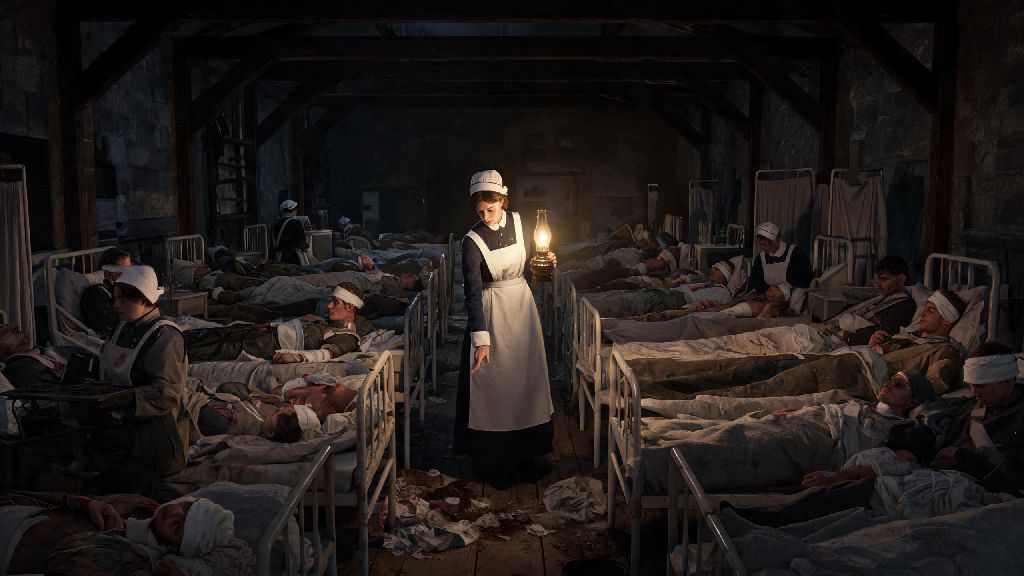
Most people recognize Florence Nightingale as the “Lady with the Lamp,” the gentle nurse who tended to wounded British soldiers during the Crimean War. But that popular nickname only scratches the surface of her decades of work as a statistician, reformer, and advocate for public health. If you’ve ever wondered what did Florence Nightingale achieve beyond walking hospital wards at night, you might be shocked to learn her work still shapes how we receive medical care today.
What Did Florence Nightingale Achieve During the Crimean War?
In 1854, the British government reached out to Nightingale after reports surfaced that 42% of soldiers fighting in the Crimean War were dying from preventable diseases, not battle injuries. She brought a team of 38 volunteer nurses to the Scutari military hospital in Turkey, where they found overcrowded wards, raw sewage flowing through hallways, no clean linen, and almost no access to fresh food for patients. Most officials at the time blamed the high death rate on weak soldiers or bad luck, but Nightingale knew poor sanitation was the real culprit.
She immediately implemented strict sanitation and hygiene protocols for the entire facility. Her team cleaned every ward, set up dedicated laundry services to prevent the spread of infection, established a specialized kitchen for patients with dietary needs, and even created a recreation area for soldiers to boost their mental health. Within two years of her arrival, the mortality rate at Scutari dropped to just 2%. That alone would be a lifetime achievement for most people, but it was only the start of her work.
Unlike other nurses of the era, Nightingale kept meticulous records of every patient’s condition and cause of death. She knew raw data would be the only way to convince government officials that better sanitation was worth funding. She didn’t just care for individual patients—she set out to fix the broken system that was killing them in the first place.
Pioneering Data Visualization for Evidence-Based Policy
Nightingale was a skilled statistician long before she became a nurse, and she used that skill to turn her Scutari data into actionable change. Most politicians of the era couldn’t parse dense tables of death statistics, so she invented a new type of graph to make her findings impossible to ignore: the polar area diagram. This circular, color-coded graph showed clearly that 83% of soldier deaths in Crimea were from preventable, sanitation-related illnesses like typhus and cholera, not combat wounds.
She presented this graph directly to members of Parliament, and it worked. Lawmakers approved sweeping reforms to military hospital sanitation almost immediately, and those reforms later spread to civilian hospitals across the UK. She became the first female member of the Royal Statistical Society in 1859, and later an honorary member of the American Statistical Association, for her work making data accessible to non-experts.
This work laid the foundation for evidence-based public health policy as we know it today. Before Nightingale, most health policies were based on opinion or tradition. She proved that hard data, presented clearly, could convince leaders to make changes that saved millions of lives. Even modern COVID-19 public health briefings that use graphs to show infection rates trace their roots back to her work in the 1850s.
Founding Modern Nursing as a Respected Professional Field
When people ask what did Florence Nightingale achieve that has the most day-to-day impact on modern life, her nursing reforms are usually the first answer that comes to mind. Before the 1860s, nursing was seen as a low-status, unskilled job for working-class women, and it was often associated with laziness or immorality. Most nurses had no formal training, and many worked for little to no pay in poor conditions.
She used the £45,000 raised by the public in honor of her Crimean War work to open the Nightingale Training School at London’s St. Thomas’ Hospital in 1860. This was the first secular nursing school in the world, and it set a standard for nursing education that spread across the globe. The school’s core principles are still used in nursing programs today:
She also published Notes on Nursing: What It Is, and What It Is Not in 1859, a guide to home care that was written for regular people, not just professional nurses. It sold over 10,000 copies in its first year, and it’s still in print today. The book taught ordinary people how to care for sick family members at home safely, and it helped shift public perception of nursing as a skilled, respectable career for women.
Lifelong Advocacy for Marginalized Groups and Healthcare Equity
Nightingale contracted a mysterious illness during her time in Crimea that left her mostly bedridden for the last 30 years of her life. But that didn’t slow her down. She wrote over 200 reports, letters, and books from her bed, advocating for healthcare equity for low-income and marginalized populations across the British Empire.
She spent decades pushing for reform of workhouse healthcare, which at the time provided substandard, neglectful care for poor people who couldn’t afford private treatment. She argued that all people, regardless of income, deserved access to clean, safe medical care, and her advocacy led to the creation of dedicated trained nursing staff for workhouse hospitals in 1868.
She also worked to improve public health in India, even though she never visited the country. She analyzed government data on mortality rates in Indian villages and found that poor sanitation and lack of clean water were killing millions of people every year. She published multiple reports on the issue, and her recommendations led to widespread investments in clean water infrastructure and public health education across rural India in the late 19th century. She also advocated for women’s right to higher education and supported the women’s suffrage movement later in her life, though she kept that advocacy mostly private to avoid drawing attention away from her public health work.
If you’ve ever asked what did Florence Nightingale achieve that still impacts your life today, you can find her legacy in almost every part of modern healthcare. The trained nurse who takes your temperature at a doctor’s office, the handwashing signs posted in every hospital, the public health campaigns that encourage you to get a flu shot—all of these trace back to her work. It’s easy to reduce historical figures to one catchy nickname, but her 60 years of advocacy, research, and reform saved far more lives than her work in the Crimea ever did, and her impact is still felt around the world every single day.