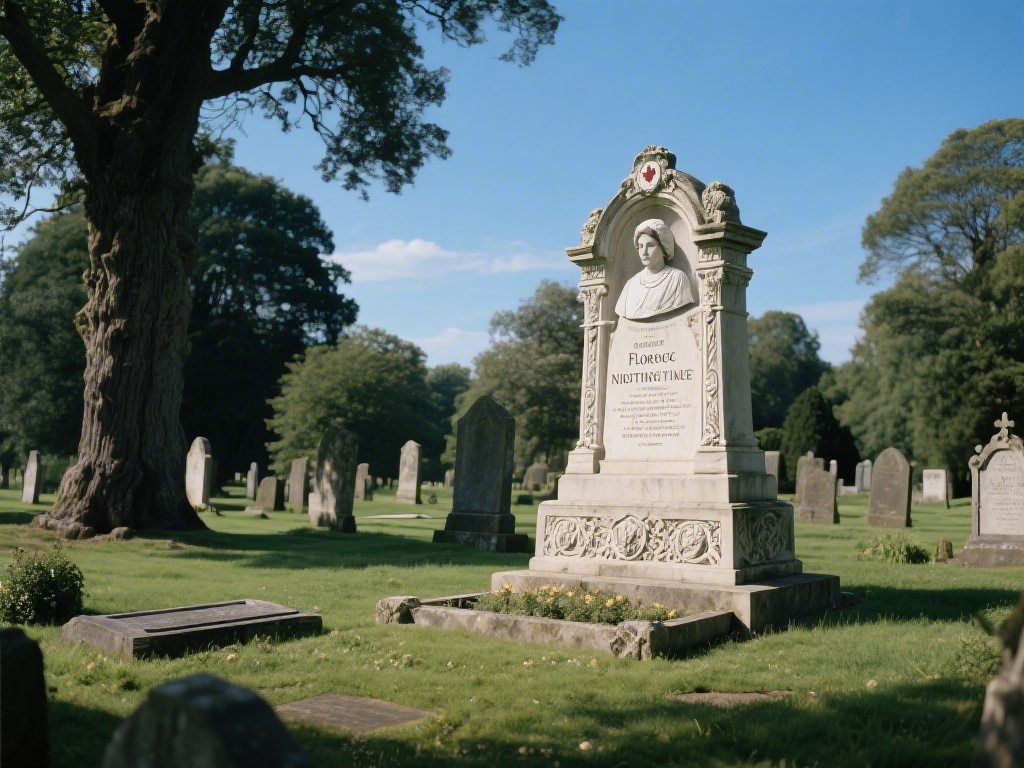
If you only know Florence Nightingale as the "Lady with the Lamp" who tended to wounded soldiers during the Crimean War, you’re only getting half of her story. I’ve always been frustrated that most school lessons only cover that gentle, caregiving side of her legacy, and leave out the brilliant researcher behind the reforms. Most casual histories frame her as a compassionate caregiver who reformed nursing, but far fewer people stop to ask is Florence Nightingale a scientist with contributions that extend far beyond bedside care. What you might not learn in basic history classes is that her work with data, public health systems, and disease prevention laid the groundwork for many modern medical practices we take for granted today.
Is Florence Nightingale a Scientist? Breaking Down Her Core Research
If you’ve ever wondered whether Florence Nightingale qualifies as a scientist, her membership in the Royal Statistical Society (the first woman granted that honor in 1859) should be your first clue. She received formal training in mathematics from her father as a child, and carried that passion for numbers into every part of her adult work. She was one of the first people to use data visualization to convince policymakers to fund public health reforms, a practice that is standard for public health campaigns today.
When she arrived at the Scutari military hospital during the Crimean War, she immediately noticed that most patient deaths came from preventable diseases like typhus and cholera, not combat wounds. She spent months collecting meticulous data on mortality rates, living conditions, and sanitation practices at the facility, and tracked how changes to hygiene impacted patient survival. Her work directly led to a 60% drop in mortality rates at the hospital in less than two years, a result that would be considered a major scientific breakthrough in any era.
The Lesser-Known Scientific Contributions That Changed Public Health
Many people who question if Florence Nightingale was a scientist focus only on her nursing work, ignoring that her care protocols were all rooted in rigorous data collection and testing. After the war ended, she didn’t return to a quiet life of public speaking and charity work. She spent the next 50 years conducting formal research on hospital design, sanitation protocols, and rural health access for poor communities across the UK. Her guidelines for hospital ventilation and waste management are still used in medical facility design around the world today.
Her key scientific achievements extend far beyond wartime care, and include:
- Development of the polar area diagram, a precursor to modern infographics used to share complex public health data with non-experts and policymakers
- Publication of 200+ books, pamphlets, and reports on sanitation, hospital administration, and patient care that were cited by public health officials for more than a century
- Creation of standardized mortality tracking systems that allowed for cross-hospital comparisons of care quality, the foundation of modern medical outcome tracking
- Research on the connection between poor living conditions and high mortality rates in working class communities, which led to the first national public health acts in the UK
Many people write these achievements off as "administrative work" rather than science, but that’s a mistake. The scientific method relies on collecting data, testing hypotheses, and using results to create repeatable, evidence-based solutions, and that’s exactly what Nightingale did for her entire career. She didn’t just care for patients; she studied why they got sick, and built systems to stop other people from getting sick in the first place.
Why Her Scientific Legacy Is Often Overlooked in Popular History
This erasure is why so many people still doubt if Florence Nightingale is a scientist, even with extensive evidence of her formal research output. 19th century gender norms played a huge role in erasing her scientific contributions from mainstream narratives. Back in her time, women were barred from most formal scientific institutions, and many of her male peers dismissed her work as "amateur" even when her data proved it saved thousands of lives.
She also intentionally framed much of her work as "charitable care" to get male politicians to take it seriously, because they would have rejected it outright if she presented it as formal scientific research. Popular culture latched onto the "Lady with the Lamp" narrative because it fit the ideal of a self-sacrificing, gentle female caregiver, which was far more palatable to Victorian audiences than the idea of a sharp, data-driven female scientist. Even today, most school curriculums only teach the nursing side of her story, leaving out the statistical and public health work that made that nursing work effective.
How Her Work Still Impacts Modern Science and Medicine Today
Even people who know her nursing work often don't realize that Florence Nightingale's scientific work is what made her nursing reforms so effective. Her focus on evidence-based care is the foundation of all modern medical and nursing practice. Before Nightingale, most medical decisions were based on tradition or anecdote, not hard data. She proved that tracking outcomes, adjusting practices based on results, and prioritizing preventive care could save thousands of lives every year.
For example, during the COVID-19 pandemic, public health officials used data visualization tools almost identical to her polar area diagrams to share infection and mortality rates with the public. Her guidelines for sanitation and ventilation were also cited repeatedly as key ways to reduce virus spread in hospitals and public spaces. She also paved the way for women in science, statistics, and public health, proving that women could make groundbreaking contributions even when they were excluded from formal academic spaces. She was posthumously awarded the Order of Merit in 1907, the first woman to receive the honor, in recognition of both her care work and her scientific contributions.
At the end of the day, there's no question that Florence Nightingale was far more than a kind nurse with a lantern. Her commitment to data, evidence-based solutions, and systematic research means the answer to is Florence Nightingale a scientist is a resounding yes. Her work saved millions of lives in her own time, and continues to save lives every day as we build on the public health and statistical frameworks she created. Next time you hear someone refer to her only as the Lady with the Lamp, take a minute to share the other half of her story: the pioneering scientist who changed medicine forever.