If you’ve ever stumbled across old photos of 19th century nurses or taken a first aid course that mentions the origins of modern hygiene standards, you’ve probably wondered how old would Florence Nightingale be today if she were still alive in 2026. Most people know her as the Lady with the Lamp, the nurse who revolutionized care during the Crimean War, but few stop to calculate just how many centuries of impact her work has had. We’re breaking down the exact math, plus the little-known details of her life that make her legacy feel even more relevant right now.
How to Calculate How Old Would Florence Nightingale Be Today in 2026
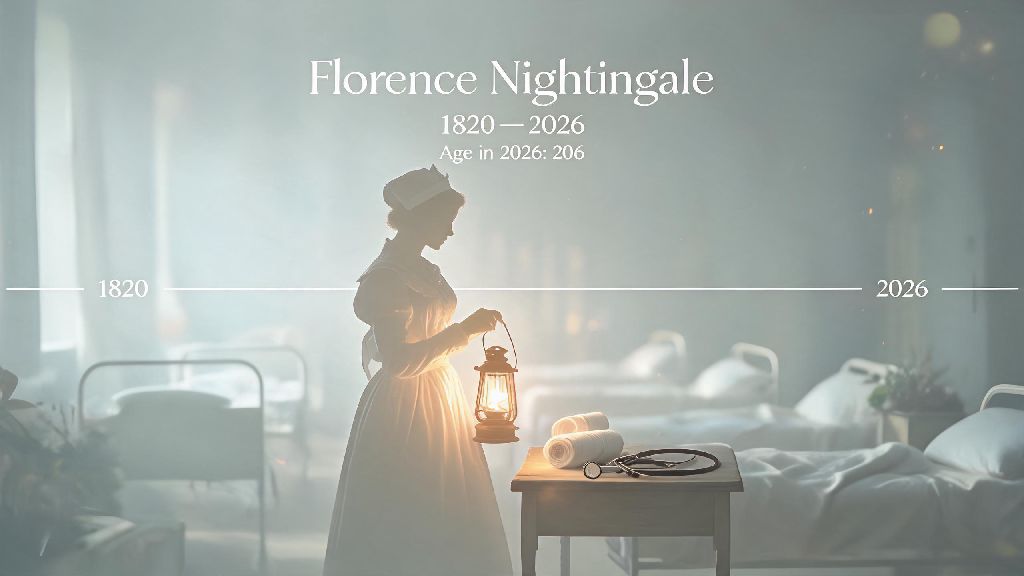
The math here is pretty straightforward once you have her exact birth date. Florence Nightingale was born on May 12, 1820, in the Italian city she was named after. To get her age in 2026, you just subtract her birth year from the current year: 2026 minus 1820 equals 206. That means if she were alive to celebrate her birthday in May 2026, she’d turn 206 years old.
Florence Nightingale was born in Florence, Italy to wealthy British parents who were traveling through Europe at the time, a fun fact many people miss when learning about her work. Her birthday is now recognized as International Nurses Day in over 100 countries, a tradition that started back in 1965 and is still going strong in 2026. If you’re doing the math earlier in the year before May 12, you could technically say she’d be 205, but most sources round up to her birthday age for general trivia purposes.
It’s wild to think someone born two full centuries ago still has such a huge impact on how we care for sick and injured people today. Most people who lived in the 1800s are forgotten within a few generations, but Nightingale’s work has only grown more influential as healthcare systems evolve.
Little-Known Facts About Florence Nightingale’s Life Beyond the Crimean War
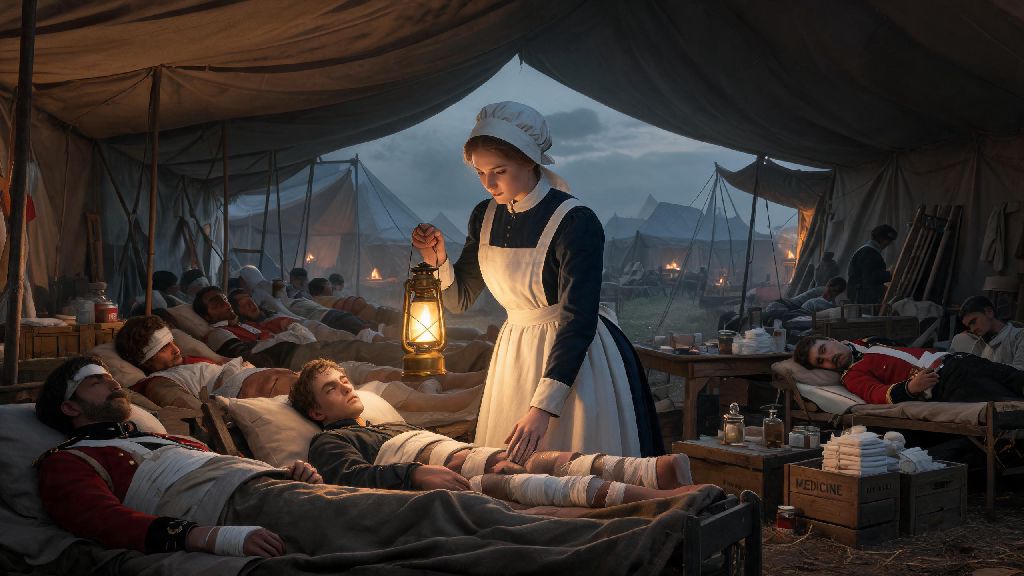
Most people only know the basic story of Nightingale carrying a lamp to check on patients at the Scutari Hospital during the Crimean War, but her career extended far beyond those few years. She was a brilliant statistician, administrator, and writer who spent decades pushing for systemic healthcare reform long after she left the war zone. You might be surprised to learn just how many contributions she made that have nothing to do with battlefield nursing.
Some of her most underrated contributions include:
She refused to get married at a time when upper-class women were expected to prioritize family over career, saying she believed marriage would prevent her from dedicating her full attention to healthcare reform. She also lived to be 90 years old, spending the last 30 years of her life bedridden with a mysterious chronic illness, but still writing over 200 reports, pamphlets and books from her bedroom.
Why Florence Nightingale’s Legacy Still Matters in 2026
It’s easy to write off Nightingale’s work as outdated, especially with all the advanced medical technology we have in 2026, but her core principles are still the foundation of modern patient care. I volunteered at a local community hospital last year, and the new nurse training manual had an entire section dedicated to her core care guidelines, which I definitely didn’t expect to see in 2026. Many of the protocols we take for granted today started with her observations in the Scutari Hospital.
Her emphasis on patient mental health is something that’s only become mainstream in healthcare over the last 10 years. She wrote extensively about the importance of fresh air, natural light, quiet spaces and even small personal touches like flowers for patients, at a time when most doctors only cared about physical symptoms. Today, almost every new hospital built in 2026 includes large windows, outdoor patient spaces and quiet rooms for family visits, directly based on her recommendations.
Her focus on data-driven care is also more relevant than ever. We now have electronic health records and AI tools to analyze patient outcomes, but the core idea of using data to identify gaps in care and reduce preventable deaths comes directly from her work with statistical diagrams in the 1850s. Even public health campaigns for handwashing and infection control that became standard during the COVID-19 pandemic trace their roots back to her hygiene guidelines for military hospitals.
Common Misconceptions About Florence Nightingale Debunked
After almost 200 years of being featured in textbooks and pop culture, a lot of incorrect information about Nightingale has become accepted as fact. Separating myth from reality helps give a more accurate picture of who she actually was and what she accomplished. Here are three of the most common myths you’ve probably heard that aren’t true.
The biggest myth is that she was just a kind, caring nurse who walked around with a lamp checking on patients. In reality, her biggest contributions were administrative and statistical, not hands-on patient care. She was hired to run the Scutari Hospital because of her organizational skills, not her nursing experience, and she spent most of her time there negotiating for funding, fixing supply chains and analyzing mortality data.
Her famous “Notes on Nursing” was written for ordinary women, not professional nurses, another fact most people get wrong. She wanted everyday people who cared for sick family members at home to have access to basic care guidelines, which is why the book was written in simple, easy to understand language instead of medical jargon. It sold over 10,000 copies in its first year of publication, and it’s still available in print in 2026.
Another common myth is that her family supported her decision to become a nurse. In reality, nursing was seen as a low-class job for poor, uneducated women in the 1800s, and her wealthy upper-class family was furious when she announced she wanted to study nursing. They refused to let her pursue training for years, and she only got the chance to work in the Crimean War after she gained support from powerful political contacts who overruled her family’s objections.
At the end of the day, asking how old would Florence Nightingale be today isn’t just a fun trivia question to pull out at game night. It’s a chance to reflect on how one person’s dedication to evidence-based care and human kindness can shape hundreds of years of history. If you’re celebrating International Nurses Day this May 12, take a minute to raise a cup to the 206-year-old pioneer who made every modern nurse’s work possible. You don’t have to work in healthcare to apply her principles, either: small acts of care and attention to data can make a big difference in almost any area of your life.