If you’ve ever taken a basic history or health class, you’ve probably heard Florence Nightingale referred to as the Lady with the Lamp, the gentle nurse who checked on wounded soldiers after dark during the Crimean War. But most people never learn the full scope of her impact, and the question of how many lives did Florence Nightingale save is rarely answered with complete context. Her legacy goes far beyond late-night ward rounds, and the total number of lives she saved is exponentially higher than casual history fans assume. This breakdown pulls from peer-reviewed historical records and her own published statistical work to give you the full, accurate picture.
How Many Lives Did Florence Nightingale Save Directly in the Crimean War?
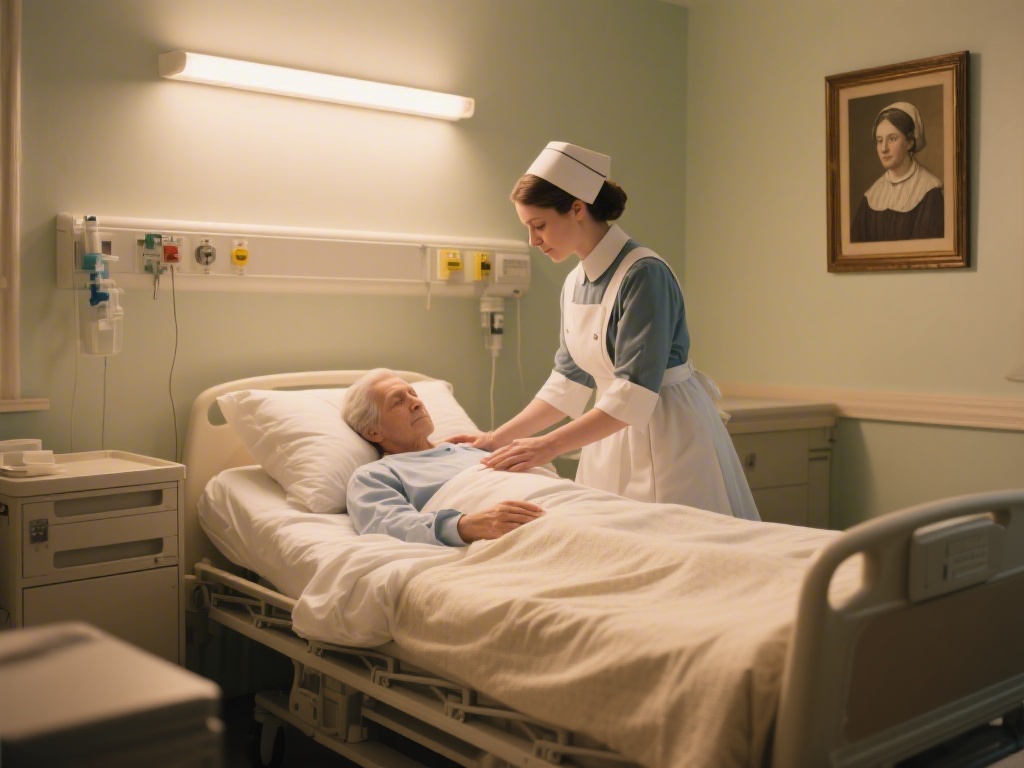
Florence arrived at the British military hospital in Scutari, Turkey, in 1854, at the height of the Crimean War. When she and her team of 38 volunteer nurses stepped through the doors, the facility was on the brink of collapse. At her lowest point, 1 in 2 soldiers admitted to the Scutari hospital did not survive their stay. Most deaths weren’t from battle wounds, either: 9 out of 10 fatalities were from preventable infectious diseases like typhus, cholera, and dysentery, spread by rotting sewage in the hallways, moldy food, and unwashed linens shared between patients.
Military officials refused to give her budget or permission to make changes at first, writing off the high death rate as an unavoidable consequence of war. She used her own money to buy soap, clean linens, and fresh produce for the wards when military officials refused to allocate funds. She and her team scrubbed the wards from floor to ceiling, set up a dedicated laundry system, and installed ventilation grates to let fresh air circulate. She also started tracking every patient outcome in a detailed ledger, so she could prove her changes were working.
By 1856, when the war ended, the mortality rate at Scutari had dropped from 42% to just 2%. Historians estimate that of the roughly 13,000 soldiers treated at the hospital during her time there, she and her team saved between 4,000 and 5,000 lives directly. That number alone would make her one of the most effective medical workers of the 19th century, but it’s just a tiny fraction of her total impact.
Indirect Lives Saved From Her Post-War Public Health Reforms
When Florence returned to Britain after the war, she didn’t take a victory lap. She spent the next 50 years lobbying politicians, publishing research, and building systems that would cut mortality rates for millions of people around the world. She refused to let the lessons from Scutari be forgotten, and used her fame to push for changes that were considered radical at the time.
Her most famous work, Notes on Nursing, was published in 1859 as a guide for home caregivers and professional nurses alike. Her 1859 book Notes on Nursing sold over 10,000 copies in its first year, and is still used as a core text in nursing programs today. The book outlined simple, evidence-based practices that anyone could use to reduce the risk of disease, and it was translated into 10 languages within a decade of its release.
She also used her statistical data to lobby Parliament for sweeping public health reforms that went far beyond hospital walls. The core practices she fought to make mandatory are still standard for healthcare facilities across the world today:
- Mandatory handwashing protocols for all clinical staff before and after interacting with patients
- Regular deep cleaning of hospital wards and shared patient spaces to eliminate mold and bacteria buildup
- Separate wards for patients with contagious infectious diseases to stop outbreaks from spreading to other patients and staff
- Systematic record-keeping of patient outcomes to identify care gaps and measure the impact of new policies
Common Myths That Skew Her Actual Life-Saving Impact
Over the years, pop culture has watered down Florence’s legacy to that of a kind, gentle caregiver who just happened to be in the right place at the right time. These myths erase the hard, confrontational work she did to push for change, and make her impact seem smaller than it actually is.
One of the most common myths is that she only saved lives by tending to patients at night. In reality, she spent less than 10% of her time in Scutari providing direct patient care. Most of her work was administrative, statistical, and political. She was a trained mathematician long before she became a nurse, and she invented the polar area diagram (a type of pie chart) to show military officials exactly how many deaths were caused by poor sanitation, rather than battle wounds. She was the first woman ever elected to the Royal Statistical Society, in 1859, for her work using data to drive public health policy.
Another myth is that she was a quiet, obedient worker who followed the rules. That couldn’t be further from the truth. She regularly leaked her mortality data to newspapers to pressure military officials into making changes, and she used her personal connection to Queen Victoria to bypass Parliament when lawmakers refused to act on her reform proposals. She was famously stubborn, and once spent 10 days bedridden from exhaustion after a 36-hour lobbying session to get the Public Health Act of 1875 passed.
How Her Work Saves Lives Even Today
You don’t have to be in a 19th century hospital to benefit from Florence’s work. The systems she built are the foundation of modern healthcare, and they still save thousands of lives every single day around the world.
During the 2020 COVID-19 pandemic, public health officials repeatedly cited her work as a reminder that basic hygiene and infection control are the first line of defense against new diseases, even with advanced vaccines and medical technology. The core guidelines of masking, social distancing, and isolating contagious patients all draw directly from the protocols she first formalized in the 1860s. Modern hospital infection control guidelines still list 80% of the core practices she first formalized in the 1860s.
She also transformed nursing from a low-wage, unskilled job that was mostly filled by working class women with no formal training, into a respected, regulated profession. She opened the first secular nursing school in the world at London’s St Thomas’ Hospital in 1860, and her curriculum became the model for every nursing program that followed. Today, there are 27 million registered nurses around the world, all working within the framework she built to provide safe, evidence-based care.
It’s easy to overlook that impact when most popular history only talks about her lamp. But every time you wash your hands before a doctor’s appointment, or stay in a clean hospital room, or get care from a trained nurse, you’re benefiting from the work she did more than 150 years ago.
When people ask how many lives did Florence Nightingale save, the short answer is that no one can give an exact final number. The 4,000 to 5,000 lives she saved in Crimea are just the start, and the tens of millions saved by her public health reforms are still growing every single day. I visited the Florence Nightingale Museum in London a few years back, and I was shocked to learn she did most of her post-war work from her bed, after developing a chronic illness during her time in Crimea that left her mostly housebound for 30 years. She never stopped fighting for better care for everyone, and her legacy is still keeping us safe long after her death.