Most people recognize Florence Nightingale as the “Lady with the Lamp,” the gentle nurse who cared for wounded British soldiers during the Crimean War. If you’ve ever wondered how does Florence Nightingale affect us today, you might be shocked at how many parts of modern daily life trace back to her quiet, data-driven advocacy. I first learned the full scope of her work in a college public health class, and I still stumble on new ways her ideas show up in my routine, from hospital safety signs to the infographics I scroll through on social media. She wasn’t just a nurse—she was a statistician, social reformer, and problem solver who built systems that outlived her by more than a century.
How Does Florence Nightingale Affect Us Today in Modern Healthcare Settings?
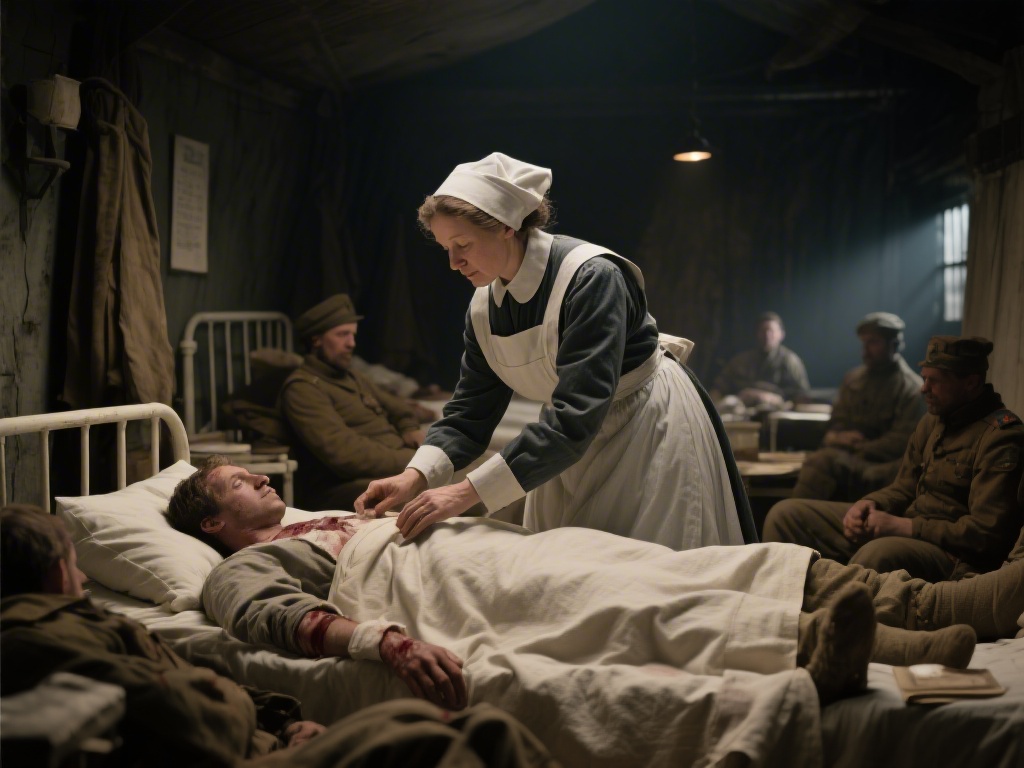
The most obvious place to see Nightingale’s impact is in every hospital, clinic, and nursing facility around the world. During her time in the Crimean War, she noticed that 10 times more soldiers died from preventable infections than from their actual battle wounds. She pushed military leadership to enforce clean ward linens, regular handwashing, access to fresh drinking water, and proper waste disposal, and cut the death rate in her ward by two-thirds in just six months. Those practices laid the foundation for the evidence-based infection control guidelines that are still the gold standard for patient safety today.
Before Nightingale, nursing was seen as a low-status, unregulated job, often filled by unskilled workers with no formal training. She used her post-war fame to raise funds for the first secular nursing school at St. Thomas’ Hospital in London, which opened in 1860. The school’s curriculum, which focused on hands-on clinical training, patient care ethics, and health science, became the global model for nursing education. That means every certified nurse working today can trace the core of their training back to the standards she set.
She also pioneered the idea of patient-centered care, a concept that is a core requirement for healthcare facilities today. She argued that nurses should listen to patients’ concerns, track their symptoms closely, and prioritize their comfort and mental well-being, not just treat their physical illness. She even wrote about the importance of natural light, quiet wards, and access to fresh flowers for patient recovery, small touches that many hospitals still incorporate into their patient experience plans now.
Her Data Visualization Work Shapes How We Share Information Today
Most people don’t know that Nightingale was a skilled statistician, and the first woman ever accepted into the Royal Statistical Society. She hated that policymakers and military leaders ignored dense, table-heavy reports about preventable deaths, so she invented a new type of visual called the polar area diagram to make her data impossible to ignore. The diagram used colored, wedge-shaped sections to show how many deaths each month came from infection, battle wounds, and other causes, and it convinced even skeptical politicians to invest in hospital sanitation reforms.
Her core insight that data should be accessible to non-experts is the foundation of all modern data communication. You can see her influence in almost every type of visual information you encounter on a daily basis, including:
- Public health infographics used during global health outbreaks to share risk and prevention guidance with general audiences who don’t have formal science training
- Business performance dashboards that turn raw sales and operational data into easy-to-interpret graphs and charts for leadership teams who don’t have time to sift through spreadsheets
- Climate change awareness materials that use simplified visuals to show long-term temperature and emission trends to people who don’t work in environmental science
Before Nightingale, data was seen as a tool only for highly educated experts. She proved that accessible data storytelling can drive real, large-scale policy change, a rule that every marketing team, public health department, and non-profit organization follows today. Even the simple bar graphs you see in news articles follow the core principles she established: keep visuals simple, highlight the most important takeaway first, and make sure the audience doesn’t have to work hard to understand the message.
Her Advocacy Laid Groundwork for Modern Public Health Equity Rules
Nightingale didn’t limit her work to military hospitals and wealthy patient populations. After the Crimean War, she spent decades advocating for better health conditions for poor working-class communities, prisoners, and people living in workhouses in the UK. She spent years collecting data on housing conditions, and proved that neighborhoods with no sewage systems, overcrowded housing, and no access to clean water had 3 times higher mortality rates than wealthier areas with proper infrastructure.
Her reports directly led to the passage of the 1875 Public Health Act in the UK, which mandated proper sewage systems, clean drinking water access, and safe housing standards for all residents, regardless of their income. That act became the model for public health legislation around the world, including the rules that govern drinking water safety, housing codes, and waste disposal in most developed countries today.
She also argued that health is a human right, not a privilege for people who can afford to pay for care. That idea is the core of all modern health equity initiatives that work to expand access to care for underserved communities, rural populations, low-income families, and marginalized groups. She also advocated for women’s right to access formal education and professional roles, paving the way for the millions of women working in healthcare and STEM fields today. Even at a time when women were barred from most professional spaces and political processes, she refused to back down from her demands, and used her data to prove her points when people dismissed her because of her gender.
Her Approach to Problem-Solving Teaches Key Lessons for Modern Work
One of the most underrated parts of Nightingale’s legacy is her approach to solving complex problems, a framework that still applies to every industry today, not just healthcare. She never relied on assumptions or anecdotes to make her case. When she thought poor sanitation was causing high death rates, she spent months collecting data, testing her hypothesis, and documenting her results before she approached leadership with requests for change.
That focus on evidence-based decision making is now the standard for everything from business operations to education policy to non-profit program design. No successful organization makes major changes based on guesswork now, and that shift can be traced back to reformers like Nightingale who proved that data-driven decisions get far better results than decisions based on tradition or intuition.
She also emphasized the value of quiet, consistent work over flashy, short-term wins. She contracted a chronic illness during the Crimean War that left her bedridden for 30 years after she returned to the UK, but she never stopped working. She wrote more than 200 reports, books, and pamphlets from her bed, advised healthcare leaders around the world, and continued advocating for public health reforms until she died at 90 years old. That lesson is especially relevant today, when social media rewards flashy, quick wins and viral moments. She proved that consistent, focused work that prioritizes long-term good over short-term praise can create change that lasts for centuries.
It’s easy to write off Florence Nightingale as a historical figure who only matters to nursing students, but her impact touches almost every part of modern life. Once you start looking for it, you’ll see how does Florence Nightingale affect us today in every handwashing sign in a hospital, every infographic that simplifies complex data, every policy that pushes for equal access to healthcare for low-income communities. You don’t have to work in healthcare to apply her lessons: prioritizing evidence over assumptions, centering the needs of the most vulnerable, and communicating information clearly are skills that work in every field, from education to tech to small business ownership. Her legacy isn’t just a story about a woman with a lamp—it’s a blueprint for building fairer, safer, more effective systems for everyone.