If you’ve ever spent time in a hospital, taken a first aid class, or read even a single chapter of European history, you’ve almost certainly heard of Florence Nightingale. Most people know her as the “Lady with the Lamp” who tended to wounded soldiers in a far-off war, but far fewer understand the full, messy, radical story of how did florence nightingale became famous beyond that cutesy nickname. Her fame wasn’t a random, overnight success story. It was built on decades of pushing back against family expectations, defying gender norms, and designing systemic changes that saved millions of lives long after she stopped working directly with patients.
Core Moments That Explain How Did Florence Nightingale Became Famous
Nightingale was born in 1820 to a wealthy, upper-class British family that expected her to marry well, run a household, and live a quiet, comfortable life. But from her early 20s, she insisted she felt a “divine calling” to care for sick people, a goal her family actively fought against for years. At the time, nursing was viewed as a disreputable, low-skill job for working class women, with zero formal training requirements and widespread association with alcohol abuse and misconduct. She didn’t care. She spent years sneaking study sessions on nursing and hospital administration, eventually taking a job running a small care home for wealthy women in London in 1853.
That same year, the Crimean War broke out between Britain, France, and the Ottoman Empire against Russia. Reports quickly flooded back to the UK that wounded British soldiers were dying at a horrifying rate—over 40% of casualties were dying not from their injuries, but from preventable infections, malnutrition, and exposure to cold. The British government, facing public outcry, asked Nightingale to take a team of 38 nurses to the military hospital in Scutari, Turkey, in 1854. What she found when she arrived was worse than any report had described: wards were covered in feces and rotting food, bedding was never washed, and there was barely enough clean water for patients to drink.
She immediately implemented a set of non-negotiable rules that shocked the military leadership that tried to block her work at every turn:
- Complete sanitization of all hospital wards, bedding, and food preparation spaces, with mandatory handwashing rules for all staff long before germ theory was widely accepted by mainstream medical communities
- Implementation of a strict patient record system to track mortality rates and identify gaps in care, which later formed the basis for modern health data collection used by hospitals around the world
- Creation of dedicated patient recreation and support spaces to reduce mental distress among soldiers recovering from life-altering injuries and amputations
Within two years of her arrival, the mortality rate at the Scutari hospital dropped to just 2.2%. The changes she made were so effective that military leaders eventually had to admit her methods worked, even if they resented taking orders from a woman.
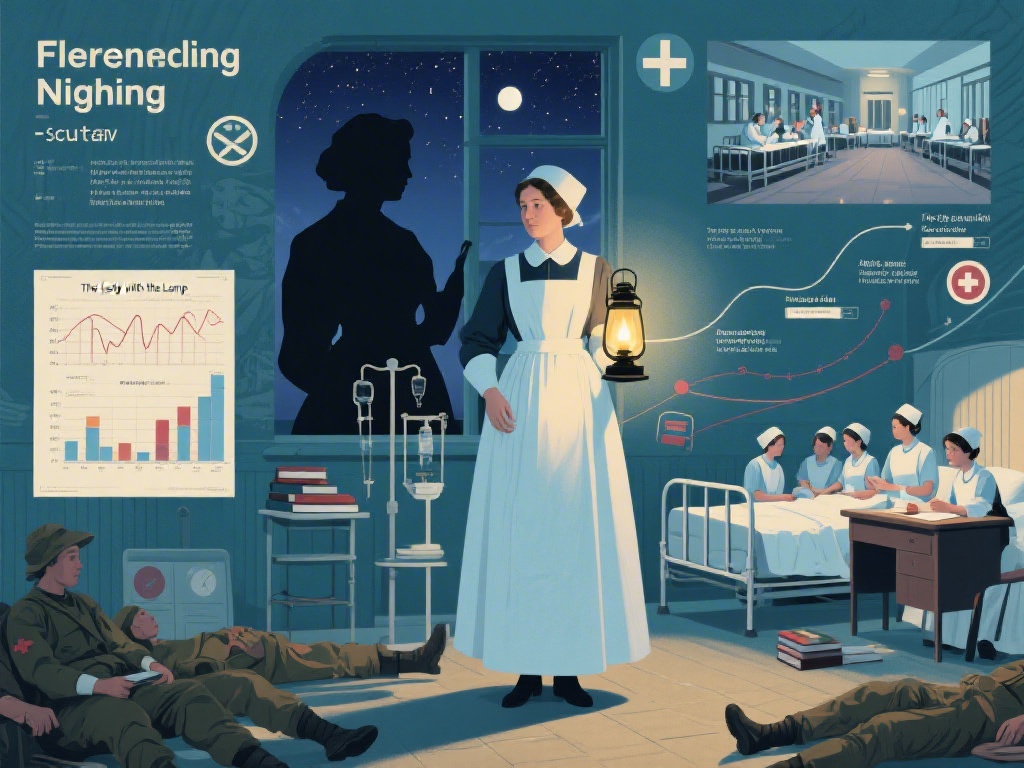
The "Lady with the Lamp" Nickname and Unexpected Media Frenzy
While Nightingale was busy reforming the Scutari hospital, soldiers stationed there started writing letters home about the tall, quiet woman who would walk the wards late at night with a small oil lamp, checking on patients who were in pain or struggling to sleep. Those letters got picked up by British newspapers, which were desperate for positive, uplifting stories amid constant reports of military losses and high casualty counts.
The British public was hungry for a hopeful, relatable hero during a deeply unpopular war, and Nightingale’s “Lady with the Lamp” persona fit perfectly. Newspapers printed poems about her, shops sold figurines of her with her lamp, and people across the country donated money to support her work. She didn’t court this attention, though. She hated the nickname at first, and refused to do interviews or pose for photos for years after the war ended.
Instead of leaning into the celebrity status, she used her new public influence to push for bigger changes. She knew that if the public already admired her, she could use that goodwill to force political leaders to listen to her demands for better public health infrastructure across the UK and the British Empire.
Her Post-War Data-Driven Advocacy That Cemented Her Fame
When Nightingale returned to the UK in 1856, she was already a household name, but she didn’t stop working. She spent months compiling all the patient data she’d collected in Scutari, and invented a new type of data visualization now called the “polar area diagram” (or rose diagram) to show political leaders that 83% of soldier deaths in the Crimean War were from preventable, hygiene-related causes, not battle injuries.
She was one of the first public health advocates to use data visualization to persuade political leaders to make systemic changes, at a time when most policy decisions were based on personal opinion and class bias. Her work directly led to the creation of the Royal Commission on the Health of the Army in 1857, which implemented sweeping reforms to military hospital hygiene that saved tens of thousands of lives in subsequent conflicts.
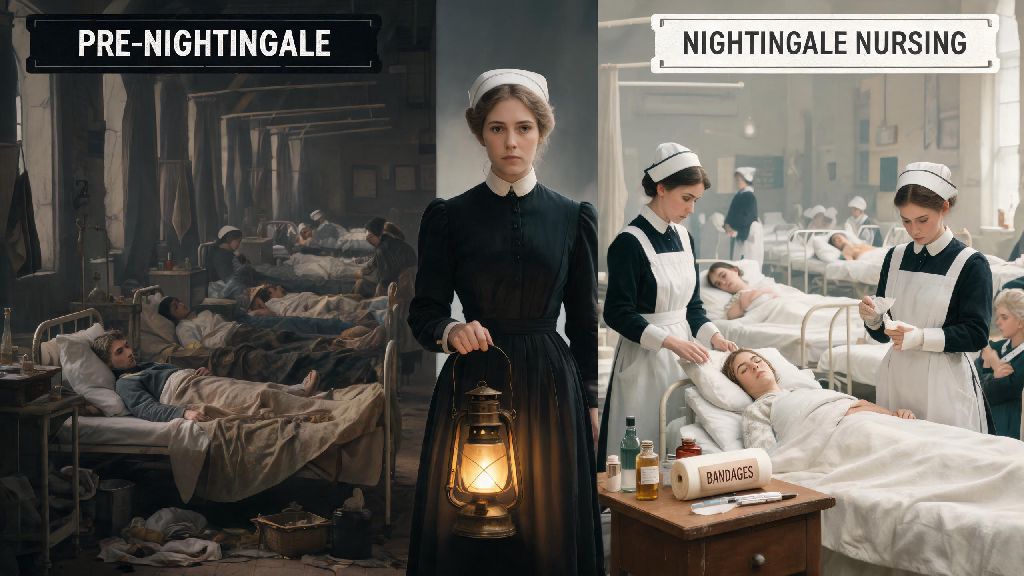
In 1860, she used public donations raised in support of her Crimean work to open the Nightingale Training School at London’s St Thomas’ Hospital, the first secular, formal nursing school in the world. For the first time, nursing was treated as a respected, skilled profession with strict training requirements, not a last resort for women who couldn’t find other work. Graduates of her school went on to set up nursing programs across the globe, spreading her methods everywhere from North America to rural India.
Common Myths About Her Rise to Fame (And The Real Truth)
Plenty of simplified stories about Nightingale have spread over the years, and many of them erase the most impressive parts of her work. A lot of people still assume she only got famous because she was a nice woman who cared about soldiers, but that’s not the full story at all. She never set out to become a public figure, and often found the constant media attention frustrating and distracting from her actual work. She spent most of the last 30 years of her life bedridden due to a mystery illness she likely contracted in the Crimea, but she still wrote over 200 books, pamphlets, and reports on public health from her bed.
I’ve spent years researching 19th century public health reforms for my own writing, and I’m still shocked by how many of Nightingale’s protocols are still followed today without most people even knowing where they came from. Another common myth is that her only contribution was making nursing more respectable. That ignores the decades she spent advocating for better sanitation in low-income neighborhoods in the UK, and her work overhauling public health systems in British-ruled India that reduced mortality rates by 50% in just 20 years. She also wrote one of the best-selling nursing textbooks of all time, “Notes on Nursing”, which is still in print today and used as a reference for new nurses in many countries.
Her work laid the foundation for modern infection control protocols that we still rely on today, including during global public health emergencies like the COVID-19 pandemic. The handwashing, sanitization, and patient tracking rules that became standard around the world during that crisis were all first tested and proven by Nightingale almost 170 years ago.
Now that you know the full story of how did florence nightingale became famous, you can see her legacy is far more complex and impactful than the simple “Lady with the Lamp” image most of us grow up with. She wasn’t just a kind woman who cared for sick people. She was a stubborn, data-obsessed reformer who used her unexpected fame to tear down broken systems and build better ones that still save millions of lives every single year. If you take one thing away from her story, let it be this: even small, consistent acts of pushing back against unfair systems can create change that lasts for centuries.