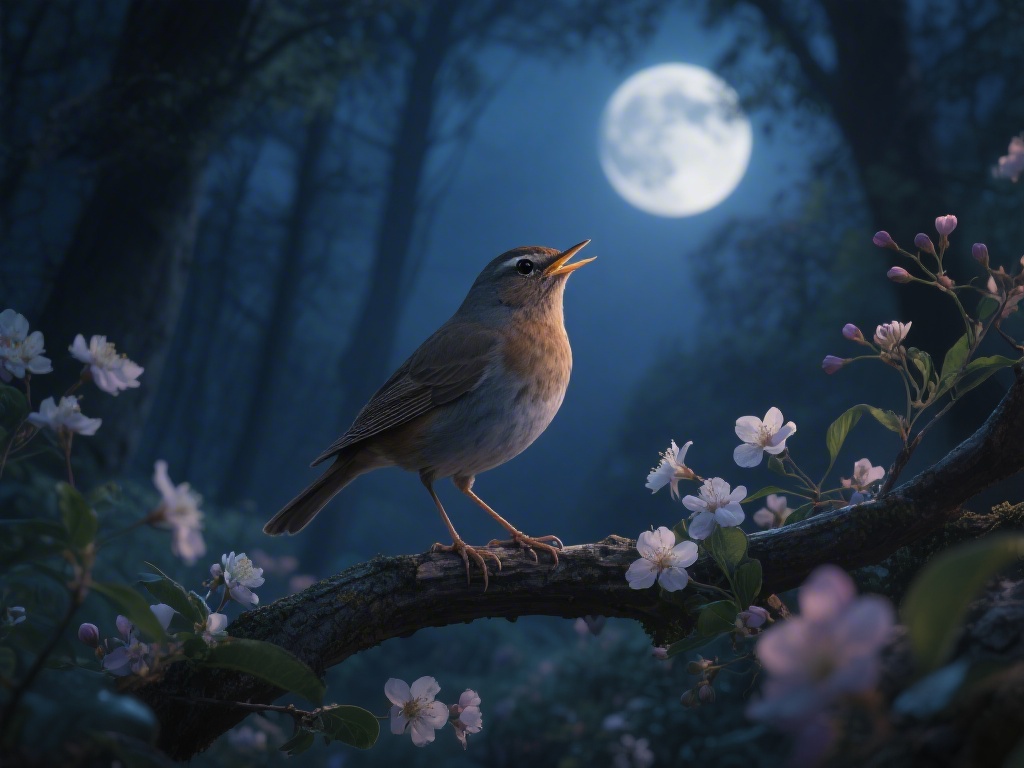
Do nightingales sing at night? This question has intrigued bird enthusiasts and musicians for centuries. In this article, we will delve into the truth behind this captivating phenomenon and explore the history, lore, and myths surrounding the nightingale.
Do Nightingales Sing at Night? The TruthContrary to popular belief, nightingales do not sing exclusively at night. While they are often associated with the night, these birds are known for their melodious songs during the early morning and late evening hours. The misconception that nightingales sing only at night may stem from the fact that their songs are more prominent during these times, making them seem like nocturnal creatures.
The Nightingale's MelodyThe nightingale's song is a complex and beautiful melody that has inspired poets and composers for generations. The bird's song consists of a series of trills, warbles, and whistles, which can last for several minutes. The nightingale's ability to produce such a wide range of sounds is due to its unique vocal cords and the way it uses its respiratory system.
Nightingale Lore and MythsThroughout history, the nightingale has been surrounded by various myths and legends. In Greek mythology, the nightingale was believed to be the spirit of a beautiful woman who was transformed into a bird after being betrayed by her lover. The nightingale's song was said to be a lament for her lost love.
In medieval Europe, the nightingale was considered a symbol of love and fidelity. It was believed that hearing the nightingale's song would bring good luck in love. Additionally, the nightingale was associated with the Virgin Mary, and its song was thought to be a form of praise for the Mother of God.
The Nightingale's Conservation StatusUnfortunately, the nightingale's population has been declining due to habitat loss, climate change, and other environmental factors. Conservation efforts are underway to protect these enchanting birds and preserve their unique songs for future generations.
How to Spot a NightingaleIf you're interested in spotting a nightingale, the best time to do so is during the spring and summer months. Nightingales are most active during the early morning and late evening hours, so keep an ear out for their distinctive songs during these times. They are often found in dense woodlands and shrubbery, where they can hide from predators.
ConclusionSo, do nightingales sing at night? While they are not exclusively nocturnal, their songs are indeed more prominent during the early morning and late evening hours. The nightingale's enchanting melody has inspired countless stories, myths, and songs throughout history. By understanding the truth behind this captivating bird, we can appreciate its beauty and work towards its conservation.