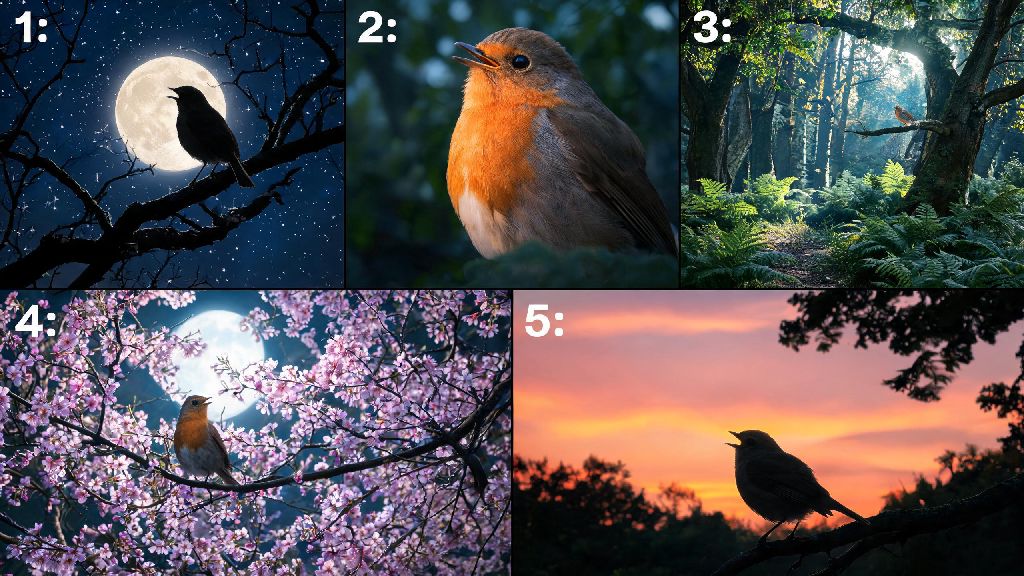
If you’ve ever wandered through a thick European or Asian woodland at dusk and heard a rich, trilling melody cut through the quiet, you’ve likely experienced one of nature’s most magical moments: a nightingale sings. Most people only recognize these birds from poetry or old folk tales, but their vocal abilities and the stories tied to their songs are far more interesting than what you might have read in high school literature class. I’ve spent the last three years leading bird-watching walks across southern England, and I still stop in my tracks every time I hear that first nightingale call of spring. You don’t need fancy binoculars or a degree in ornithology to appreciate these tiny birds’ incredible talent.
Why a Nightingale Sings Differently Than Every Other Backyard Songbird
Most songbirds have a limited set of calls they use for mating, warning off predators, and communicating with their flock, but nightingales are built for vocal variety. Part of their unique ability comes from their specialized vocal organ, which lets them produce two separate tones at the same time, creating that layered, almost musical sound people recognize instantly. I once had a group of 12 bird watchers with me who all gasped in unison when we heard one start singing 20 feet away from our path – even the experienced birders in the group said it was the loudest, clearest nightingale call they’d ever heard.
There are a few key traits that set their songs apart from similar species. Male nightingales have a repertoire of more than 200 unique call variations, which is 10 times more than the average robin or blackbird. They learn these calls from older males in their first year of life, and will tweak and adjust their personal repertoire throughout their lives to stand out to potential mates. Their songs can carry up to 2 miles on quiet, windless nights, which is a huge advantage for a bird that lives in thick, vegetation-heavy habitats where visual signals don’t travel far. Only unpaired male nightingales sing regularly after dark, so if you hear one singing late at night, you know he’s still looking for a mate.
The Centuries of Cultural Lore Tied to Nightingale Calls
People have been fascinated by nightingale songs for thousands of years, and these birds show up in stories and art from almost every culture across their natural range. Even hundreds of years ago, people would travel for miles just for the chance to witness the moment a nightingale sings at dusk. Ancient Greek myths tied nightingales to themes of grief and undying love, with one famous story telling of a princess who was transformed into a nightingale after a terrible tragedy, so she could sing of her pain for all eternity.
In medieval Europe, people believed nightingales stayed awake all night to guard their nests from snakes, so their songs were seen as a sign of protection and loyalty. By the Romantic era of the 18th and 19th centuries, nightingales became a core symbol of artistic inspiration and unrequited love. John Keats’ Ode to a Nightingale remains one of the most studied Romantic poems in the world, written after the poet heard a nightingale singing outside his London home for hours one spring evening. In Chinese and Japanese folklore, nightingale songs are associated with spring arrival, good fortune, and even imperial favor, with many ancient poets referencing their calls as a sign of happy times ahead.
How to Spot (and Hear) a Nightingale on Your Next Outdoor Walk
Most first-time listeners are shocked by how loud and clear a nightingale sings, even from hundreds of feet away. But you won’t stumble on one by accident in most suburban areas, since they have very specific habitat preferences. If you want to hear one for yourself, these simple tips will drastically increase your chances of success:
You should never approach a spot where you hear a nightingale singing too closely, as this can disrupt their mating patterns or cause them to abandon their nests entirely. You won’t ever find a nightingale in a heavily manicured park or suburban backyard, since they need dense, undisturbed vegetation to nest and hunt for insects. 90% of nightingale sightings in the UK happen in just 10 counties in the southeast, so if you’re in that area, you have a far higher chance of hearing one than you would in northern parts of the country. If you’re not sure where to start, local bird-watching groups almost always share public, responsible viewing spots each spring.
Common Myths About Nightingale Songs Debunked
There are a lot of widespread misconceptions about nightingales and their songs that have spread through pop culture and old folk tales, and many of them aren’t rooted in fact. The most common myth I hear on my walks is that all nightingales sing – that’s not true. Only male nightingales produce the elaborate, famous songs people recognize. Female nightingales only make short, simple chirps to communicate with their mates or their young, and they never sing the extended melodies males are known for.
Another common myth is that nightingales only sing at night. Unpaired males sing after dark to reach more potential mates, but all males sing frequently during the day too, especially early in the mating season. They’re just harder to hear during the day when hundreds of other bird species are also calling. A lot of people also assume nightingale songs are always happy or romantic, but they have different calls for different purposes. Some calls are meant to attract mates, others are meant to warn other males off their territory, and some are even used to signal to nearby birds that a predator is nearby. Nightingale populations have declined by more than 90% across Europe since 1970, due to habitat loss and climate change, so hearing one in the wild is a far rarer experience than it was even 30 years ago.
Whether you’re a casual hiker, a poetry fan, or a dedicated bird watcher, the moment a nightingale sings is something that sticks with you for years. Taking the time to learn about their behavior, the stories tied to their songs, and how to spot them responsibly helps you appreciate that small, magical moment even more. Next time you’re out in the woods on a warm spring evening, slow down, stay quiet, and listen closely – you might just get to hear that iconic melody for yourself.