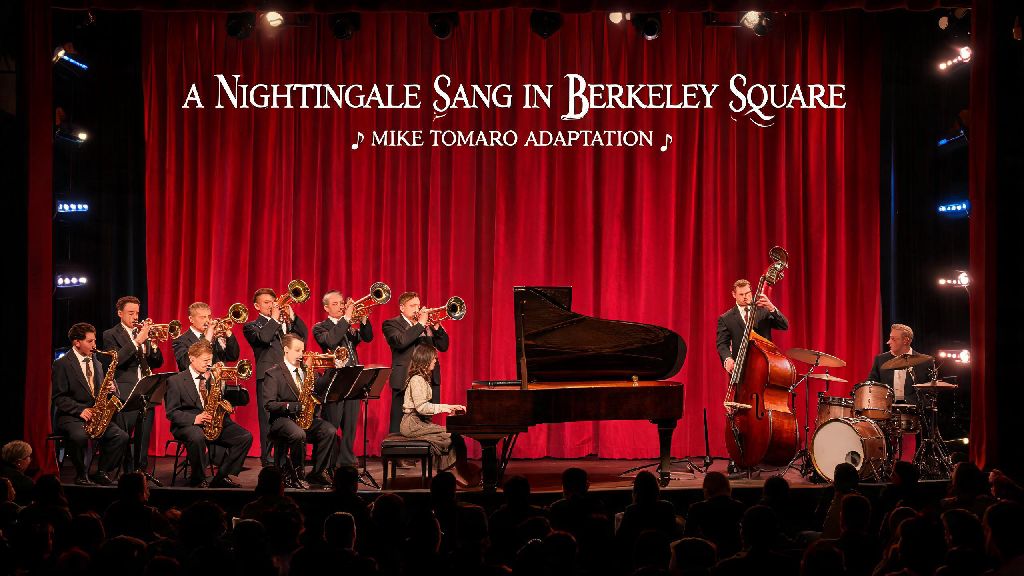
If you’ve spent any time digging through modern big band charts, you’ve almost certainly come across A Nightingale Sang in Berkeley Square Mike Tomaro arrangement. First published in the early 2000s, this adaptation of the 1940s classic has become a staple for high school, college, and professional big bands worldwide, balancing nostalgic charm with accessible, dynamic scoring that works for almost any ensemble size. I first stumbled on the chart when I was subbing for a second tenor sax player in a local community big band, and I was immediately struck by how Tomaro kept the original song’s soft, romantic core while adding just enough punch to keep a modern audience engaged.
The Origins of A Nightingale Sang in Berkeley Square Before Tomaro’s Adaptation
The original song dates back to 1939, written by Eric Maschwitz and Manning Sherwin while the pair were working in London, just weeks before the start of World War II. It was first performed in the 1940 revue New Faces, and quickly became a wartime favorite, with soldiers and civilians alike clinging to its soft, hopeful story of a chance romantic encounter in one of London’s most iconic neighborhoods. Early recordings by artists like Vera Lynn and Nat King Cole cemented its place as a cross-Atlantic jazz standard, but for decades, most big band arrangements of the track were either too simplistic for experienced ensembles or overly complex for amateur groups to pull off well. Tomaro’s arrangement filled that gap almost immediately after its release, offering a middle ground that was satisfying to play for seasoned musicians and approachable for groups still building their skill set.
What Makes Mike Tomaro’s Adaptation Stand Out From Other Versions
Tomaro has spent decades as a jazz educator, composer, and saxophonist, so he knows exactly what works for both performers and audiences when arranging classic standards. His take on this nightingale-themed track is no exception, with a few key choices that set it apart from every other chart on the market. First, he keeps the original melody largely intact for the first chorus, giving the featured soloist plenty of room to lean into the song’s romantic, nostalgic tone without unnecessary embellishments. He also adds a subtle, swinging background horn section that builds slowly across the track, peaking at the final chorus without overwhelming the lead line.
Most people don’t realize how much work goes into making a big band arrangement that’s both high quality and accessible for groups of all skill levels. It’s a lot like designing a casual game that’s fun for new players but still has enough depth to keep long-time fans coming back, the same way Rummy Ludo balances simple core rules with enough variation to feel fresh every time you play. Tomaro spent almost two years tweaking the chart before it was published, testing it with his own university jazz ensemble to work out awkward transitions and adjust parts that were too difficult for less experienced players.
Tips for Performing A Nightingale Sang in Berkeley Square Mike Tomaro Chart
I’ve played this chart at least 20 times over the last 10 years, in everything from small community band gigs to formal college jazz festivals, and I’ve picked up a few tricks to make the performance go as smoothly as possible. First, make sure your featured soloist spends time listening to the original 1940s recordings before they rehearse the track. The biggest mistake most groups make is leaning too hard into the modern swing, and losing the soft, dreamy tone that makes the song so beloved in the first place. You don’t have to play it exactly like Vera Lynn did, but keeping that gentle, hopeful core front and center will make your performance stand out from every other band that’s playing the same chart.
For the rhythm section, make sure the drummer keeps the brush work soft through the first two choruses. It’s tempting to lean into the louder swing sections early, but the slow build is what makes the final chorus hit as hard as it does. If you’re playing for a smaller audience, you can even cut the final modulated section entirely to keep the soft, intimate tone consistent from start to finish. I’ve done this for small cocktail hour gigs, and it always gets more positive feedback than the full, loud version.
Where to Find Legitimate Copies of the Arrangement and Related Resources
Since this is one of the most popular big band charts on the market, there are a lot of low-quality pirated copies floating around online, usually with missing parts or incorrect transcriptions that will cause headaches during rehearsal. Always buy your copy from a legitimate sheet music retailer, and make sure you’re getting the full set of parts for your ensemble size, not just a condensed score. Legitimate copies come with permission to perform the track publicly for non-commercial gigs, so you don’t have to worry about copyright claims when you play it at local festivals or community events.
If you’re looking for reference recordings, there are dozens of high-quality performances of the Tomaro arrangement uploaded to streaming platforms, from small high school bands to professional touring big bands. Listening to a few different versions can help you decide what changes you want to make for your own ensemble, whether that’s slowing down the tempo for a more romantic feel or adding a longer solo section for your featured player. If you’re a newer player assigned to the lead part, you can also find free play-along tracks that let you practice with a pre-recorded rhythm section to get comfortable with the tempo and phrasing before your first rehearsal.
Whether you’re a jazz educator looking for a new crowd-pleasing chart for your ensemble, a player who’s just been handed the solo part for an upcoming gig, or just a fan of classic jazz standards, the A Nightingale Sang in Berkeley Square Mike Tomaro arrangement is one of the most well-crafted, accessible adaptations of the track ever written. It’s stood the test of time for almost 20 years for good reason, and it’s sure to remain a staple of big band setlists for decades to come.