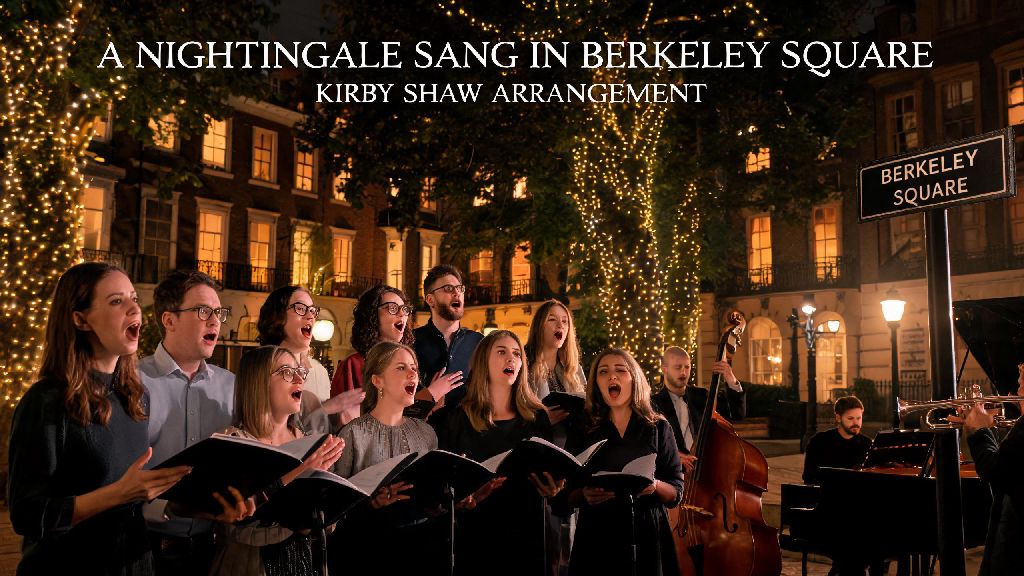
I first stumbled on A Nightingale Sang in Berkeley Square Kirby Shaw arrangement when my college jazz choir director handed us the sheet music for our end-of-semester gala. I’d heard the original 1930s standard dozens of times before, but Shaw’s take on it felt fresh, warm, and surprisingly accessible even for our mixed-skill group. Most people know the song as a whimsical, romantic ode to unexpected magic in the heart of London, but Shaw’s arrangement leans into soft jazz harmonies and flexible vocal lines that work for everything from small acapella groups to full 40-person choirs. If you’re a choir director, vocalist, or just a fan of classic jazz reimagined, this deep dive will break down everything that makes this version stand out, plus actionable tips for pulling off a great performance.
What Makes the A Nightingale Sang in Berkeley Square Kirby Shaw Arrangement Unique
Kirby Shaw is one of the most prolific choral arrangers of the last 40 years, best known for taking iconic jazz and pop standards and adapting them for amateur and student vocal groups without losing their original charm. This arrangement is no exception. He kept the original song’s gentle, dreamlike melody intact, but reworked the supporting harmonies to be more forgiving for singers who might not have professional-level pitch control. Shaw’s arrangement is available for both SATB and SAB choirs, which is a big reason it’s become a staple in high school and college choir repertoires across the US and Europe.
Unlike other jazz arrangements of this song that lean into complex scat sections or overly fast tempos, Shaw’s version prioritizes the original, heartfelt lyrics. He also added an optional acapella opening section that groups can use if they don’t have a piano or accompanist available. He intentionally left room for ad-libs and personal interpretation, so groups can add their own flair without straying from the core of the song. I’ve seen groups add everything from soft hand percussion to a short tenor solo in the middle verse, and all of those choices fit perfectly within the structure Shaw laid out.
The History Behind the Original Song and Shaw’s Adaptation
The original A Nightingale Sang in Berkeley Square was written in 1939 by lyricist Eric Maschwitz and composer Manning Sherwin, shortly before World War II broke out across Europe. Maschwitz reportedly wrote the lyrics while sitting at a cafe overlooking London’s Berkeley Square, inspired by the idea that even in a busy, familiar city, you can stumble on small, magical moments that feel like they’re out of a fairy tale. The song quickly became a staple of wartime British radio, popularized by singer Vera Lynn, and later covered by artists ranging from Frank Sinatra to Ella Fitzgerald.
Shaw adapted the song for choirs in the early 1990s, after he received dozens of requests from high school choir directors who wanted a version of the standard that would work for mixed-skill groups. Most existing choral arrangements at the time were designed for professional vocal ensembles, with tight, difficult harmonies that were out of reach for most student groups. Shaw kept the original’s core nostalgic, almost dreamlike tone by keeping the melody largely unchanged, only adding subtle harmonic layers in the alto and tenor lines to give it a richer, more modern feel. He also cut the original’s overly long instrumental intro to make it more suitable for choral performances that usually run 3 to 4 minutes max.
Top Tips for Performing This Arrangement Successfully
I’ve directed this arrangement three times now for different community choirs, and I’ve picked up a handful of tricks that make the performance go off without a hitch every time. Most groups struggle with the soft, opening lines and the shift to the more upbeat middle section, but these small adjustments will make a huge difference, even if your group only has a few weeks to rehearse.
One common mistake I see groups make is overdoing the dynamics. This song isn’t meant to be belted or performed with huge dynamic shifts. The magic comes from the soft, warm harmonies that feel like a quiet secret shared with the audience. You don’t need to add fancy lighting or choreography either – a simple, stationary performance with soft warm lighting is more than enough to sell the mood.
Common Misconceptions About This Arrangement
A lot of people assume that because Kirby Shaw is known for accessible, student-friendly arrangements, this version is too simple for more advanced choral groups. That’s not true at all. I’ve seen professional acapella groups perform this arrangement with layered harmonies and subtle improvisation that brought audiences to tears. The arrangement’s simplicity is actually its biggest strength, because it can be adapted to fit almost any group’s skill level and style. You can add extra harmonies, adjust the tempo, or even rework the verse order to fit your group’s unique strengths, and it will still feel true to the original song.
Another common misconception is that this song can only be performed for formal, old-fashioned events. I’ve seen groups perform it at outdoor summer concerts, coffee shop open mics, and even LGBTQ+ wedding receptions, and it always lands well. The core theme of finding unexpected magic in a familiar place is universal, no matter the audience. You don’t need a full band to perform this arrangement well – it sounds just as beautiful with only a piano accompaniment, or even completely acapella if your group has a strong bass section. I once saw a small 8-person acapella group perform it at a park concert with no mics, and the entire crowd went quiet to listen, it was that lovely.
At the end of the day, the A Nightingale Sang in Berkeley Square Kirby Shaw arrangement has stayed popular for decades because it balances respect for the original song with flexible, thoughtful design that works for almost any vocal group. Whether you’re a new choir director looking for a reliable, crowd-pleasing piece for your next concert, or a vocalist who loves digging into classic jazz standards, this arrangement is worth adding to your repertoire. It’s warm, accessible, and full of the quiet magic that made the original song a staple for nearly 80 years. Next time you’re looking for a piece that will connect with your audience and be fun for your group to rehearse, give this one a try – you won’t regret it.