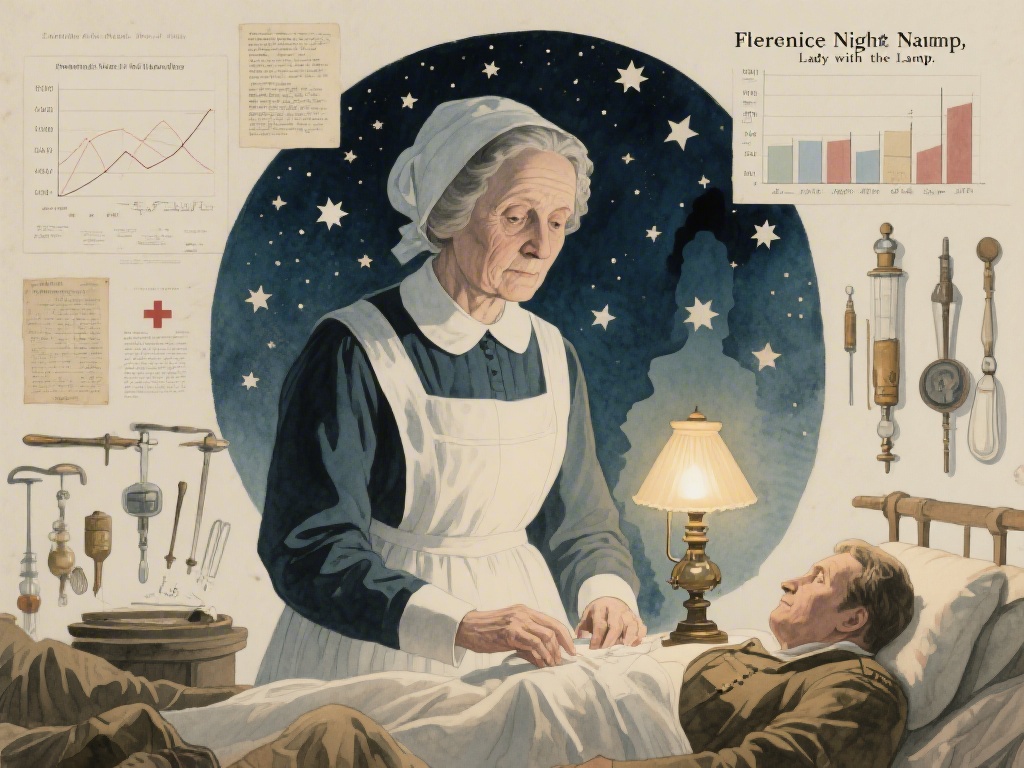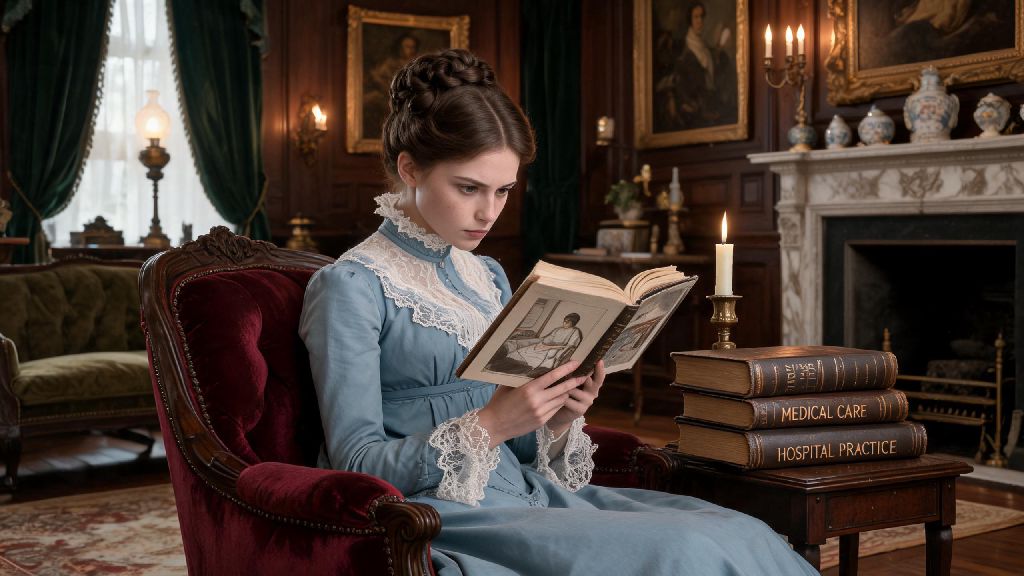
If you’ve ever studied nursing history, you’ve almost certainly wondered why did Florence Nightingale want to be a nurse, especially given her privileged upbringing in 19th-century upper-class English society. Most people know her as the Lady with the Lamp, caring for wounded soldiers during the Crimean War and revolutionizing hygiene standards in medical facilities, but far fewer understand the personal and ideological drivers that pushed her to reject the expected life of a wealthy wife and mother for a career that was widely seen as low-status, even disreputable, at the time. I’ve spent years researching underrated stories of 19th-century women trailblazers, and the real reasons behind Nightingale’s career choice are far more layered than most generic textbook summaries let on.
Core Reasons Behind Why Florence Nightingale Wanted to Be a Nurse
Nightingale’s choice to pursue nursing wasn’t a spontaneous decision made in her 30s, as many people assume. It was the result of decades of careful thought, personal experience, and quiet conviction that built up from her teenage years onward. The four biggest drivers of her choice are:
Most pop culture retellings only mention the spiritual calling, but the other three factors played just as big a role in her final decision. She didn’t just want to care for people individually—she wanted to fix the broken systems that made so many people get sick or die unnecessarily in the first place. That’s a key detail most people miss when they reduce her to a kind, caring woman with a lamp, rather than the sharp, data-driven reformer she actually was.
The Societal Barriers She Faced to Pursue Nursing
When Nightingale first shared her career goals with her family in 1837, they reacted with outright horror. At the time, nursing was widely seen as a job for uneducated, poor, or even morally questionable women, with most facilities having no formal training programs and extremely low standards for care. Upper-class women were expected to marry, run a household, and participate in charity work from a distance, not get their hands dirty tending to sick strangers in crowded, unsanitary hospitals.
Her parents forbade her from pursuing nursing for nearly a decade, and tried to pressure her into accepting marriage proposals from suitable upper-class suitors to redirect her focus. She turned down multiple proposals, including one from a prominent politician she cared for deeply, because she knew marriage would mean she could never dedicate herself fully to her work. It wasn’t until 1851, when she was 31 years old, that her family finally relented and allowed her to complete formal nursing training at the Institute of Protestant Deaconesses in Kaiserswerth, Germany.
She later wrote that those 10 years of pushback from her family only made her more committed to her goal, because she saw firsthand how societal expectations for women were holding back critical progress in public health. If women were allowed to work in formal medical roles, she argued, thousands of preventable deaths could be avoided every year.
How Her Early Experiences Shaped Her Approach to Nursing
Before she took on her famous role in the Crimean War, Nightingale spent years studying healthcare systems across Europe, taking detailed notes on hygiene practices, staff training, and patient outcome data wherever she went. She was particularly fascinated by the work of the Sisters of Charity in Paris, who ran highly organized, clean hospitals with far lower mortality rates than most public facilities in England at the time. She also realized that most hospitals kept almost no formal data on patient outcomes, making it impossible to identify what practices were actually helping or hurting patients.
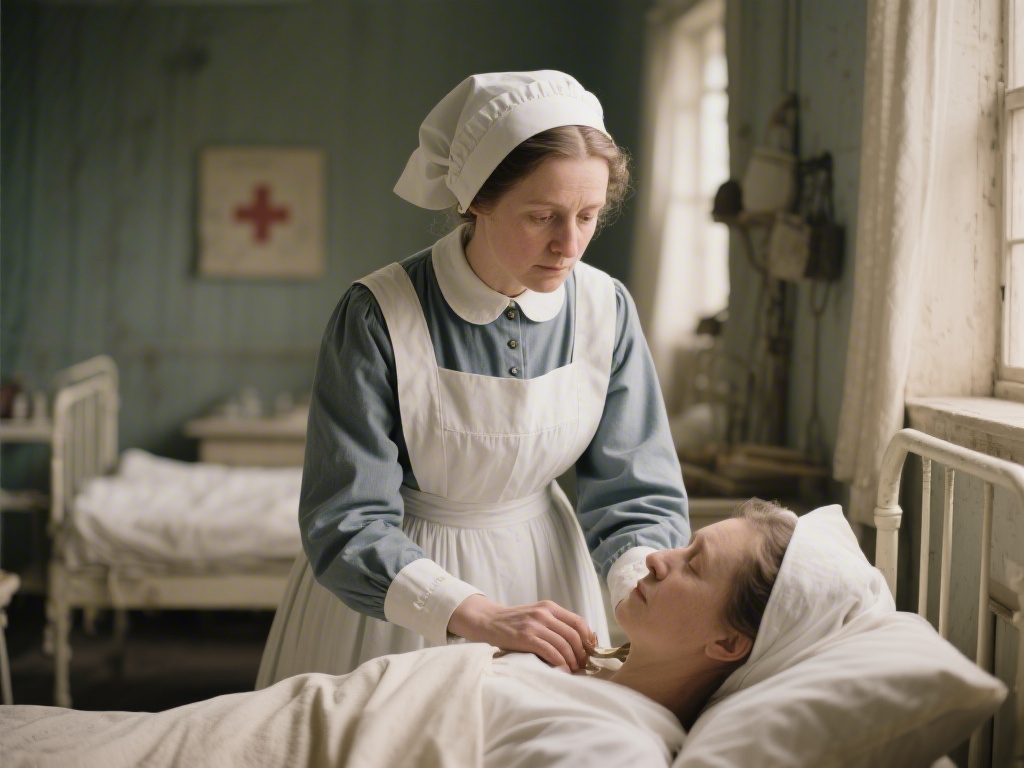
When she arrived in Scutari, Turkey, in 1854 with a team of 38 nurses, the military hospital was filthy, overcrowded, and lacked basic supplies like soap, bandages, and clean drinking water. More than 40% of patients admitted to the hospital were dying of diseases like typhus, cholera, and dysentery, rather than the battle wounds they’d been admitted for. She immediately implemented strict cleaning protocols, ordered fresh food and clean linens, and set up a system to track patient mortality by cause.
Her data collection proved that the vast majority of deaths in the hospital were due to poor sanitation, and her reforms cut the mortality rate from 42% to just 2% in less than two years. That success is what gave her the public credibility to push for nationwide healthcare reform in England when she returned home, and to found the first secular nursing school in the world in 1860. The school’s formal, science-based training program turned nursing into a respected, professional career for women for the first time in history.
Common Myths About Her Career Choice Debunked
There are dozens of persistent myths about Nightingale that have spread over the years, and most of them erase the intentional, radical nature of her choice to become a nurse. The most common myth is that she was simply a naturally caring person who fell into nursing by chance, rather than someone who spent decades planning and fighting for her career. She was a deliberate, highly strategic reformer who chose nursing specifically because it was an overlooked space where she could create large-scale systemic change.
Another common myth is that her family eventually supported her work after seeing her success in the Crimea. In reality, while they stopped actively forbidding her from working, they never fully approved of her choice, and she remained somewhat estranged from them for most of her adult life. She also didn’t stop working after the Crimean War, as many people assume—she spent the next 50 years writing policy papers, lobbying parliament, and publishing research on public health, sanitation, and nursing education, even when she was bedridden with chronic illness for decades later in life.
Many people also think she only cared for wounded soldiers, but the majority of her work focused on improving public health for poor and working-class people in civilian communities. She wrote extensively about the link between poor housing, sanitation, and high mortality rates in industrial cities, and her research directly led to the passage of the 1875 Public Health Act in England, which established mandatory sanitation standards for all residential buildings. That single piece of legislation is estimated to have saved more than 10 million lives in the UK alone over the past 150 years.
At the end of the day, understanding why did Florence Nightingale want to be a nurse helps you see her not just as a one-dimensional historical figure, but as a radical, determined trailblazer who fought against every expectation of her time to build a better healthcare system for everyone. Her choice to pursue nursing wasn’t just a personal calling—it was a deliberate political act that redefined the role of women in medicine, and saved millions of lives in the process. If you’re considering a career in nursing or public health today, her story is a powerful reminder that even the smallest, most undervalued roles can be used to create massive, lasting change for the better.