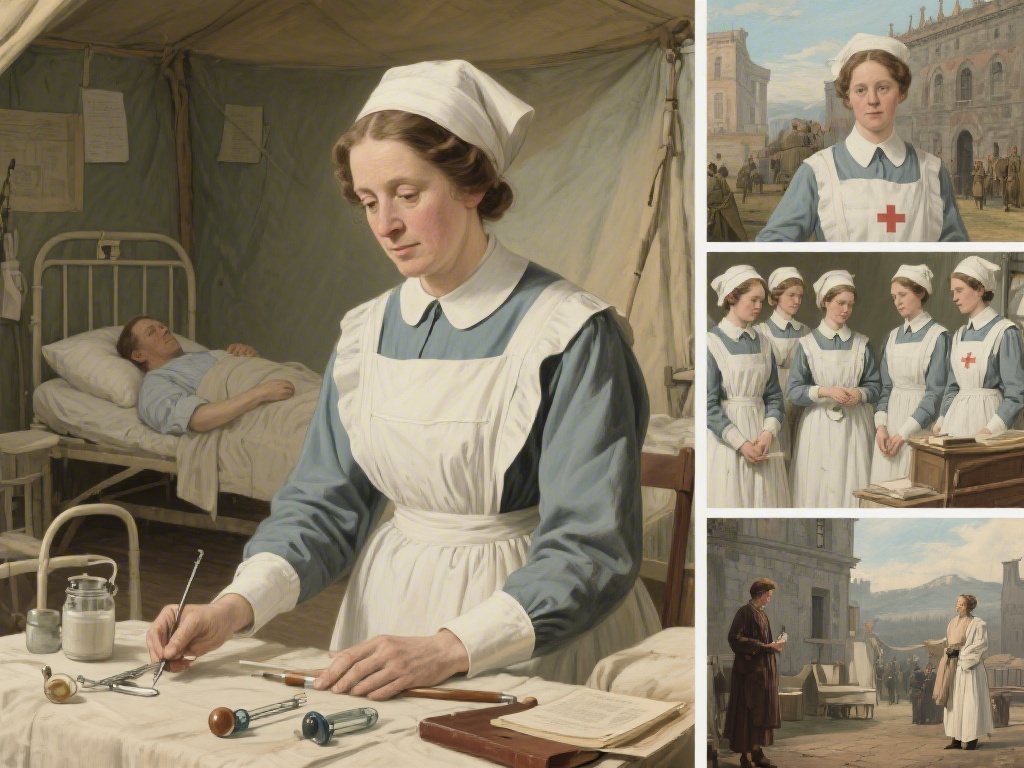
When Did Florence Nightingale Begin Her Nursing Career?
Florence Nightingale, an icon in the nursing profession, began her nursing career at a relatively late age compared to the standards of her time. Born on May 12, 1820, Nightingale was the daughter of wealthy British parents. Her early education was unconventional, as her parents believed in a liberal and well-rounded education. However, it wasn't until she was 35 years old that she decided to take up nursing. Her journey to becoming a nurse was not only driven by a desire to help others but also by her profound empathy and compassion.
Her Early Years and Education
Nightingale's early years were spent in a nurturing and intellectual environment. Her father was a notable banker, and her mother was an educated and socially conscious woman. Despite her family's wealth and influence, Nightingale felt a calling to help the less fortunate. Her interest in nursing was piqued after visiting an Italian hospital during her travels. She was appalled by the conditions and realized the need for proper medical care and attention to patients.
The Training of a Nurse in the 19th Century
In the 19th century, nursing was not recognized as a formal profession. There were no specific training institutions, and nurses were usually trained on the job. Nightingale, however, was determined to receive formal training. She traveled to Europe to study at various hospitals and received her training under the guidance of noted physicians and nurses. Her education was rigorous, and she learned not only medical care but also hygiene, sanitation, and the social aspects of health.
The Crimean War and Nightingale's Legacy
Nightingale's most significant contribution to nursing came during the Crimean War in 1854. She organized the first volunteer nursing team and traveled to Scutari, a hospital in Turkey, where she faced the direst of conditions. Her efforts in improving hygiene and patient care saved countless lives. Nightingale's work during the war not only brought her international acclaim but also laid the foundation for modern nursing practices.
Nightingale's Legacy in Nursing Education
After the war, Nightingale returned to England and founded the Nightingale Training School for Nurses in 1860, the first recognized nursing school in the world. Her school trained nurses in both clinical and theoretical aspects, emphasizing the importance of both patient care and personal hygiene. Nightingale's contributions to nursing education have shaped the field as we know it today.
Conclusion
Florence Nightingale became a nurse at the age of 35, a decision that would change the world. Her journey from a wealthy, well-educated woman to a legendary nurse is a testament to her compassion, resilience, and dedication to improving the lives of others. Nightingale's legacy continues to inspire future generations of nurses and healthcare professionals.