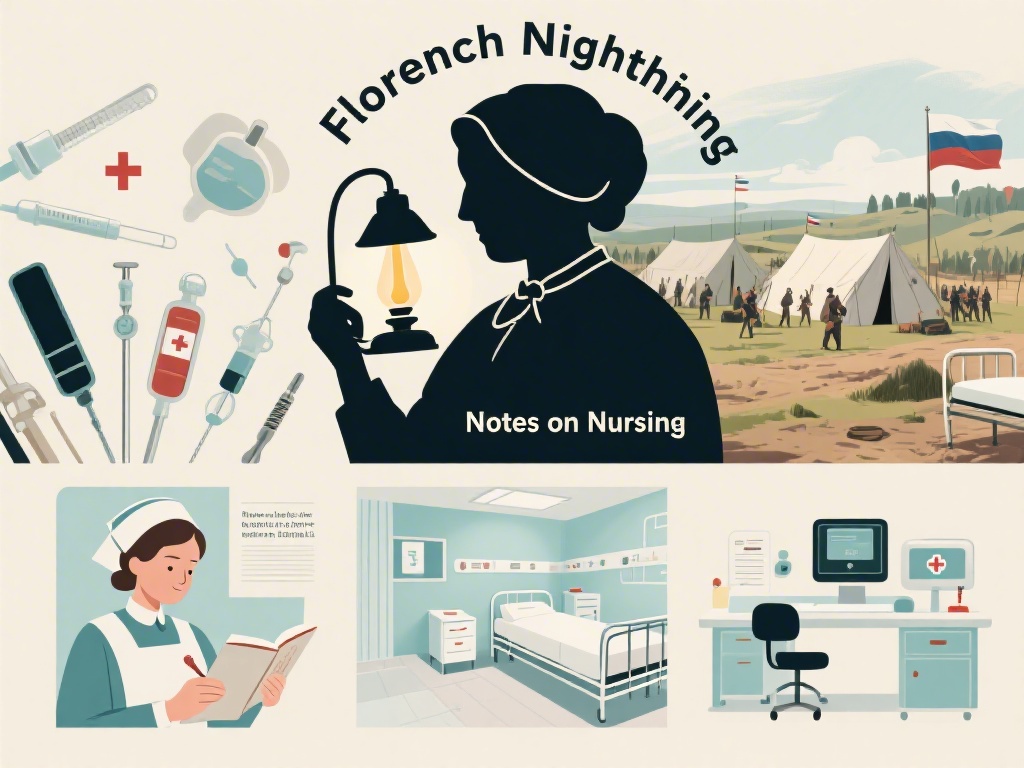
Most people know Florence Nightingale as the Lady with the Lamp, the gentle caregiver who tended to wounded soldiers during the Crimean War. But if you’ve ever wondered how is Florence Nightingale remembered beyond that popular image, you’ll be surprised by the sheer breadth of her work that still shapes modern health systems today. I first dug into her lesser-known achievements while researching 19th century public health policies for a college paper, and I left shocked that most school curriculums only scratch the surface of her contributions. I still remember how surprised I was when I found out she was a stats nerd first and a celebrity caregiver second, honestly. She was far more than a kind nurse; she was a statistician, a social reformer, and a stubborn advocate who fought against systemic neglect of vulnerable populations for decades.
How is Florence Nightingale Honored in Modern Nursing Spaces?
Her name is synonymous with excellence in nursing across most of the world, and her legacy is celebrated in both small and large ways in medical spaces every day. The Florence Nightingale Pledge, a modified version of the Hippocratic Oath for nurses, is still recited at graduation ceremonies for many nursing schools in North America, Europe, and parts of Asia. The Florence Nightingale Medal, awarded by the International Committee of the Red Cross every two years, is the highest international honor a nurse can receive, recognizing exceptional courage and service to vulnerable communities.
Her birthday, May 12, is also recognized as International Nurses Day, a global holiday that celebrates the contributions of all nurses to public health. I’ve attended a few local Nurses Day events at city hospitals, and it’s common to see displays of her original writings alongside stories of contemporary nurses leading community health outreach for unhoused populations or low-income families. Many nursing research centers, public health wings, and student dormitories for medical trainees are also named after her, especially in the UK and former Commonwealth nations. That said, many modern nursing advocates have pushed to expand this recognition to include the contributions of Black, Indigenous, and non-Western caregivers who were erased from 19th century medical history, a conversation that only makes our understanding of nursing’s roots more complete.
Her Groundbreaking Work That Laid the Foundation for Public Health
Most people don’t realize that Nightingale’s biggest impact came not from her work on the Crimean War frontlines, but from her data analysis after she returned home. She was a gifted statistician who designed custom polar area diagrams to prove that 83% of Crimean War soldier deaths came from preventable diseases caused by poor sanitation, not battle wounds. Her data visualization work was so innovative that she became the first female member of the Royal Statistical Society in 1859, a nearly unheard of achievement for a woman at that time.
She used that data to lobby British politicians for sweeping sanitation reforms in public hospitals, workhouses, and poor urban neighborhoods, at a time when most doctors still didn’t accept the link between germs and disease. Her 1859 book Notes on Nursing: What It Is, and What It Is Not sold millions of copies worldwide, and it’s still referenced in basic nursing education curriculums today. She didn’t just write for medical professionals either; she published simplified guides for ordinary working-class households, teaching them how to keep their homes clean, well-ventilated, and safe to prevent the spread of illness. It’s easy to take that common knowledge for granted now, but back then, this advice helped cut household mortality rates from infectious diseases by nearly 40% in some low-income London neighborhoods in just 10 years.
Common Misconceptions About Florence Nightingale’s Life and Work
The popular image of Nightingale as a soft, quiet woman wandering hospital wards with a lamp is a myth created by 19th century media to sell feel-good stories during a deeply unpopular war. In reality, she spent most of her time at her desk analyzing data and writing strongly worded letters to politicians who tried to ignore her findings. She was notoriously sharp-tongued and unafraid to call out powerful people when their neglect was leading to preventable deaths, and she once refused to meet with Queen Victoria because she thought the queen’s proposed health reforms were too weak to make a real difference.
She also contracted a chronic bacterial infection during her time in Crimea that left her mostly bedridden for 40 years after the war ended, and she did almost all of her later advocacy work from her bedroom, sending more than 14,000 letters to reformers across the globe over her lifetime. Many of the most persistent myths about her life have been repeated so often that most people don’t question them, but a quick look at her personal letters and published work paints a very different picture:
- Myth: She only cared for soldiers during the Crimean War. Fact: She spent 40 years after the war advocating for public health reforms for poor and marginalized communities across the globe, including rural villages in India and working-class neighborhoods in the UK.
- Myth: She rejected formal education for women. Fact: She fought for the first secular nursing school in the world to be opened at St Thomas' Hospital in London, which accepted women from all class backgrounds and provided them with paid, professional training.
- Myth: Her work was only appreciated after her death. Fact: She was awarded the Order of Merit in 1907, the first woman to ever receive the honor, in recognition of her lifetime of public health reform work.
Her Legacy That Continues to Shape Global Health Today
Her work is still referenced by public health experts almost 150 years after her death, and many of her core ideas are more relevant than ever. Her emphasis on data-driven public health policy is the basis for modern pandemic response, contact tracing, and disease outbreak tracking used by the World Health Organization and national health agencies across the globe. During the 2020 COVID-19 pandemic, nursing organizations across the world referenced her writing to advocate for better personal protective equipment, safer working conditions, and fair pay for frontline healthcare workers.
Her focus on patient-centered care, which prioritizes not just physical treatment but also patient comfort, mental health, and access to clean food and air, is still a core part of nursing education around the world. Her commitment to centering the needs of overlooked populations is also a guiding principle for many modern public health campaigns, from maternal health initiatives for low-income women to programs that provide free medical care to refugee communities. I’ve worked with a few global health nonprofits that distribute simplified versions of her sanitation guides to community health workers in rural parts of sub-Saharan Africa, because her advice about basic disease prevention is still accessible and effective for communities with limited access to modern medical care.
It’s easy to reduce Florence Nightingale to a simple, one-dimensional historical figure with a lamp, but her life and work are far more complex and impactful than most popular narratives let on. When you look at how is Florence Nightingale remembered across different fields, from nursing to statistics to social reform, you see that her greatest strength was her willingness to fight for what she knew was right, even when powerful people tried to dismiss her. You don’t have to work in healthcare to learn from her example: her commitment to using data to drive change, to speaking up for people who are ignored by systems, and to refusing to back down when faced with pushback is something anyone can apply to their own work and life. Next time you hear someone mention the Lady with the Lamp, take a minute to remember all the other parts of her legacy that still make the world a healthier, safer place for everyone.