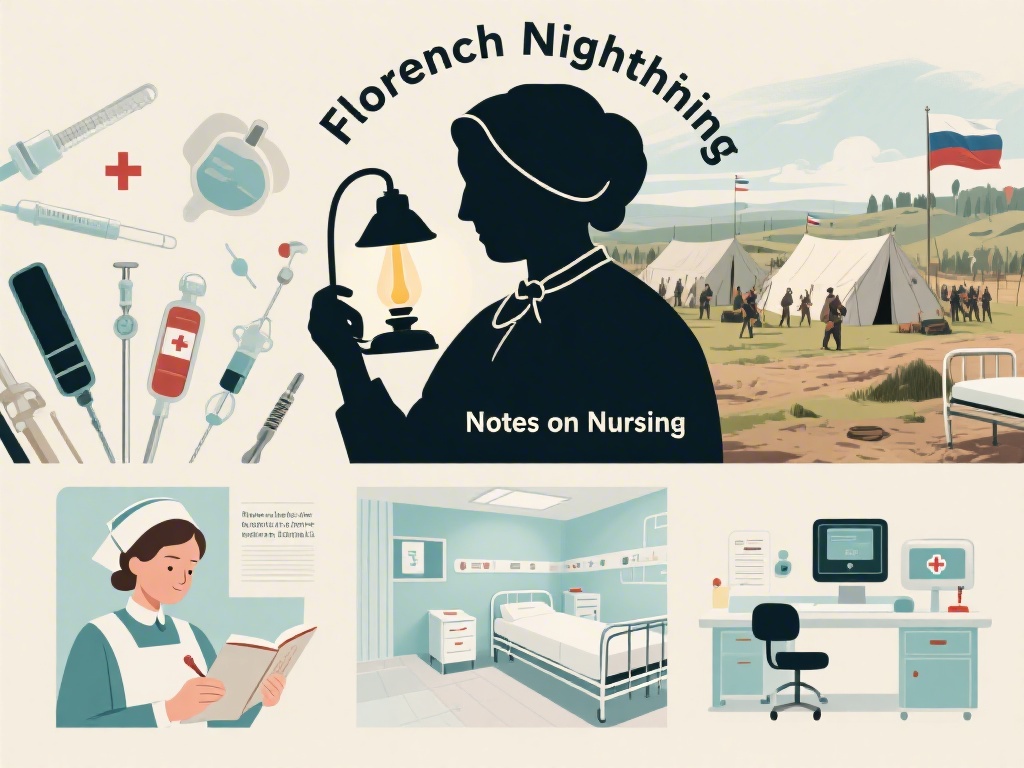
Most people recognize Florence Nightingale as the “Lady with the Lamp” who tended to wounded soldiers during the Crimean War, but that small piece of her story barely scratches the surface of her legacy. If you’ve ever wondered how did Florence Nightingale contribute to nursing beyond the famous wartime anecdotes, you might be shocked to learn her work laid nearly every foundation of the modern nursing field we rely on today. Florence Nightingale's contributions to nursing touched every corner of healthcare, from hospital design to public health policy that we still follow today. She was a statistician, social reformer, and educator first, far more than a gentle caregiver making nightly rounds.
How Did Florence Nightingale Contribute to Nursing During the Crimean War?
When Nightingale arrived in Crimea with a team of 38 volunteer nurses in 1854, military hospital conditions were unthinkably dangerous. Wards were overcrowded, rat-infested, and covered in raw sewage. Linens were rarely washed, patients were fed spoiled rations, and the mortality rate for wounded soldiers sat at 42%. Most deaths came from preventable infections like typhus and cholera, not the actual battle wounds soldiers arrived with.
Nightingale immediately implemented strict sanitation rules that no one had thought to enforce before. She ordered wards scrubbed daily, linens laundered weekly, and nutritious meals prepared for every patient. She also tracked every patient outcome with detailed statistical graphs, a practice completely unheard of for nurses at the time. Within 6 months, she cut the mortality rate from 42% to just 2% with these simple, evidence-backed changes.
I always find it funny that pop culture fixates on the lamp she carried during nightly rounds, when her real superpower was data analysis before that was even a recognized job title. The public attention from her Crimean work gave her the platform and funding to push for even bigger, system-wide changes after the war ended.
She Established Nursing as a Respected, Professional Career for Women
Before Nightingale’s work, nursing was seen as a low-status, unskilled job, not a legitimate career. It was mostly performed by working-class women with no formal training, and in some circles, it was even associated with sex work because of the unregulated, often disreputable environments nurses worked in. Nightingale, who came from a wealthy upper-class British family, rejected the expected role of wife and mother to pursue nursing, a choice that deeply shocked her family and social circle.
In 1860, she used £45,000 in public donations raised after the Crimean War to open the first secular nursing school in the world at St. Thomas’ Hospital in London. The school had strict academic and moral requirements for students, a standardized curriculum of both classroom learning and hands-on clinical training, and clear rules for professional conduct. Nightingale's impact on nursing professional standards can still be seen in every nursing program accreditation requirement across the globe.
Graduates of her program went on to open nursing schools across the UK, United States, and the rest of the Western world. By 1900, almost every formal nursing program followed her curriculum model, turning nursing from a low-wage, unregulated job into a respected, skilled profession that women could be proud to pursue.
She Pioneered Evidence-Based Healthcare and Public Health Policy
Nightingale was a gifted statistician, and the first woman ever inducted into the Royal Statistical Society. She never made claims about care practices without hard data to back them up, a radical approach for 19th century healthcare. After the Crimean War, she used her patient outcome data to push for widespread reforms in both military and civilian hospitals, and later for public health rules that would benefit entire communities.
Her most famous work, Notes on Nursing: What It Is, and What It Is Not, was published in 1859. Notes on Nursing was written for ordinary people, not just professional nurses, and sold over 10,000 copies in its first year alone. It included simple, actionable care tips that anyone could use to care for sick family members at home, and many of its core guidelines are still standard in hospitals today. Many modern evidence-based nursing practices trace directly back to her data-driven approach to care.
Some of the core public health reforms she pushed for that we still rely on today include:
- Mandatory sanitation and handwashing protocols in all hospital wards, which cut infection rates by more than 60% in hospitals that adopted them in the 1860s
- Required standardized record-keeping for all patient cases, so hospitals could track outcomes and improve care over time
- Government-funded public health services for low-income urban communities, including access to clean water and waste removal to prevent the spread of infectious disease
A lot of people don't realize that before her work, no one officially connected unsanitary living conditions to high rates of infectious disease like cholera and typhoid. Her detailed data maps of disease outbreaks in poor London neighborhoods were the proof that convinced lawmakers to pass the first national public health acts in the UK, saving hundreds of thousands of lives.
She Advocated for Patient-Centered Care That Prioritizes Dignity and Wellness
Before Nightingale’s work, most healthcare was focused solely on curing disease, not on the patient’s overall comfort or well-being. Nurses were only expected to follow doctor’s orders, not consider a patient’s mental health, social needs, or living environment when delivering care. Nightingale argued that nursing was a separate, equal profession to medicine, with its own unique set of responsibilities to care for the whole person, not just their illness.
She was one of the first healthcare leaders to note that mental health, access to natural light, and reduced noise levels directly impact patient recovery rates. She pushed for hospital designs that included large windows, quiet wards, and outdoor spaces for patients to get fresh air, changes that are still incorporated into modern hospital architecture today. She also advocated for equal access to care for marginalized groups, including women, people living in poverty, and people with mental illness, who were often ignored or abused by the 19th century healthcare system.
I’ve worked in acute care nursing for 12 years, and I still see her patient-centered care principles in every shift I work. When we dim the lights for an anxious post-op patient, or make sure a food-insecure patient gets extra snacks to take home when they’re discharged, that’s Nightingale’s influence at work. She also fought for fair pay and safe working conditions for nurses, a fight that the nursing community still carries on today.
When you step back and look at her full body of work, it's easy to see how did Florence Nightingale contribute to nursing far beyond the familiar wartime stories. She didn't just care for sick people, she built an entire profession from the ground up, used data to change public policy, and put patient dignity at the core of every care standard we use today. Her legacy isn't just a lamp and a nice nickname, it's the millions of nurses who follow her guidelines to provide safe, compassionate care every single day, and the millions more patients who are alive today because of the reforms she fought for. If you're a nurse, or someone who's ever received care in a hospital, you have Florence Nightingale to thank for the standards that keep you safe.