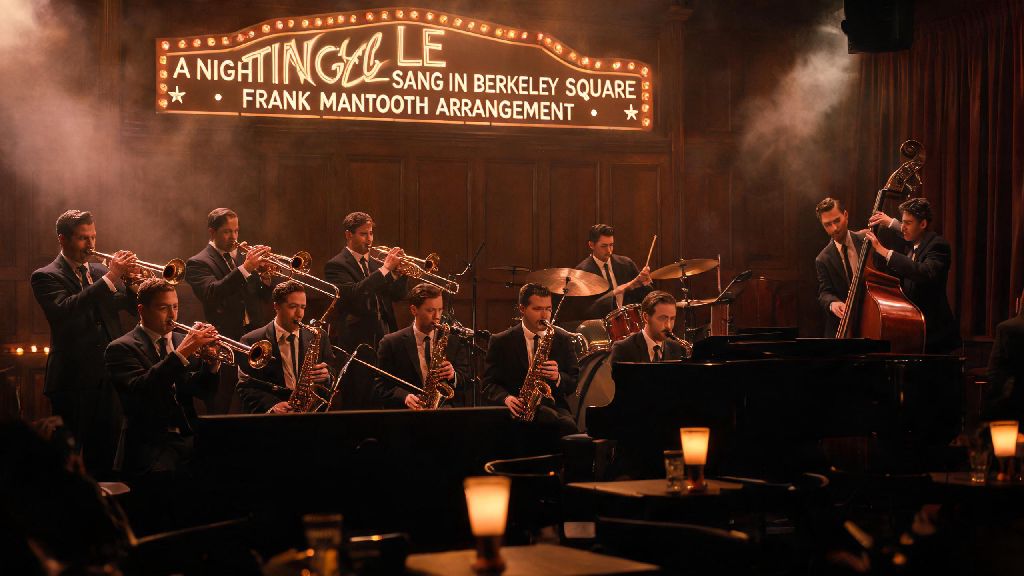
If you’ve ever spent an evening scrolling through underrated big band jazz recordings, you’ve probably stumbled on A Nightingale Sang in Berkeley Square Frank Mantooth arrangement at least once. It’s one of those covers that feels both deeply nostalgic and surprisingly fresh, even if you’ve heard the original 1940s standard hundreds of times. I first heard it during a small jazz club set in Portland, where a local 12-piece band closed their set with it, and I spent the next three days digging into every detail of Mantooth’s take on the track. It’s not flashy, it doesn’t have wild solos or experimental tempo shifts, but that’s exactly what makes it so special.
What Makes Frank Mantooth’s A Nightingale Sang in Berkeley Square Stand Out
Frank Mantooth was a beloved jazz arranger and educator best known for creating accessible, high-quality big band charts for both amateur and professional ensembles. Most of his arrangements balance technical skill with approachability, and this track is no exception. Unlike many modern arrangements that overcomplicate classic standards to feel unique, Mantooth’s take prioritizes the song’s original storytelling first. He kept the core melody intact, but added layered brass and sax sections that swell and fade like soft wind through London’s tree-lined Berkeley Square.
He also adjusted the original key to sit perfectly in a range that works for both male and female vocalists, which is one of the biggest reasons it’s become such a staple in high school and college jazz programs across the world. You don’t need a world-class vocalist to pull off this arrangement, and that’s intentional. Mantooth wanted to make classic jazz standards accessible to as many groups as possible, and this track is a perfect example of that mission.
The Original History of the Track Before Mantooth’s Arrangement
The original A Nightingale Sang in Berkeley Square was written in 1939 by lyricist Eric Maschwitz and composer Manning Sherwin, for a London revue called New Faces. It became an almost immediate hit during WWII, as Londoners clung to its soft, hopeful story of a magical romantic encounter in the middle of a city under attack. Nightingales don’t actually nest in the busy, built-up area around Berkeley Square, so the core image of the song is intentionally whimsical, a reminder of small moments of magic even during dark times.
The song’s lasting appeal comes from its balance of quiet romance and quiet resilience, which resonated with listeners through decades of social upheaval. Before Mantooth released his arrangement in the 1980s, most covers of the track were either small combo jazz takes, or pop vocal versions designed for solo singers. There was no widely available big band arrangement that amateur groups could easily access, which is exactly the gap Mantooth filled with his version.
Practical Tips for Performing Mantooth’s Arrangement
If you’re part of a jazz ensemble planning to add this track to your set list, there are a few small tweaks that will make your performance feel far more authentic than just playing the notes off the page. I’ve played this arrangement with three different ensembles over the years, and these small changes always get a positive reaction from crowds:
One mistake most new ensembles make is rushing the 8-bar bridge, which is designed to build slowly before the final chorus. Mantooth added a subtle, walking bass line under the bridge that most groups miss if they don’t listen to his original recording first, so make sure to give that section extra attention during rehearsal. You don’t need to add any extra solos here, either. The arrangement is already complete as written, and adding unnecessary solos can take away from the gentle, storytelling tone of the track.
The Cultural Legacy of Mantooth’s Jazz Standard Cover
Since it was first published, Mantooth’s arrangement has become one of the top 10 most performed big band versions of the track in North America, according to recent data from the Jazz Education Network. It’s used in everything from high school jazz competitions to wedding receptions, and even appeared in a 2022 episode of a popular British period drama set in the 1940s, introducing it to a whole new generation of listeners who had never heard the original standard before.
Many jazz educators recommend Mantooth’s arrangement as the first big band standard new ensembles learn, because it teaches section harmony without being overly technically demanding. Even professional big bands, including the Count Basie Orchestra, have added it to their rotating set lists in recent years, which is a rare honor for a relatively modern arrangement of a classic standard. It’s not often that an arranger’s take on a song becomes as beloved as the original, but Mantooth’s version has earned that spot over decades of performances by groups of all skill levels.
Whether you’re a jazz performer looking for a new crowd-pleasing standard, a casual listener digging through hidden big band gems, or someone who just loves romantic 1940s tracks, A Nightingale Sang in Berkeley Square Frank Mantooth arrangement has something to offer. It’s a perfect example of how a great arranger can honor a classic song while making it feel new for entirely new audiences. It’s rare for a jazz arrangement to become as beloved as the original track, but Mantooth’s take has earned that spot over decades of performances. Next time you’re putting together a jazz playlist, or planning your ensemble’s next set list, give it a listen – you won’t be disappointed.